


It’s no secret that there is a strong relationship between customer experience and brand loyalty. A recent Forrester Research report revealed that customer experience leaders have a 14 percentage point advantage in encouraging their customers’ “willingness to buy more, reluctance to switch, and likelihood to recommend.”
Function, features and benefits are an integral part of a product. However, they don’t matter as much as the perception of use value inherent in the brand’s promise.
Today, even online retailers have undertaken to create customer-centric strategies that drive brand loyalty. With a plethora of competition and better educated consumers, this has become more critical than ever before. However, how does one create and execute engaging customer experiences online or offline that will maximize brand loyalty?
Negligent Brands
Many brands are myopic to the point that they unintentionally and unknowingly allow their dissatisfied customers to go away without a thought. Front-line staff is either not trained properly and/or lacks the proper attitude to handle clientele appropriately.
During the industrial era, consumers would simply purchase what was produced, shopping where that product was available and paying the price the retailer demanded. In essence, the manufacturer and the store were in position of strength.
As products and consumers have changed over the years, the concept of ‘brand loyalty’ and ‘consumer insight’ came about. As we progressed into the new millennium, the transparency and unrestricted information available on the internet has changed all of that. Today consumers are not only better informed but they are also in control. They can make or break a brand through their actions.
So what does this say about listening?
Consumers will no longer refrain from informing companies on what may have gone wrong ─ whether it’s a particular brand or a competitor’s. With the numerous platforms for consumers to make their voices heard online, brands have to be very reactive and not allow anything to chance. In an age when the consumer’s outcries and influences spread quickly, the results can signify lost sales and a deterioration of brand loyalty.
By listening attentively – especially through the various online social venues, should keep a brand from becoming the next Netflix, Tropicana or Gap ─ each one with their costly blunders.
As for low prices, though they may seem attractive to shoppers, prices can only go so low. Retailers, whether in bricks & mortar or not, need to look beyond the quick sale and start to focus on building brand loyalty. Commodities find it hard to maintain loyal customers.
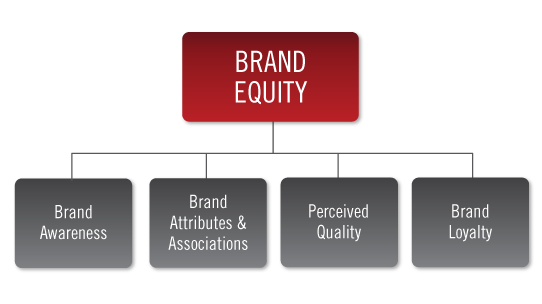
What contributes to Brand loyalty?
Brand loyalty is about building an emotional, and in some cases, irrational, attachment in a product. The most ideal example is when thousands of people line-up, regardless of weather conditions, to get their hands on the latest iPhone or iPad. This happens because Apple has built an emotional attachment to their products by creating a lifestyle choice rather than a product purchase.
It’s about how it makes you feel. Same goes for baby boomers, whether accountants or attorneys or business executives who purchase a Harley Davidson motorcycle and ride them for about four or five hours every Sunday afternoon. The bike makes them feel like a rebel – sort of an escape.
A study (2004) conducted by brand expert J. N. Kapferer reported that brand loyalty contributes to successful marketing programs, sales initiatives and product development.
The key aspect of brand loyalty is the consumer decision — which can be made both consciously and unconsciously to repurchase a brand continually. A consumer makes this decision that the brand is perceived the one that offers the right product features, identity or level of quality at the right price, thus establishing a positive image of the brand. Since brand loyalty leads to future purchases, it can be considered a valuable strategic asset for companies.
Brand loyalty requires trust as it’s a key factor in the development of brand loyalty. An additional and often overlooked principle in brand management is this: When a brand is successful, it’s because customers value an emotional experience more than a functional benefit. When the brand delivers on client expectations – and beyond, trust is earned, strong connections are made and ultimately, brand value grows.
As 2011 began, the top three U.S. coffee brands, when it comes to their own customer’s report of their degree of brand loyalty and engagement, are:
1. Dunkin Donuts;
2. Starbucks;
3. McDonalds (McCafe)
In Mr. Schultz’s new book, “Pour Your Heart into It,” he describes how the brand was built “one cup at a time.” This could not have been further than the truth as every brand thrives through a constant repeat of individual positive transactions. Unfortunately, many brands take consumers for granted once a business or new retail location is up-and-running.
Branding in the Luxury Sector – the Differentiators
Luxury brands rely on committed customers, who often provide “walking advertisements”/brand ambassadors ─ also known as indirect marketing. Evidence from academics suggests that this phenomenon has a strong presence in the luxury sector and may have a double positive effect on enhancing a brand’s overall image and status.
Consumers who trust a brand and its name are more likely to trust the quality of new and existing products. This leads to faithfulness, repeat business and positive word-of-mouth.
With luxury retailers, emphasis should be placed on providing a service or an experience that causes the luxury shopper to shift his/her spending from one brand to another. Giving your customer prestige or special recognition for buying your product or service should be a standard offering.
Simply thanking him/her who just spent $1 million at your luxury boutique isn’t adequate. A generous and memorable offering should be made rather than something that can be duplicated and repackaged by a competitor – whether online or offline.
Rewarding points, for example, will no longer make a large impact in demonstrating appreciation as it has become quite ubiquitous. It may be utilized toward buying an item he/she would have gotten anyway. But an “invitation-only” evening, for example, with a top designer can have much more of a positive impact.
Brand Loyalty: B2B Sector v, B2C
Brand loyalty in the B2B sector is higher than in consumer goods markets because companies in the commercial and industrial segments seek long term relationships as any experiment with a different brand will have impacts on the entire business. Therefore, it’s wrong to assume that marketing solely applies to consumer goods brands.
Among Interbrand’s 10 most valuable global brands, Microsoft, Intel, IBM and GE all generate far more B2B revenues than sales to end consumers. Consider, for example, that GE and Microsoft are hybrid brands with some direct-to-consumer sales that have helped to build the reputations of what are primarily B2B firms.
Although enterprises are selling to businesses, they want to be in touch with end consumers, with their aspirations and their needs. That is a source of competitive advantage in driving their innovation agendas can capture a larger share of channel margins and as a result, build loyalty.
The Impact of Social Marketing
Social media is proving a fertile ground for breeding brand loyalty. Recent research by eMarketer has shown that social media sites like Facebook are where consumers go to keep abreast of a brand’s products and promotions.
This is where consumers are converging and where online retailers should engage. Building a community around a brand not only increases exposure and traffic to a website, but also a very effective means of creating brand evangelists who will spread the brand’s message to a wider audience.
Starbucks has made effective use of social networking and micro-blogging such as Twitter and Facebook in interacting with their customers and measuring their interests and opinions on new branding activities. As of the beginning of 2011, the company had 1,237,169 followers on Twitter and more than 19.4 Million on Facebook.
Conclusion
When consumers are delighted by a particular brand experience, they begin to bond emotionally with the brand. They become brand loyalists and advocates – buying the brand more often and recommending it to others. This behavior serves to build the brand’s reputation.
Consumers will often purchase a brand for the first time due to its reputation. The brand, therefore, adds value and certainty to an otherwise unknown product. The stronger a brand’s reputation, the higher the value of the brand and the greater revenue it will drive for the business.
Brand loyalty has a strong presence in the luxury segment because luxury goods consumers identify with the personality of the luxury brand and see no need to search for alternatives.
B2B marketers are realizing that developing brand awareness among their customers’ customers can capture a larger share of channel margins and build loyalty that can protect them against lower-priced competitors.
Using social media to build brand loyalty to a brand’s long-term success as it creates a digital holistic platform where loyal customers converge and whose voices are heard and spread beyond.
Those merchants winning the race are delivering the kinds of recognition that make these shoppers feel truly remarkable, even in their privileged surroundings.
_______________________________________
Footnotes:
Article based on extensive research that has been conducted for an MBA dissertation based on the topic ‘The Influence of Brand Identity on Brand Equity in Luxury Segment’ by Violetta Ihailanen who has over 15 years of practical retail luxury experience with renowned fashion brands including Burberry amongst others along with an entrepreneurial stint.
Sources:
Chaudhuri (1995)
Jacoby and Chestnut (1978)
Kapferer (2004)
Phau and Cheong (2009)
Request your TWO FREE chapters of this popular book with no obligation.

Learn how to start or expand a business with free courses at





 Unconventional Business Wisdom for the refined entrepreneurial mindset - by James D. Roumeliotis