When we encounter the word “luxury”, images of: seamlessness, awe, the rarity factor, cache, opulence, aristocracy, supreme workmanship, stellar service and reverence come to mind, amongst others
Now, close your eyes for a moment. What images come to mind when you consider mention of the following vehicles: Aston Martin, Jaguar, Bentley and Range Rover? That’s what we will be analyzing in this four part series of the luxury British automotive icons and the above average expectations of consumers seeking such extravagant motor vehicles.
What qualifies the authors to give such commentary? Having worked and served — most notably with prestigious brands such as Gucci, Aston Martin, Jaguar, Bentley and Range Rover, as well as with mega yachts and coupled with extensive research and consultations in this domain –, both can accurately define the exceptional treatment tendered to a HNWI (High Net Worth Individual) luxury seeking discerning consumer. Brands which qualify to serve this exclusive market provide attention to detail, a plethora of product knowledge/competence, and discretion along with an implementation of an anticipated flawless post-sale/follow-up policy.
Price aside, a luxury car brand should embody cache, exclusivity, pedigree, craftsmanship and limited production. R.L. Polk and Company, a global automotive information and marketing firm that provides solutions to automotive and related industries, has re-defined the term with the appellation, “super luxury”, ‒ i.e. cars that cost over $100K. This category includes brands such as Rolls Royce, Bentley, Maserati as well as the Aston Martin being featured here.
Aston Martin: License to thrill
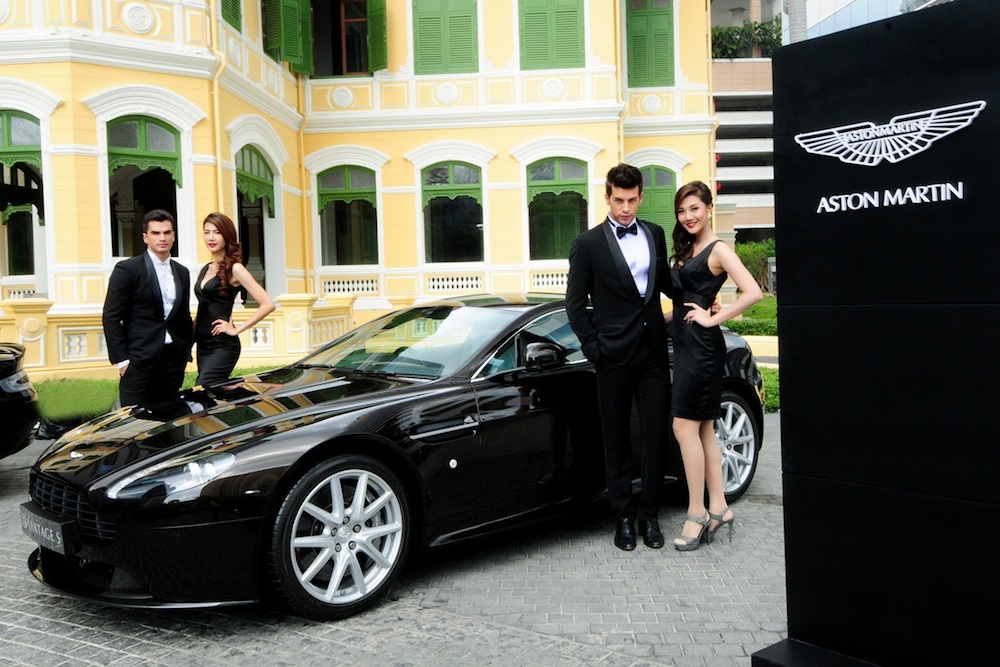
We begin with the initial luxury automotive brand in this four part series: Aston Martin. This high valued motor car producer brings images of James Bond, a ladies gent, British heritage, sophisticated technology, sex appeal, speed, agility and soul.
Considering the above persona, the makeup of a typical Aston Martin customer.is a male (no gender discrimination intended), in his late 30’s early 40’s, handsome, successful, possibly with an attractive spouse (or if single, a striking companion), possesses a deep knowledge of refined luxury, knows what he wants virtually at any price level, and enjoys adventure, as well as thrives at constant new challenges.
Initial impressions and consultative sales process
When a prospective owner, or existing customer of an Aston Martin walks into any impressive looking Aston Martin showroom, the total experience should normally result as follows:
– To be greeted initially by the attractive receptionist/hostess (brand ambassadors) by the owner or General Manager of the dealership;
– Introduce the prospective client to an Aston Martin specialist;
– Offer a hot or cold fine beverage;
– Be given a tour of the impressive premises;
– Exhibit the various models and a test drive initiated during which time rapport is being built;
– Offer of an overnight test drive to create the feel and experience of the automobile and its performance characteristics;
– Thank and greet the prospect by the dealership owner or GM upon returning the vehicle followed by the sales specialist;
– Customer’s contact information should be entered into the dealer database (CRM);
– If a sale is initiated – the sales process should ensue. However, if a sale does not occur, effort should be exerted in a discreet and pragmatic manner (consider “consultative” selling) to close the sale. Statistics show that 60% of car purchases have been consummated on the spot when they received what they considered was an excellent presentation and demonstration. Either way, a follow-up is imperative within 24 hours.
Sale & delivery
– An appointment should be set for delivery;
– Upon arrival to pick-up the vehicle, customer should be congratulated by owner and/or GM;
– Explanation of vehicle model should be thorough along with a post-sale follow-up the following day;
– Customer should be offered a token appreciation for his/her business. This can be in the form of champagne from a strategic partnership for example, Moët & Chandon and/or an additional gift in good taste.
Exceeding customer expectations for the discerning client-driver
To succeed in gratifying the seemingly sophisticated client, a high-end organization should develop a comprehensive strategy along with efficient implementation tactics. These include:
– Having a clear and unique value proposition that hooks them;
– Consider exploiting the five senses to attract and retain them – categorized as “ambiance”/”sensorial” marketing and branding;
– Staff must be customer centric, patient, empathetic, and good listeners – remaining calm under duress during client interactions;
– Employee retention – hiring for attitude and training for skills;
– Utilizing a hands-on approach;
– Probing clients’ specific needs/requirements – recognizing their motivations – reading their body language;;
– Earning their trust and respect by exuding confidence, empathy and transparency;
– Offering a personal touch – individualized attention with customized solutions – It’s all about the customer;
– Being frank and transparent with pricing, offers, proposals and promotions;
– Proposing an expansive product selection and service options;
– Outstanding and consistent levels of customer service throughout the organization;
– Reducing or eliminating waiting times – whether on the phone (reservations, customer service etc.), as well as for service or an appointment at the physical location;
– Offering customer loyalty programs through joint collaborations with other luxury purveyors – a great way to make them feel special by receiving something extra;
– Asking for feedback with regards to service and product experiences for ways to improve those experiences. Discerning clientele are typically strongly opinionated and relish giving their views.
– Implementing the latest technology with all touch points.
The Aston Martin automotive brand with its power, beauty, soul and heritage as its tagline delivers to a specific and limited market segment by giving way to its consumer target to acquire their models they associate with a “luxurious and sporty lifestyle.” The brand is essentially a status symbol.
Brand loyalty is about building an emotional, and in some cases, irrational, attachment in a product. “Total customer experience” is not an option but rather compulsory as part of an alluring brand. It takes savvy planning, execution and perpetual refinements to stand above the crowd. It’s how you get noticed and remain relevant. Luxury brand desirability is driven by standout design, craftsmanship, as well as what is felt.
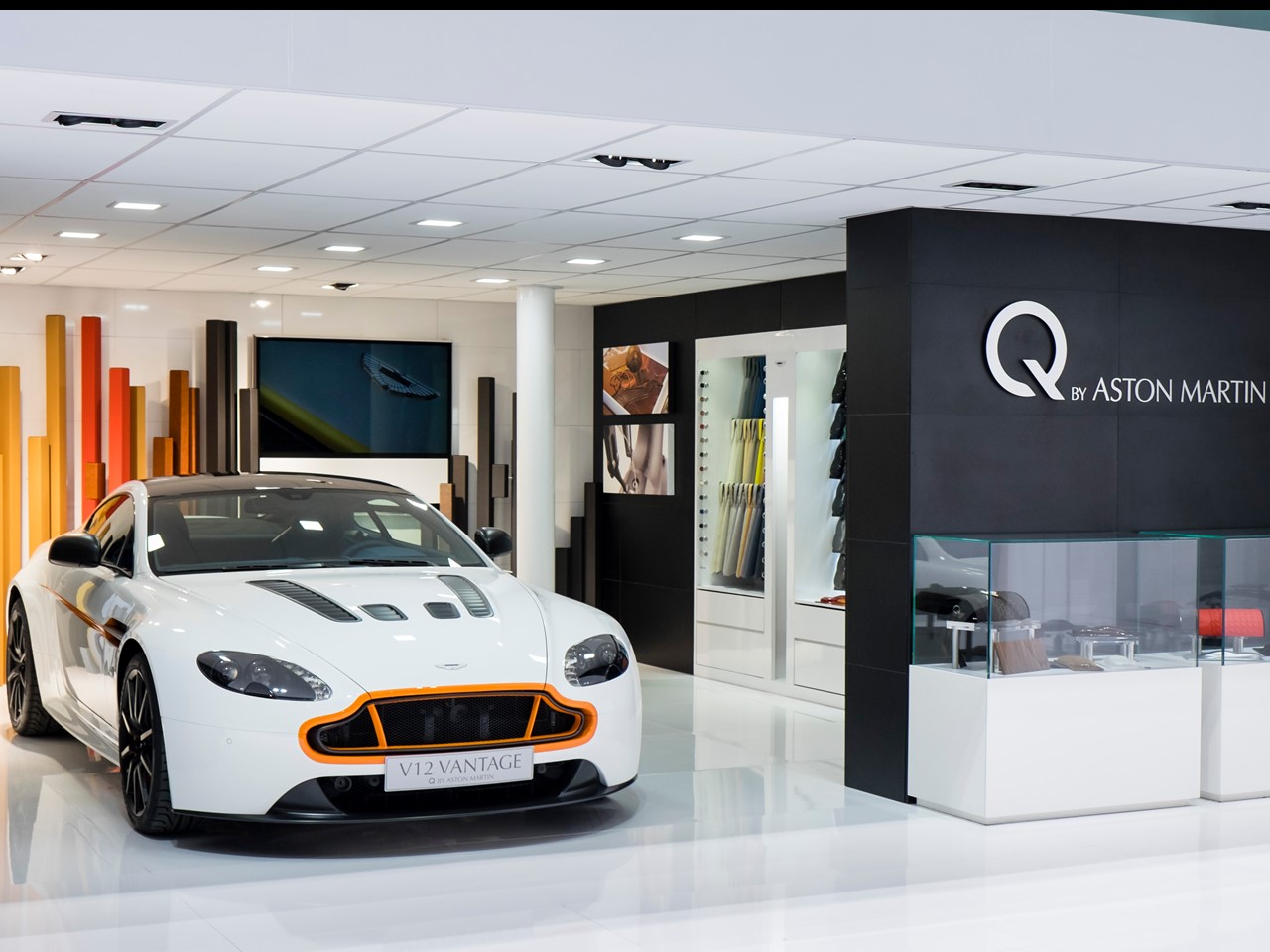
A typical Aston Martin showroom portrays a super luxury car brand able to offer a “wow” factor to its intended customers with an unconventional retail experience which exploits the five senses. This includes a showroom floor with ideal lighting, the various models well positioned/presented, impeccably dressed/groomed staff, and an upscale lounge ‒ overall, presenting sight, sound, smell, touch sensorial experiences and creating a feeling of lavishness. Some will go as far as offer art exhibitions on the premises, five star dining events and wine tasting to name a few. It’s what its type of clientele crave.
With the proliferation of Italian and French luxury brands bearing the ‘Made in China”, ‘Made in Turkey’ or made elsewhere remote from their land of origin, it makes one ponder whether the brands are diluting their image for the sake of lower prices and higher profits. This begs us to revisit the question of what constitutes an “authentic” luxury product and whether manufacturing in a country unknown and unfamiliar for evoking luxury is a good long term strategy for the brand with heritage.
Luxury vs. Premium vs. Fashion: Clarifying the Disparity
Definitions of “luxury” vary enormously and depend on with whom you discuss the topic and in what context. The term “Luxury” has never been something easy to define. It is relative, mysterious and elusive. In essence, it revolves around subjective criteria in the mind, which creates a mood and what is generally referred to today as lifestyle.
The proliferation and marketing misuse of the word “luxury” on many products across sectors is quite evident. Brands either do it out of ignorance or to enhance the desire for the consumer to purchase their products.
Gary Harwood at HKLM, one of the founders and directors of a leading strategic branding and communication design consultancy, affirmed:
“A luxury brand is very expensive, exclusive and very rare – not meant for everyone. When it ceases to be these things, then it’s lost its exclusive cachet. Commoditizing luxury brands and making them more accessible to the middle market puts them at risk of becoming ordinary, common and less desirable. And the more available a brand is, the less luxurious it becomes.”
Authentic luxury brands compete on the basis of their ability to invoke exclusivity, prestige and hedonism to their appropriate market segments not the masses. There is a classic litmus test:
Is the product manufactured in artificially limited quantities? (i.e. the rarity factor)
Does the firm have a story to tell? (i.e. history & pedigree)
Is the firm portraying a unique lifestyle?
Is craftsmanship the hallmark, which delivers products that only High Net Worth individuals can purchase without question?
Does the brand offer authenticity?
Does it implement an absolutely no discounting policy?
Is the product (and at least most of its materials/parts) manufactured only in its country of origin?
Luxury is not premium – and premium is not luxury. They are two dissimilar categories catering to different market segments.
Luxury Product Roots and Perception: Key Factors of Authentic Luxury
A luxury product is rooted in a culture and comes along with a small fragment of its native soil, of its heritage. This proposes that in order for a “luxury” product to remain true to its origins, as one of its main criteria, its production shall remain in the country of origin ‒ whether that is France, Italy or elsewhere (most notably in Europe). Tempting to relocate production elsewhere can cause the brand to lose its lustre and character.
Professor Jean-Noël Kapferer, an author and lecturer at the Kellogg Business School (Northwestern University, USA), as well as at HEC Paris, Europe’s premier academic research center on Luxury, clarified his views on this subject matter by stating that:
“Looking at luxury companies’ own attitudes, there is a clear segmentation, based on their brand positioning and business model. A first group (such as Louis Vuitton, Hermès, Chanel) emphasize quality and heritage as the main sources of their incomparability. They are patriots. For them, a country of origin is a homeland, much like the soil in a vineyard – a miracle made of earth, nature, sun, rain, and sophisticated human labor, loaded with culture. For them, ‘made in…’ tells a whole story, tying production to a long heritage.”
He further affirmed that:
“To remain a true luxury brand, following the luxury business model, entails sticking to local production. This is not an easy task for many luxury brands. Those that comply must create the conditions that are necessary to sustain this production. This is why they often buy their local sub-contractors in case the latter go bankrupt, to be sure to keep alive a historical know-how that might otherwise disappear.”
France and Italy are considered the leading countries for luxury and trend setters for clothing and accessories. Luxury watches (better known as “timepieces”) are manufactured in Switzerland ‒ the undisputed leader in this category. London, is considered to be the luxury spirit capital of the world with Burberry as the most prominent luxury brand. Whereas, Germany Italy, as well as the UK are for luxury automobiles. However, what they do produce elsewhere in the world are not ‘luxury’ but rather their lower priced “premium” derivatives (think BMW, Mercedes and Audi). Other illustrious automotive names, such as Ferrari and Rolls Royce, continue to manufacture solely in their native country.
Private vs. Public Luxury Purveyors
For the good of their distinguished image and cache, top-tier luxury brands should remain small privately held, with no pressure to sell and family run beyond the reach of speculators. These companies are managed, and their equity held, by those families. Consequently, management of brands, people and profits are done with the long term in mind, not necessarily the next quarter, which most investors would not have the patience to deal with if the luxury brand was publicly traded. In essence, the privately held have the luxury of taking risks as they desire and staying the course when they don’t. They have the freedom to invest for 5-10 years without receiving a financial return. In comparison, the publicly traded ones, which are accountable to their shareholders, are constantly under pressure to trim production costs and increase revenues and profits which lead them to cater to a larger audience ‒ the mass affluent. So much for all the elements of ‘genuine’ luxury purveyors which are doing away with scarcity and exclusivity.
The most prominent smaller and privately held ‘authentic’ luxury brands which fulfill every criteria ‘luxury’ truly exudes are as follows:
Soft Luxury Goods (high-end apparel, leather goods and exclusive fragrances) include: Hermès (70% owned/controlled by the Dumas family ‒ the descendants of its founder), Chanel (100% ownership by the Wertheimer family) and the niche perfume house, Creed Fragrance Company founded in 1760 (100% ownership by the Creed family ‒ descendants of its founder).
Hard Luxury Goods (products such as watches, jewellery and pens) include: Rolex, Chopard, Patek Philippe amongst others.
According to the Millward Brown luxury brand survey, which includes the large luxury groups, Louis Vuitton, Hermes, Gucci, Chanel, LVMH (Moët Hennessy Louis Vuitton), Rolex, Cartier, Fendi and Tiffany & Co. respectively, are the most successful family owned luxury brands. Moreover, research done by SDA Bocconi, renowned for providing world class luxury education, revealed that unique characteristics of most family-owned or managed business fit almost perfectly with the competitive logic of hard and soft luxury approaches. Needless to say, their management culture, retaining the mystique (crucial in the ultra-luxury domain), and long-term decision approach are all instrumental for cultivating and preserving their brand heritage.
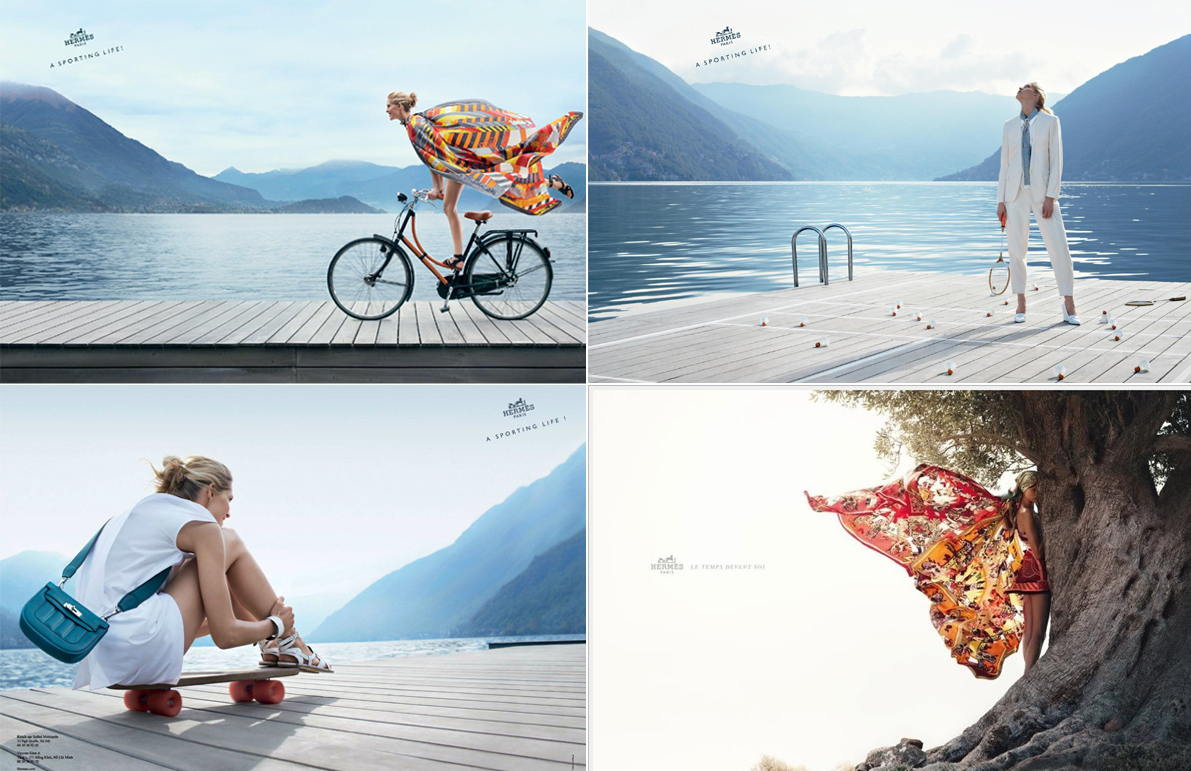
Hermes 2013 Ad Campaign
In the Final Analysis
There should be no confusion between luxury and premium or even a fashion category. When someone buys a luxury object, he/she purchases craftsmanship, cache, pedigree, made in limited quantities, a special place in the world of lifestyle and exclusivity (made for the few). The premium business model is based on the manufacturing of best-in-class products, with an image of style. Fashion is a general term for a popular style or practice, especially in clothing, foot wear, and accessories. Fashion references to anything that is the current trend in look and dress up of a person. Usually not timeless. A “luxury” and a ‘premium” product can be both – as in a tailored made fine wool suit for example.
Therein lies the major differences between a luxury product and a premium product. It’s legitimate for a premium product to seek out the most suitable and most economical manufacturing location, so long as quality and service levels can be maintained.
Brands such as Nike, Adidas, Ralph Lauren, Hugo Boss, Tommy Hilfiger, amongst others, are doing an exceptional job of selling solely an image to the masses. Indeed, far from being a genuine ‘luxury’ brand, most of their products are manufactured in low labor countries such as China.
The ‘made in’ label plays a significant role for luxury aficionados who hold higher expectations including a value added quotient to ‘luxury’ brands who produce their products in their respective country of origin – mainly France, Italy and the U.K. For categories other than apparel and accessories, production should be elsewhere in Western Europe.
In the article “Building a Luxury Brand Image in a Digital World” by David Dubois, INSEAD Assistant Professor of Marketing and Debbie Teo, INSEAD MBA, they quote the following:
“Hermès has no desire to become ‘masstige’ (a mass producer of prestige goods) the company’s CEO Patrick Thomas stated in 2009. In essence, he asserted that his brand was not in a position to dilute its image and compromise on quality in the interest of short-term results. This is truly one of very few authentic “luxury” brands befitting the model and criteria in the sense of the word.
Privately held luxury brands are prone to view business with long-term vision and remain rigid with quality over quantity. Comparatively, their publicly traded counterparts go out of their way to please their shareholders which may dilute their “luxury” status for the sake of volume and short–term gains.
Good business decisions are not the domain of tactical “bean counters” — exploiting the luxury brands for all their worth. They may also come from strategic planning and overall financial leadership.
A place which wants to attract the most discerning souls, should be unique and embody a complete lifestyle concept which combines a relaxed, holistic approach amongst an elegant setting and decor with attention to detail. This includes, clean, updated and attractive guest rooms with no amenities spared. Pleasing food & beverage prepared and presented with pizzazz are complemented by soothing music which is also an integral part of the ambiance. The attractive, smiling and well-mannered staff is dressed stylishly. All of these elements combined will, undoubtedly, seduce the senses and generate good vibes along with positive memories created.
However, is all that adequate? Today, more than any other time in history, customers are the most sophisticated and increasingly demanding – whether they’re Boomers, GenXer’s or Millennials. The total customer experience in the high-end hospitality domain requires superlative attention to customer care from the moment a booking is made, during the guest’s stay and beyond. The use of an integrated approach is essential across various touch points with the purpose of engaging and retaining customers.
The sanctuary away from home
Astute guests consider hotels they choose to be an upgrade away from home in terms of comfort and services offered. One area of particular attention in the last few years has been the bed. It has been the focus of tremendous improvement. According to J. D. Power & Associates, a comfortable bed and pillow choices are must-haves ‒ especially for business travelers. In fact, 93% of luxury hotels offer a selection of pillows.
A high-end resort developer and operator, Kerzner International, renowned for its opulent One & Only luxury resorts brand has “Blow away the customer” as it core mantra. The company walks the talk by impressing its guests through grandiose entrances, facilities, overall ambiance and luxury amenities – then making absolutely certain that they are pampered throughout their stay. It’s all an integrated, well-orchestrated and flattering process. Nothing is left to chance although it does take a coordinated team effort to make it all happen flawlessly.
The wealthy cherish their time and know what they want. Even time is a luxury and limited resource for them, thus saving time greatly trumps saving money. This is part of the reason service is crucial for them. They can be generally described as:
– Seek a higher and exacting standard with a minimum set of expectations; – Fussy in nature; – Often require customized solutions to mirror their lifestyle – whether a product or service; – Take pleasure on getting extra attention from the brands they pursue; – Prefer the uncommon to the mundane; – Expect to be offered unique choices and experiences; – Synonymous with a taste for luxury with pedigree and craftsmanship which they’re able and willing to pay; – Aspire an aura of exclusivity; – Crave an experience heightened by exceptional service along with a personal relationship; – Seek products which are different and more sophisticated – whether it’s apparel, electronics, food or insurance; – Want to feel in command of their purchase decision without any pressure.
Boutique hotels vs. corporate chains
“Boutique hotel” is a term to describe hotels which often contain luxury facilities of varying size in unique or intimate settings with full service accommodations. Sometimes known as “design hotels” or “lifestyle hotels”, boutique hotels began appearing in the 1980s in major cities across North America and Europe – mainly in the U.K. These hospitality properties are characteristically furnished in a themed, stylish and unique manner. Boutique hotels generally are known to have less than 100 rooms. Their limited capacity enables them to enhance the customer experience through personalized service, as well as to customize their property and operations. An intimate atmosphere is usually regarded as a vital part of a “boutique” hotel. This includes cozier premises, quality amenities; conceptual dining outlets that become destinations in their own right, and an environment whereby the hotel staff recognize what your needs and desires are, rather than just responding to what you ask.
Taking the personal touch to a higher level
Superb customer experience isn’t merely offering the customer what he/she asks for but rather what the discriminating customer truly desires to receive. This is accomplished by constantly exceeding of expectations through the delivery of remarkable tailored customer service with a series of personal touches. Premium and luxury hotel guests expect surprise and delight along with unusual positive experiences.
Forrester, an independent technology and market research company, defines customer experience as: How customers perceive their interactions with your company. As with brands, customer experience is not what management thinks it should be – it’s what the customer perceives it to be. Thus, it should be understood that, because experience is a customer’s perception, management doesn’t control the customer experience, but it can certainly influence it.
The challenge for hospitality organizations is to ensure that their personnel always provide at least the level of service that their guests want and expect every time, perfectly. The purpose of quality management in the hospitality industry is to ensure that customer service is consistent and flawless. Providing it is intertwined with the overspill of the needs and expectations of guests and therefore their enthusiasm (delighted guests). The element of quality of service offered by the hotel industry should be apparent, be recognized and understood by the guest, as absolutely essential element in all the stages and processes during the service delivery.
The organization’s strategy, personnel and systems are aligned to meet or exceed the guest’s expectations regarding the following aspects of the guest experience: service product, service setting and service delivery. These aspects are carefully woven together to give guests what they desire and expect, plus the wow element. It all starts with the guest. Evidently, you can’t have a guest experience without a guest to experience it. That’s the main point, without the guest to initiate it, the components such as the carefully designed service product, the detailed and inviting setting, the highly trained and motivated servers and the finest back of the house people and facilities are just an experience waiting to happen.
The evaluation of service quality is a complex process, and the guest side is primarily subjective criteria, because each person can have their own opinion. But what is it really imparts excellence in quality of service to guests and causes only positive emotions and reactions of customers when they experience an unforgettable experience?
There are four key elements that make up the quality of the generated service and identify the outstanding quality of service (Service Excellence) which are as follows:
The Guest
The service setting – environment
The service delivery system
The processes
When these four elements, coexist and perform maximally, then the chances, the qualitative result to delight the guests, are significantly increased.
The service, as a product of person to person or a series of interactions between the guest and the person delivering the service is transformed into experience for the guest. The positive or negative aspect of the experience depends on the strategy applied by each company and sets the service delivery system. The guests, the service procedures and physical data sited so as to form a quality experience for the customer service they receive. Employees, who are also the brand ambassadors, play a crucial role in the process of service delivery. They are trained specifically for this purpose and supported by the organization itself along with the organizational culture. Technology and information flows like internal and external communication.Artificial and natural elements of the service along with the human factor, in this case, define the guest experience.
The service dimensions consist of reliability, responsiveness, assurance, empathy which characterize an emotionally intelligent and spirited staff with tangible elements in the ensuing way:
Reliability reflects the service provider’s ability to perform service dependably and accurately.
Responsiveness is a strong indicator in assisting guests and providing prompt service.
Reassurance reflects the courtesy and knowledge of employees and their ability to inspire trust and confidence.
Empathy involves the caring individualized attention the brand provides its guests.
Tangible elements include the facilities, amenities and ambiance felt by the guest directly or indirectly.
A company’s reputation for excellence in the services sector can be developed and supported, as long as the firm has a strong organizational culture oriented in high quality service, customer focus throughout the organization, as well as a dynamic set of employees. They are conscientious and committed to act within the quality standards which the company has established.
For a hospitality organization to achieve high levels of customer service and maintain constant satisfaction, it should develop and implement a structured service strategy, which covers all necessary actions on what measures and actions will be taken to:
Create a customer-centric culture.
Develop and install appropriate infrastructure service delivery system.
Identify the necessary procedures to recognize and meet the needs and expectations of guests.
Refine and encourage staff to speak with the right attitudes, skills and behaviors to internal and external environment of the company and towards the guests.
Measure – evaluate the degree of guest satisfaction.
Continuously implement practices to improve internal operations and procedures relating to excellent guest service.
An experience is created when a company uses the services and goods, in such a way as to create a memorable event and to stimulate the emotional world of the guests.The more intense is the intensity of emotion, the more strongly imprinted in memory and then only is it created as a memorable experience.
Guest experience is an integral part of service excellence and absolute customer satisfaction, all of which are subject to evaluation and performance measurement of an organization. With modern techniques and methods identified and assessed the degree of customer satisfaction and the recorded positive or negative experience. The collection of information, both during the service and the configuration of the customer experience provides useful information and enables the company to rectify and remedy any failure or deviation from the quality standards prescribed.
Customer service centric hospitality businesses train staff to utilize the so called “sixth sense:” It’s the innate ability to perceive what is not seen or immediately apparent. That perception will undoubtedly offer hotels, as well as other customer driven businesses, to delight their customers. According to an article authored by Mike Metcalfe, founder of Hoteliyo, a resource and blog for hotel professionals, he suggests to define your hotel service culture. Start by creating the ‘Guest Journey’. Map out every interaction or ‘touch point’ guests will experience as the following image depicts.
Hotel guest touch points according to Mike Metcalfe of Hoteliyo
At Ritz-Carlton hotels, employees with direct contact with guests, such as the bellmen, are authorized to spend as much as $3000 to help solve a customer’s problem. At some other luxury hotels a wake-up call from the employee is not a typical, “This is your wake-up call ‒ wish you a great day”, but it also includes an offer to send up a complementary cup of coffee to get the guest’s day started.
At a Four Seasons Boston hotel video, an employee describes with pride and exhilaration how she went out of her way to personally get a guest’s luggage to the airport at the nick of time. The luggage was locked in the trunk of the customer’s rental car parked at the hotel and had lost his keys. Meantime, he had to rush to the airport without them so as not to miss his international flight.
Utilizing IT and social media to enhance the personal touch
Nowadays, luxury hotels should not neglect utilizing the benefits of IT and the internet to keep a two-way flow of continuous communication with its prospective, as well as existing clientele. This includes a fully integrated CRM system which connects sales, marketing and the administration including reservations, monitoring and responding to review sites and reaching out to social networking sites. Customer preferences are also kept on record to keep in consideration and deliver upon during the guest’s future stays.
Digital think tank L2 reported 78% of the affluent participate in social networking sites, with more than half using social media to connect with a brand, while 65% of wealthy consumers believe that brands that have no such presence are considered out of touch.
Luxury hotel chain Four Seasons, only a couple of years ago, unveiled a new website that reportedly cost a whopping $18 million to develop. It uses a holistic digital media strategy to enhance the total online experience and give a visual taste of what can be anticipated at their properties. Extensive research around digital consumption of luxury consumers, both in the travel sector and across other categories, was conducted for the development of the new website. The result of the investment is a fancy, colorful website, with a new booking process, social media integration and personal profile technology that allows users to set preferences and create a more targeted online experience. It is also optimized for mobile, which provides access to a reduced size version of the site, and includes videos, room rates and booking capabilities. In addition, locations and experiences are showcased through photo-rich, informative property and destination pages.
Upscale hotels, particularly, must offer WiFi access throughout the property at no charge. This is becoming part of the standard package that guests expect and demand. The cost, reliability and performance of WiFi in hotels worldwide has been a subject of frequent contention amongst hotel patrons.
The most notable high-tech innovation since a few years ago has been the mobile revolution. From the tablet with the iPad to the smartphone before it, they have become ubiquitous to everyday life. According to the Luxury Institute, one-third of wealthy consumers own a tablet or e-Reader such as the Kindle or Sony.
The takeaway
Any organization obsessed with customer service and the total customer experience, let alone the hospitality domain, should forgo routine and avoid unpleasant surprises. Complacency is a comfort zone which yields marginal performance. It can cause deficiencies, stifle growth and progress. This syndrome should be replaced with drive and consistent improvement. The culture of the organization, along with its structure, play a major role with the challenges it faces and how it deals with them.
As in every service sector, with an upscale hotel, every guest contact point should offer a unique and pleasant experience. Hotel brands need to use an integrated approach across their various touch points to engage their customers – commencing from the ease of their online (website) procedure or phone reservations center, during the guest’s stay, at check-out and beyond.
Placing emphasis on employee attitude/personality, empowerment, constant training, offering effortless accessibility for clients, flexibility when solving issues and presentations with style, as well as finesse. Each and every customer should be treated with personal care – a sign of individuality;
Sufficient resources and proper procedures should be implemented in hiring and training individuals with the right attitude over skills. The organization’s culture ought to support and inspire its staff to impressive achievement. An environment of mutual trust between leaders, employees, and customers should be created, along with proper rewards and incentives. This is what it takes for a human and personalized touch that retains its brand promise.
The best managed organizations have one factor in common: They are constant achievers, exude managerial excellence and possess a well-targeted CRM. The payoff will be a higher level of repeat business, referrals and profitability. Their financial performance is reflected in those results.
Ultimately, everyone in a service organization should live and breathe the brand.
___________________________________
Empirical fact references:
– Robert C. Ford, Michael C. Sturman, Cherrill P. Heaton (2011) Managing Quality Service in Hospitality.
– Parasuraman, A., Zeithaml, V., and Berry, L. (1994a). Alternative scales for measuring service quality: A comparative assessment based on psychometric and diagnostic criteria. Journal of Retailing, 70 (3), 201-230.
– Armstrong (2009). Armstrong’s Handbook of Management and Leadership. A guide to managing for results.











 Unconventional Business Wisdom for the refined entrepreneurial mindset - by James D. Roumeliotis