Category Archives: luxury storytelling

The Smell Of Exclusivity: Evolution of the Niche Perfume Market

By James D. Roumeliotis

Smell Branding Image

Open any fashion magazine and you are immediately struck by the mystique of perfume adverts. It is an industry, which combines the power to make people dream, to imagine their ability to attract, and better still seduce. It plays on the psychological heartstrings of self worth and self-perception.

When the elements come together with force, people feel sexy and desirable. Billions are spent on their consumption. Large and small houses spare no expense in their creation and marketing. Perhaps this explains why so much effort is spent on designing an appropriate package along with creating the right name.
New Display for Fragrance Collection : r/fragrance

The Commercialization of Designer Fragrances

Mainstream body fragrances are usually a blend of synthetic elements. They are produced by only a handful of firms.

Niche perfumes however, are not generally associated with fashion labels, celebs or extravagant looking bottles. Their trademarks are rare components constructed to leave an indelible mark.

Such fragrances are built on a pyramid, harness raw materials and are aromatic. Many are botanically sourced and distilled by master perfume makers. Key ingredients include Damascus rose, jasmine, citrus from Sicily or Corsica, and even tree bark such as sandalwood, juniper, and cedar.

For these reasons, trained noses are in high demand. However, the use of perfume and the selection of ingredients are cultural and even generational. Take two well-known brands as examples:

Many young clients prefer the scent marketed by Abercrombie & Fitch. It is light, sweet and attracts. Although everyone knows Chanel No.5 not everyone will wear this fragrance. It is heavy and voluptuous. Marilyn Monroe might have worn nothing else to bed, but who else follows suit? Chanel’s new advert campaign online has been designed to capture a new generation of advocates.

When Only Luxury Perfume Will Do

Recent statistics show that the demand for fragrances continues to grow most notably in the Gulf and Middle East. Euromonitor, a consumer research firm states that perfume sales in Saudi Arabia top sales in 2010 ($827.5 million) followed by the UAE, ($205.8 million) during the same year. On average, a Gulf client will spend $380 per annum on perfumes.

Lifestyle and DPI do not alone explain the stats. It is also the demand for rare elements used in their preferred fragrances some of which contain oud and amber. Just last year Christian Dior has tried to tap this lucrative market with much success.

Other classic brands such as Armani and YSL have tried to do likewise. Historically however, more emphasis was placed on naming the product and the packaging rather than the actual contents. Lifestyle has always been the key market driver when a big fashion brand launches a new perfume. They are seen as key pieces of the accessories puzzle to the brand, which can include cosmetics.

I am often reminded how such brands will even create a timepiece, which sports the brand name. However, these timepieces have nothing in common with genuine luxury watches such as a Patek Philippe.

As consumers become more sophisticated, they begin to shop around for more articulate perfumes. Think of Annick Goutal, Kilian Hennessy (Kilian Paris), Roja Dove (Roja Parfums), Serge Lutyens, or better still Frederick Malle. These houses stress sophistication as well as natural ingredients whenever possible.

The luxury brand Hermes for example, has taken great care to hire some of the noses that work for Frederick Malle. The smell Terre d’Hermes immediately comes to mind. With each creation, there is an eau de toilette and for others there is the perfume. Both products commit the client to the brand and provide accessibility as well as exclusivity, which is the hallmark of Hermes in the first place.

Distinguishing Natural Perfumes from Mainstream Fashion Brands

Contrary to popular belief, France was not the first country in the world to conceive perfumes. The ancient Greeks and Romans were devoted users of fragrance. However, Grasse, a town on the South of France, is today considered the world’s capital of perfume.

The natural perfumer is both a scientist and an artist. He/She demands rigor in his/her quest of creating beautiful perfumes including his/her “nose” as an inherent talent.

According to The Natural Perfumers Guild – the world’s largest trade association dedicated to natural fragrance, natural perfumers do not use synthetic aromatic chemicals. Natural aromatics are natural biological chemicals, thus their scents come from nature. Additionally, the need is greater than the mainstream perfumers in developing a fixative base for the perfume (so it is held onto the skin to last longer.) Mainstream perfumery has a huge number of synthetic fixatives at their disposal, and natural perfumers do not, and would not, use them. Moreover, the bottles or body care containers are filled by hand which, typically, makes the entire process personal.

Niche perfumery maker Creed, established in 1760 and one of the oldest, uses such methods of hand production, including maceration and filtration, instituted at the company’s founding. It is the industry’s firm proponent of natural ingredients in fragrance. As a result, it has a loyal following that includes royalty, Hollywood stars, political leaders, legends in business, sports, music and the fine arts as well as discerning members of the public who value beauty and quality in scent.

Applying the slogan, “Fragrance without compromise” to his brand ethos, Frederick Malle  runs the exclusive fragrance boutique in Paris, Les Editions Du Parfum. His shop and the niche perfumes he sells epitomize how the luxury perfume trade has moved on from just name brands to something beyond marketing hype.


Of Art and Storytelling

The fragrance industry is a very personalized one. For this reason, niche perfumes for the discerning and affluent are growing rapidly. This sector is creating new trends in the beauty and fashion world through a niche/artisan approach. As the perfume market grows in important markets including the Middle East and BRIC countries, and as companies expand outward, the traditional perfume tastes are affecting the world of perfumery. Thus, these highly coveted and hard-to-find perfume notes are becoming ever so popular. Those boutiques able to offer the most sought after fragrances such as oriental amber, Agarwood (oud), and musk amongst others, along with their striking ambiance, will distinguish them from their competitors.

Customers expect highly trained staff at bespoke perfumery shops to understand the art of fragrances such as the origins and chemical make-ups as they are able to tell a customer why a certain fragrance will or will not work with her/his body chemistry and suggest alternatives. This includes the suitability of a perfume to someone’s skin chemistry and diet.

At specialty perfumery shops such as Madison, with a location in Bucharest and Budapest, fragrance aficionados will find an exclusive array of scents, niche colognes, hard-to-find perfumes, room scents, and incense. The 46 or so brands they carry are not available in traditional department store beauty and cosmetic counters.

The Role of the Influencer in the Fragrance Domain

With the advent of in the social media sphere, most notably on YouTube, the “influencer” persona was born. An influencer is someone in a niche or in a specific industry with sway over a large target audience. This individual can also persuade others to act based on their recommendations.

The fragrance domain has several of its own. These passionate souls with their YouTube channel have amassed hundreds of thousands and in some cases, over a million subscribers. One of those on the top spot is former German model, “Jeremy Fragrance” (née Daniel Sredzinski). Jeremy vlogs about both women’s and men’s perfumes and features niche fragrances as well as the popular scents. He is a smooth-talking YouTuber who began his video platform in 2014, He has a high influencer equity score. Another one on the top three spot, is New Yorker Tiff Benson, a fragrance and beauty vlogger and blogger. She shares perfume reviews on YouTube who also writes about beauty and lifestyle topics on her eponymous blog. Tiff is part of the Sephora Squad and founder of The Fragrance Society.

The Olfactory Take – in search for something new and singular

Great perfumes are like works of art. They are inspiring, delightful and memorable – despite their staid looking bottles in contrast to those of the designer house perfumes. Perfumes and emotions are also linked together since they impact our mood considerably. They are the new luxury category which is treated as a work of art.

The lesser-known fragrance brands are often touted by celebrities who publicly declare their preference for them, because of the mystique and rarity they possess. Niche labels often use exotic and rare ingredients which make their brand stand out from the rest. The more than two century old Creed Perfumery has a large freestanding store in New York, considered one of a kind in North America, where it sells its own limited produced fragrances.

Small and privately owned fragrance producers are, for the most part, family run – which make them personally involved in all aspects of the productions process. Their uniqueness ranges from fine-quality ingredients stories of pedigree to environment-friendly practices. Such niche brands normally cater to a small, yet extremely loyal clientele. Personalized service, through well trained front line staff, adds to the emotion, as well as the total customer experience demanded by its discerning patrons.

_____________________________________________

Request your TWO FREE chapters of this popular book with no obligation.
EntrepreneurialEssentials - FrontCover Final

2 Comments

Filed under Branding, Business, Luxury, luxury storytelling, Marketing, niche perfumery, selling luxury

Luxury vs. Premium vs. Fashion: Clarifying the Disparity

by James D. Roumeliotis

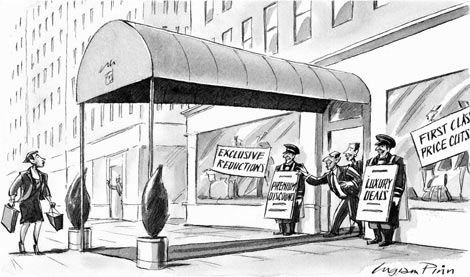
Luxury vs Premium image

Add to FacebookAdd to DiggAdd to Del.icio.usAdd to StumbleuponAdd to RedditAdd to BlinklistAdd to TwitterAdd to TechnoratiAdd to Yahoo BuzzAdd to Newsvine

Luxury Brand Management is sometimes like weather forecasting. With the media and fashion industry in full tilt this autumn, there is wave upon wave of adverts, campaigns, and promotions. Within the glitzy magazines and online videos geared to seduce, consumers and even those within the industry have a difficult time distinguishing luxury from premium brands.

Price is not the only determinant. Add the crossover product strategies between the 2 types of brands and there is more confusion still. Luxury enthusiasts are always looking for the “best”. The problem arises on what this term really means if it means anything at all. Most studies indicate that the term “luxury” is highly subjective.

For this reason, I have decided to try to clarify this important topic and booming business sector.

Take for example the terms, “premium”, “luxury” and “fashion”. Is it possible to define and portray these ethereal ideas in concrete terms? Marketing hype blurs the lines, and of course, this is intentional only adding to the misinformation among diverse constituent audiences.

Defining Luxury

Definitions of “luxury” vary enormously and depend on with whom you discuss the topic and in what context. The term “Luxury” has never been something easy to define. It is relative, mysterious and elusive. In essence, it revolves around subjective criteria in the mind, which creates a mood and what is generally referred to today as lifestyle.

Gary Harwood at HKLM, one of the founders and directors of a leading strategic branding and communication design consultancy, stated:

“A luxury brand is very expensive, exclusive and very rare – not meant for everyone. When it ceases to be these things, then it’s lost its exclusive cachet. Commoditizing luxury brands and making them more accessible to the middle market puts them at risk of becoming ordinary, common and less desirable. And the more available a brand is, the less luxurious it becomes.”

Authentic luxury brands compete on the basis of their ability to invoke exclusivity, prestige and hedonism to their appropriate market segments not the masses. There is a classic litmus test:

Is the product manufactured in artificially limited quantities?
(i.e. the rarity factor)

Does the firm have a story to tell? (i.e. history & pedigree)

Is the firm portraying a unique lifestyle?

Is craftsmanship the hallmark, which delivers products that only High Net Worth individuals (HNWI/UHNWI) can purchase without question?

Does the brand offer authenticity?

Identifying Luxury Sectors

Luxury is classically defined in two key segments:

1) Luxury Goods: Fashion & Accessories, Watches & Jewelry,
Well-being & Beauty products

2) Lifestyle Purchases: Automotive, Experiential Travel, Home & Interiors, exclusive alcoholic beverages (read exceptional wines, champagne & spirits)

Brands Which Claim Authentic Luxury Status

Few brands can really claim the trademark of luxury. Those that do combine allure, sex appeal with pedigree and quality. Discounting is not part of their strategy and their entire raison d’être is geared to UHNW (Ultra High Net Worth).

Anyone in this business can rattle off the litany of names recognizable to most people:

Hermes, Chanel, Louis Vuitton, Bottega Veneta, Rolex and Cartier.

Other players to this core list include: Bentley, Rolls Royce, Gucci, E. Goyard, Charvet, Salvatore Ferragamo, and Bulgari.

Contrast the above lists with Daimler’s Mercedes-Benz. This firm has reduced its cachet ever since it introduced the entry levels A, B Classes respectively and the SMART car.

The firm also does not hesitate to harness frequent promotions to boost sales revenues. This type of strategy is pursued when the board is under pressure from stakeholders to tap what is referred to as affluent consumers of the mass market. DPI (Disposable Personal Income) of this segment is over $100,000.

Because of this strategy such brands can no longer be considered as “luxury” in the true meaning of the term.

Genuine luxury purveyors should remain relatively small and select in their industry. Wealthy consumers purchase luxury products because they seek to distance themselves from the mass through the emotional value of acquiring flawless and rare objects of desire.

Luxury service brands follow a similar pattern. On the basis of my expertise and experience I would list Hotel de Crillon, Hotel Plaza Athenée, Ritz Carlton, and Hotel du Cap. All these hotels provide the perfect luxury experience of outstanding service, exclusivity, and pedigree.

Identifying department stores is a bit more tricky considering the makeover of this retail concept in the last 15 years. Despite the changes consider the following 3: Harrods (UK), Le Bon Marche (France), and Saks Fifth Avenue (USA).

Exclusive and bespoke travel companies provide tailor made adventures and excursions. The four key players in this category include: Abercrombie & Kent, Kuoni, Orient-Express and Cunard Line.

Broadening our view of luxury services, certain firms offer services and privileges to a rare percentile. Such services include credit cards with no limits, jet ownership, private plan charters, global concierge services and the like. Think NetJets and Amex.

Considering magazines, if I were asked to name one magazine catering to this crowd and speaks its language, I would nominate: Monocle. It has been described in certain circles as “Foreign Policy meets Vanity Fair.”

“Premium” Clarified

If luxury brands are related to scarcity, quality and storytelling then premium goods, on the other hand, are expensive variants of commodities in general: i.e. pay more, get more.

These brands are less ostentatious, more rational, accessible, modern, best in class, sleek design, and manufactured with precision.

For example, take the case of L’Oréal. The firm is a giant in the cosmetics sector. It positions its “premium” products with subtly. Clients get the luxury feel they hanker for and the presentations are done with élan.

Dior on the other hand makes no pretense. It is categorized as a luxury beauty product and is priced accordingly.

What about Fashion?

This is quite a question. Is it luxury, premium or neither? If you were to stroll into Camps de Luca in Paris for a bespoke suit, you will be treated like royalty and the titans of business, who make up the firm’s client base. Afterwards, you can meander over to Place des Victoires and place an order at arguably the best shirtmaker, Charvet and order a dozen shirts cut to your specifications in sea island cotton.

Clearly, these firms are luxury in every meaning of the term.

Designer labels or “fashion houses” are a different kettle of fish. Some can be quite pricey. However the nature of fashion is ephemeral and change. Pick up a copy of September Vogue and judge for yourself.

Do not confuse what you see in Vogue with “haute couture”. This niche is always there and the French keep it this way. Clients are limited by definition of the cost involved, not to mention the intense hand labor, fabric selection, and attention to the tiniest details.

These luxury fashion statements convey ostentation, glamor, lavishness, and elegance. They are one-of-a-kind garment.

The following fashion houses measure their creative worth with the designer talent, which marks the brand: Chanel, Hermes, Ralph Lauren, Burberry, Brioni, Prada, Gucci, Dior, LV, Valentino, YSL, and D&G.

Needless to say, quality control is fundamental and is offered in lifestyle controlled environments at the above brands flagship stores worldwide.

Luxury Time Waits for No One

If you need a watch to tell time, a Timex vintage piece made simply for that purpose will do the job. If you want to make a statement that you have arrived, you will undoubtedly look to see which watch best suits your personality and budget. Think James Bond and the flagrant exposure of Rolex and later Omega.

Luxury timepieces exist in many categories and can accommodate a wide variety of budgets. A good example of an entry level timepiece is a Movado at $500. At the other end of the spectrum, you could chose a Chopard at $70k. Watches are often sold via adverts of sports heroes or movie stars. The reasons are clear. Personification and self-identity play a large role in watch acquisition and social status.

Chronocentric categories watch brands in the following groups:

Basic Luxury Watches
Description: Attractive and functional
Brands include those of fashion designers such as Michael Kors, Fortis, and Movado.

Retail prices: > $1,000 stainless steel; ( >$2,000 for gold)
Strategy: Moderate to heavy discounts available among specialized dealers.

Pseudo Luxury Watches
Description: elegant and stylish
Brands: Baume & Mercier, Raymond Weil, Tag Heuer

Retail prices: $500-$2,000 (steel); $750-$4,000 (gold)
Strategy: discounting via accredited dealerships

Luxury
Description: accent is on prestige. Quality and durability are stressed. Elegance and value underpin the watch.

Brands: Breitling, Cartier, Ebel, Omega, Rolex

Retail prices: $1,000-$4,000 (steel); $2,500-$8,000 (gold with leather strap); $5,000-$20k (gold with gold bracelet)

Strategy: modest discounts sometimes available via brand-authorized dealers. (The unauthorized “gray market” can give bigger price breaks)

High-End Luxury
Highly crafted timepieces made by experts. These watches are highly “refined” and easily recognized by collectors and people “in the know.” Sold with a strong emphasis on exclusivity, design, and craftsmanship. Produced in small numbers, available via specialized dealers. In short, these are the Rolls Royce class of timepieces.

Brands: Alain Silberstein, Audemars Piguet, Blancpain, Breguet, Franck Muller, JLC, Parmigiani, Patek Phillipe, Ulysse Nardin, Vacheron Constantin.

Retail prices: starting at $5000 (steel); starting at $20k (gold). Some watches can exceed $2m.

Selection

Watch selection is highly personal. This is true no matter what the person’s budget. Even if you are shopping in a budget category, there are many to chose from. Think Swatch or Nixon.

However, once a person seeks to make a watch statement then choice will be determined by social class, DPI, sports inclinations, sense of self-esteem, pedigree, craftsmanship and of course function. Your average person does not need a chrono watch with its multiple dials and buttons. Yet, the 25-35 year old segment see these pieces as a station in life.

A youngish successful profile will not usually be drawn to a Patek Phillipe. But someone over 40 will. Most Westerners will not go gold unless it is old gold meaning a vintage high end timepiece, which is thin and elegant.

You will also notice that in certain milieus that watch brands count. People weigh there status, revenue generation, prestige in tandem to the watch or even watches that they own and collect. Lastly, even though there are many successful business women who own and wear high-end watches, men seem to be the more obsessed. This can be attributed to the fact that it is one of the few pieces of jewelry a man can wear and not draw too much attention to himself.

Baby You Can Drive My Car

In my other two columns, I tried to clarify the differences between “luxury” and “premium” in the fashion industry and in the horology markets. Similar problems also exist when assessing the automobiles.

It is quite clear to most professionals that luxury cars carry high price tags many of us normal mortals would consider exorbitant. Price aside a luxury car should embody a cache selling prices. Read here: exclusivity, pedigree, craftsmanship and limited production.

R.L. Polk and Company, a global automotive information and marketing firm that provides solutions to automotive and related industries, has re-defined the term with the appellation, “super luxury”, i.e. cars that cost +$100k. This category includes brands such as Rolls Royce, Bentley, Aston Martin, Maserati, and until 2013, Maybach, by parent Daimler AG.

Premium cars are defined as those, which offer clients cutting edge design and technology. Their target market are individuals in the upper middle class. Some label these vehicles as such because they have creature comforts with all the bells and whistles.

Cars in this category normally range from an entry level BMW 1 or 3 series (depending on the country) from ~ $30k- +$95k.

Competition for market share in the profitable premium category is fierce amongst rivals BMW, Mercedes Benz and Audi, along with their Japanese counterparts Lexus and Infiniti.

Acura and Volvo are not regarded as strong contenders. Instead, they are viewed as part of the compact executive car segment. This category is a combination of the standard class vehicles from the top name brands and top models from automakers not necessarily known as being premium category brands.

Impeccable service is also another important measure for premium automobile brands with a strong emphasis on the total customer experience.

At the same time, we are witnessing aspiring premium brands from deep rooted economy class automobile manufacturers such as Hyundai with their Genesis (including the coupe version) and Equus models. However, compared to their established counterparts, they’re lacking “brand cachet”, thus in their clever marketing, Hyundai is pitching “Smart Luxury & Engineering” as its differentiator.

There had been internal discussions within Hyundai about creating a separate brand to feature the Genesis sedan as well as the imminent Equus sedan in North America, but due to prohibitive costs and potential delays, those models will still remain labeled with the Hyundai brand.

For exotic sports cars such as Ferrari, Lamborghini, Bugatti and others, Ferrari chairman Luca Cordero Di Montezemolo, explained at a recent FT Business of Luxury Summit:

“I tell my employees listen, be careful, we are not selling a car, we are selling a dream. Because we sell something that is not a typical car, in this rests the emotion of driving.”

Ordering any one of those cars can quote an average wait of 24 months before delivery.

As with the ultra luxury cars, the exotic sports car (limited) producers are now offering their own customization program. Ferrari, for example, offers no limit on imagination to potential buyers who want something different or want to make their Ferrari unique to them.

The Takeaway

The proliferation and marketing misuse of the word “luxury” on many products across sectors is quite evident. Brands either do it out of ignorance or to enhance the desire for the consumer to purchase their products.

Some “premium” products are labeled as “luxury” and promoted that way vigorously. This is where mass brands imitate luxury and its characteristics. As a result, it has caused confusion amongst consumers along with plenty of fancy jargon adding to the perplexity.

Luxury is not premium – and premium is not luxury. They are two dissimilar categories catering to different market segments.

A luxury brand is more about prestige and appearance – it’s about pedigree and social stratification. As objects of desire, they stand out as aspirational to all but a few souls. These crucial elements keep these products exclusive on purpose. Premium, on the other hand, stands for performance, value added, state-of-the-art, craftsmanship, and timeless design.

Certain brands deliberately generate this confusion, while others can’t figure out the messages they want to send to potential clients themselves. Obviously, the wealthy know the difference. Perhaps now, so will you.

__________________

Your views are welcome

Add to FacebookAdd to DiggAdd to Del.icio.usAdd to StumbleuponAdd to RedditAdd to BlinklistAdd to TwitterAdd to TechnoratiAdd to Yahoo BuzzAdd to Newsvine

12 Comments

Filed under Branding, Business, discerning clients, discriminating clients, Luxury, luxury storytelling, Marketing, selling luxury, what is fashion, what is luxury, what is premium