Tag Archives: entrepreneurship success

Is Anyone Truly Self-Made? The Truth Behind Business Success

By James D. Roumeliotis

Everyone loves the idea of the ‘self-made’ entrepreneur—the lone wolf who built an empire from scratch with nothing but grit and hustle. It’s a powerful story…but how accurate is it, really? In this article, I’m unpacking what self-made actually means—and what it really takes to succeed in business and become a multi-millionaire.

The Myth of the “Self-Made” Entrepreneur

The term self-made implies starting from zero—with no help, no resources, just pure effort. But when we dig into the stories of even the most celebrated entrepreneurs, the truth is more nuanced.

Examples:

  • Jeff Bezos: Is often seen as a self-made billionaire, but his journey was supported early on by a privileged background—including a $245,000 investment from his parents and an Ivy League education from Princeton.
  • Kylie Jenner: Labeled the youngest self-made billionaire—but her family’s fame and influence opened enormous doors.
  • Oprah Winfrey: A more authentic self-made story—overcame poverty and systemic barriers, but even she had key mentors and strategic alliances.

Most success stories involve more than just grind. They involve access, support, and strategy.

The 5 Real Levers of Business Success

1. Your Network

  • “It’s cliché but true—your network is your net worth.”
  • Access to decision-makers, mentors, early adopters, or investors can fast-track your growth.
  • Example: Many Y Combinator alumni cite their founder network as their greatest asset, not just their funding.

2. Access to Capital

  • Businesses bleed cash before they break even.
  • Bootstrap? It’s possible. But capital unlocks speed, marketing, and talent.
  • Example: Airbnb raised $20k from friends and family before scaling. That small early boost mattered.

3. Market Timing

  • Success is often about launching at the right time.
  • Example: Zoom launched years before the pandemic, but timing and infrastructure made it the default in 2020.

4. Unique Value Proposition

  • What makes you different in the market? Without this, even millions in funding won’t help.
  • Example: Spanx by Sara Blakely succeeded because it solved a real and specific customer pain point.

5. Resilience + Iteration

  • It’s never one shot—it’s multiple pivots.
  • Example: Shopify started as a snowboard shop before pivoting to become an e-commerce platform.

True entrepreneurs build by themselves, but rarely alone.

What “Self-Made” Really Looks Like

Being self-made doesn’t mean you did everything solo—it means you leveraged what you had, invested in relationships, and adapted relentlessly.

Characteristics of Self-Made Entrepreneurs:

  • Resourcefulness over resources
  • Learning quickly and acting on data
  • Humility to ask for help
  • Willingness to take risks others avoid
  • Clear long-term vision

The ‘self-made’ label often overlooks the invisible structures that helped someone succeed—supportive ecosystems, education, financial backing, or early access.

And here’s the truth—none of that diminishes their success. But acknowledging those advantages helps us all build smarter, not just harder.

If You’re Starting From Scratch?

If you don’t have connections or funding—what can you do right now?

Practical Steps:

  • Build social capital: Attend meetups, LinkedIn networking, Twitter communities.
  • Micro-start: Start with what you can validate cheaply. Lean MVPs over flashy launches.
  • Join ecosystems: Accelerators, coworking communities, mastermind groups.
  • Use the internet: We’ve never had more access to learning, collaboration, and low-cost tools.

“You don’t need privilege to start, but you do need strategy to grow.”

In the End

So, is anyone truly self-made? Maybe not in the absolute sense. But if you take ownership of your path, build smart, and keep learning—you can make something extraordinary on your terms.

___________________________________________________

Visit my business SAVVYPRENEURSHIP channel and if you like the content, kindly subscribe to help me grow the channel.

https://www.youtube.com/@Savvypreneurship

Leave a comment

Filed under 1, entrepreneur, entrepreneurship, entrepreneurship success

What Products and Services Must Do to Flourish: Increasing the Odds at Profiting in a Competitive Market

By James D. Roumeliotis

Image result for increasing chances of product success

Following three decades of personal business experience in three countries, as well as through constant observation of successful businesses, for products or services to increase the rate of triumph, they should perform at least one of the following:

  • Solve a problem: Whether for the B2C or B2B market, focus should be on building a “must” have not a nice to have product. Consumers are overwhelmed with a plethora choice on daily basis. Attention spans are getting shorter and only few products are getting noticed. As a result, a product or service should be doing something different and better to succeed by being in demand.

Examples: Amazon simplified online buying and selling. Poo-Pourri solved the stinky bathroom problem, Spanx solved the comfort of leggings.

Also consider inventing any product in the health & wellness sector which diagnosis and prevents any potential diseases such as colon cancer etc., or in the privacy & security domain protecting consumer data on personal devices.

  • Make lives easier – offer convenience

Examples: The invention of the GPS (replace paper maps), wireless charging (did away with power cords), voice-command devices such as the TV command remote (eliminated having to use a plethora of buttons), smart wireless home (remotely control various factors of the home environment), Blue Apron (a meal experience that customers create with the original recipes and fresh, seasonal ingredients that are included in every box.)

Fintech: “Computer programs and other technology used to support or enable banking and financial services.” It is “one of the fastest-growing areas for venture capitalists.” According to Forbes,  examples of Fintech-related companies or products include: Payment infrastructure, processing and issuance such as services provided by Square and Stripe; Stock trading apps from TD Ameritrade and Schwab; Alternative lending marketplaces such as LendingClub, and OnDeck.

Also, urban farming — growing commercial ready fresh, sustainable and local vegetables with no pesticides. Examples are La Caverne in Paris, Badia Farms in Dubai or Lufa Farms in Montreal to name a few.

  • Disrupt an existing well-established business/product/service. Disruptors create a way of doing things which displaces the existing market leaders (a product or service), and eventually replace the original players in their sector.

Consider Uber (taxi industry), Airbnb (hotel space), iRobot (vacuum cleaning chores), Beyond the Meat (looks like and tastes like real meat though plant based).

  • Sell hope – after using these products and services, lives will be easier, better, and changed somehow.

Examples: Cosmetics, skin enhancement injection services and products such as Botox, financial planning products for a comfortable retirement.

  • Offer a lifestyle enhancement

Examples: Red Bull (“gives you wings”/vigor), Vans sneakers, Apple products, and recreational lifestyle pharmaceutical products such as Viagra and Cialis.

  • Provides a social status: Think (authentic) luxury products and services or green products.

Examples: American Express Platinum charge card, Business and First-Class on airlines etc.

Green status products may include the Prius hybrid automobile and the Tesla (ditching the ubiquitous internal combustion engine with its use of fossil fuel).

  • Offer a better version of an existing (generic) product or service (“Premium”) – upper mid-to high price range appealing to discerning/very demanding consumers. This business model seeks a higher profit margin on a lower sales volume. Services and subscription models are a much more sustainable than physical products.

Example: Nestlé has its Nescafé line (various types) of coffee but also offers its top of the line Nespresso line (a separate company division).

  • Sell niche, exclusive or viral products online:

-Reach an audience with a shared identity regardless of location.

-Exclusivity has its devotees and offers the illusion of scarcity.

-There are several factors that influence the virality of a product and they range from the emotional impact to the visibility that the product delivers.

Examples: Keto(genic) foods, vegan foods, Matcha tea, all natural pet food and/or accessories with a fashion statement, bamboo toothbrushes, yoga/health retreats, specific branded apparel and footwear are just a few good ideas mentioned.

In addition, if choosing to deal strictly with B2B, what is recommended as businesses are:

  • Act in a capacity of a Consultant or Broker (services, with no inventory to purchase, store and sell) but preferably with unique knowledge and exclusivity respectively;
  • Be a wholesale supplier of specialized raw materials, parts or ingredients rather than focus on the retail space (CPG or CE domain). Building a brand in the mind of a consumer is a lengthy and costly affair.

In the end…

…with any or several categories of the above recommendations, as an entrepreneur, your product or service  has a great shot at profiting in a competitive market. A contrarian with  innovation tendencies can make a difference. Never think short term and always consider adding value if you want to truly succeed in business.

_____________________________________________________

Request your TWO FREE chapters of this popular book with no obligation.

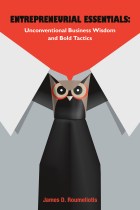
EntrepreneurialEssentials - FrontCover Final

Leave a comment

Filed under 1, Business, business development, business model, business plan, Business success, business vitality, entrepreneurship, entrepreneurship success, launching a business