
Category Archives: starting a business

How to Increase Your Chances of Startup Success

You don’t need a perfect logo. You don’t need a fancy office. And you definitely don’t need to “wait until the time is right.” But you do need a few non-negotiables. Because here’s the truth…most businesses don’t fail because of bad ideas. They fail because of poor execution, weak fundamentals, and unrealistic expectations. In this article, I break down what you actually need to start a business and how to dramatically increase your chances of success.

You Need a Problem Worth Solving

Every successful business starts with one thing:

A real problem.

Not a trendy idea.
Not “I want to be my own boss.”
Not “This sounds cool.”

A problem.

Look at Airbnb.

The founders couldn’t afford rent. Conferences were overbooked.
They solved an accommodation shortage problem.

Or Uber Technologies.

People couldn’t easily get reliable transportation in major cities.

The clearer the problem, the clearer the opportunity.

Ask yourself:

What frustration am I eliminating?

If you can’t answer that in one sentence — refine it.

You Need Market Validation

An idea is not a business.

Revenue is proof.

Before you build the website, order inventory, or quit your job — validate.

• Pre-sell the service
• Offer a pilot version
• Run a small test campaign
• Get 5 paying customers

Even Dropbox, Inc. validated demand with a simple demo video before building the full product.

Validation reduces risk.

It tells you whether people will actually pay.

Not just say, “That’s cool.”

You Need Financial Discipline

This is where many entrepreneurs fail.

You need:

• Startup capital (even if small)
• Clear expense tracking
• A runway — ideally 6 months of living expenses
• Separation between business and personal finances

Most businesses die from cash flow problems — not lack of passion.

You don’t need millions.

But you do need control.

Start lean.

Test before scaling.

Protect cash.

You Need Skill…Not Just Motivation

Motivation fades.

Skill compounds.

You must either have — or develop — skills in:

• Sales
• Marketing
• Communication
• Financial literacy
• Negotiation

Look at Sara Blakely.

She didn’t come from fashion.

But she mastered selling and pitching.

And she turned Spanx into a billion-dollar brand.

Your business will only grow to the level of your competence.

Invest in learning.

Read.
Study.
Practice.

You Need Systems Early

This is where businesses transition from hustle to structure.

From day one:

• Track leads
• Document processes
• Standardize delivery
• Use accounting software

Even if you’re solo.

Systems allow scale.

Without systems, growth becomes chaos.

With systems, growth becomes predictable.

You Need Resilience

Entrepreneurship is not linear.

You will:

• Lose clients
• Make mistakes
• Misprice projects
• Face rejection

Resilience is not optional.

It’s required.

Even companies like Starbucks struggled in early expansion stages and had to restructure.

Failure is data.

Not identity.

Your ability to adjust determines survival.

You Need a Long-Term Vision

Short-term thinking kills momentum.

Ask:

Where do I want this business in 3–5 years?

Lifestyle business?
Regional expansion?
National brand?
Acquisition target?

Your decisions today shape that outcome.

If you want scale — build infrastructure.
If you want freedom — build delegation.
If you want legacy — build brand.

Clarity drives strategy.

Final Takeaway

To increase your chances of success, you need:

1) A real problem, 2) Market validation, 3) Financial discipline, 4) Valuable skills, 5) Systems, 6) Resilience, 7) Long-term vision…not perfection…not hype…not overnight success.

Business is not about inspiration…it’s about execution…and the entrepreneurs who win? They stay consistent long enough for momentum to compound.

______________________________________________________

Visit my business SAVVYPRENEURSHIP channel and if you like the content, kindly subscribe to help me grow the channel.

https://www.youtube.com/@Savvypreneurship

Leave a comment

Filed under entrepreneurship, entrepreneurship success, start-up, starting a business, starting a business success, startup, startups, start-up, entrepreneurship, beauty business, wellness business, wellbeing business

How Inventors Can Successfully Bring Their Ideas to Market

By James D. Roumeliotis

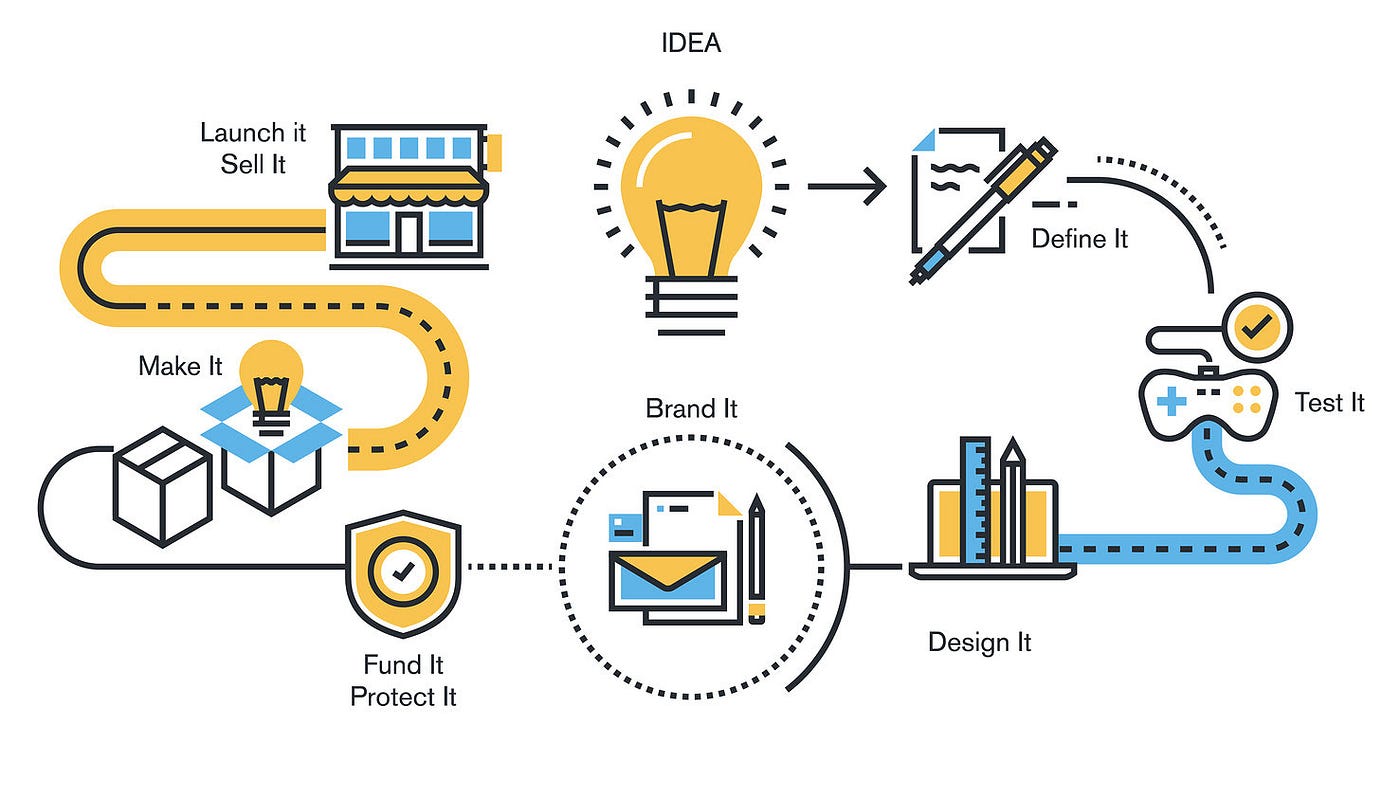
Are you an inventor sitting on a groundbreaking idea but unsure how to bring it to market? Well, your timing is ideal. In this article, I dive into the step-by-step process of preparing your invention for a successful launch. From developing a Minimum Viable Product (or MVP) to securing intellectual property rights, and even lessons from famous inventors—I’ve got you covered. So, let’s jump right in!

STEP 1 – VALIDATE YOUR IDEA WITH A PROOF OF CONCEPT

Every successful invention starts with an idea, but before you invest significant time and money, you need to prove that your idea works. This is where a proof of concept comes in. A proof of concept demonstrates that your invention is feasible and addresses a real-world problem.

Take James Dyson, for example. Before launching the Dyson vacuum cleaner, he built over 5,000 prototypes to ensure his cyclone technology was effective. Start small and test on a basic level—this will help you refine your concept and gain confidence in your invention’s potential.

STEP 2 – DEVELOP A MINIMUM VIABLE PRODUCT (MVP)

Once your proof of concept is solid, it’s time to develop a Minimum Viable Product, or MVP. An MVP is a simplified version of your invention that includes only the most essential features. The goal? To test your product with real users and gather feedback without spending a fortune on full-scale production.

Take Eric Yuan, the founder of Zoom. His initial version of Zoom wasn’t the polished platform we use today—it was a barebones video conferencing tool focused on usability and reliability. By testing his MVP with early adopters, he built the foundation for one of the most successful software platforms in the world.

For your invention, focus on delivering value while leaving room for improvement. This approach not only saves you money but also helps you avoid wasting resources on features users might not need.

STEP 3 – SECURE YOUR INTELLECTUAL PROPERTY (IP)
One of the most critical steps in preparing to bring your invention to market is protecting your intellectual property. Without it, your invention could be copied or stolen.

Patents are a common way to protect your invention. A utility patent, for example, covers functional aspects of your product, while a design patent protects its appearance. Filing for a patent can be complex, so consider hiring a patent attorney to guide you through the process.

A famous example is Steve Wozniak and Steve Jobs securing a patent for the original Apple computer. This protection gave Apple the legal foundation to dominate the personal computer market.

In addition to patents, think about trademarks for your brand name and copyright for any creative elements tied to your invention.

STEP 4 – CREATE A GO-TO-MARKET STRATEGY

With your MVP and IP in place, the next step is to craft a go-to-market strategy. This plan outlines how you’ll introduce your invention to the world. Ask yourself: Who is your target market? What’s your pricing strategy? Which distribution channels will you use?

For example, Sara Blakely, the inventor of Spanx, started small by targeting women in need of shapewear. She personally pitched her product to department stores, leveraging word-of-mouth marketing and small-scale campaigns. Her hyper-focused strategy eventually turned Spanx into a billion-dollar brand.

Whether it’s online marketplaces, direct-to-consumer sales, or retail partnerships, choose a distribution method that aligns with your audience and budget.

STEP 5 – TEST THE MARKET AND ITERATE

Launching an invention doesn’t end with putting it on the shelves—it’s just the beginning. Testing your product in the market allows you to gather valuable feedback and make improvements.

Remember the story of the Ring Video Doorbell? Founder Jamie Siminoff first introduced it as a Wi-Fi-enabled doorbell originally called Doorbot. While it had potential, early users identified several flaws. Instead of giving up, Siminoff listened to feedback, improved the product, and rebranded it as Ring. Fast-forward to today, and Ring is a household name, eventually acquired by Amazon for over $1 billion.

STEP 6 – BUILD YOUR BRAND AND SCALE

As your invention gains traction, focus on building a strong brand. A recognizable brand creates trust and loyalty among customers. Invest in professional design, a compelling story, and marketing campaigns that highlight the value of your invention.

Elon Musk’s Tesla is an excellent example. Tesla’s branding is synonymous with innovation, sustainability, and cutting-edge technology, making it a leader in the electric vehicle market.

FINAL TIPS AND ENCOURAGEMENT

Bringing an invention to market isn’t easy, but the rewards can be life changing. Start small, protect your ideas, and don’t be afraid to pivot based on feedback. The most successful inventors—whether it’s Dyson, Blakely, or Siminoff—all share a common trait: perseverance.

Your invention has the potential to change the world. So, take that first step, and don’t let fear hold you back.

________________________________________________________

Visit my business SAVVYPRENEURSHIP channel and if you like the content, kindly subscribe to help me grow the channel.

https://www.youtube.com/@Savvypreneurship
Leave a comment

Filed under 1, entrepreneur, entrepreneurship, entrepreneurship success, Launch to Market for Inventors, starting a business