PASSAGES: 15 Quotes for New Year Contemplation

Add to FacebookAdd to DiggAdd to Del.icio.usAdd to StumbleuponAdd to RedditAdd to BlinklistAdd to TwitterAdd to TechnoratiAdd to Yahoo BuzzAdd to Newsvine

“An empowered organization is one in which individuals have the knowledge, skill, desire, and opportunity to personally succeed in a way that leads to collective organizational success.”

─ Stephen R. Covey

“No institution can possibly survive if it needs geniuses or supermen to manage it. It must be organized in such a way as to be able to get along under a leadership composed of average human beings.”

─ Peter Drucker

“Hire people, who are better than you are, then leave them to get on with it. Look for people who will aim for the remarkable, who will not settle for the routine.”

─ David Ogilvy

“Be willing to make decisions. That’s the most important quality in a good leader. Don’t fall victim to what I call the ‘ready-aim-aim-aim-aim syndrome’. You must be willing to fire.”

 ─  T. Boone Pickens

“You will never understand bureaucracies until you understand that for bureaucrats, procedure is everything and outcomes are nothing.”

─ Thomas Sowell

“If you pick the right people and give them the opportunity to spread their wings and put compensation as a carrier behind it you almost don’t have to manage them.”

─ Jack Welch

“What’s a brand? A singular idea or concept that you own inside the mind of the prospect.”   

─ Al Ries

“Improving your brand is an investment in building your personal profile, reputation and the results you will achieve.” 

─ Rachel Quilty

“If you don’t get noticed, you don’t have anything. You just have to be noticed, but the art is in getting noticed naturally, without screaming or without tricks.”

– Leo Burnett

“You’ll never have a product or price advantage again. They can be easily duplicated, but a strong customer service culture can’t be copied.” 

─ Jerry Fritz

“People don’t want to communicate with an organization or a computer. They want to talk to a real, live, responsive, responsible person who will listen and help them get satisfaction.”

─ Theo Michelson

“Design is the method of putting form and content together. Design, just as art, has multiple definitions; there is no single definition. Design can be art. Design can be aesthetics. Design is so simple, that’s why it is so complicated.”

─ Paul Rand

“During a political campaign everyone is concerned with what a candidate will do on this or that question if he is elected except the candidate; he’s too busy wondering what he’ll do if he isn’t elected.”

─ Everett Dirksen

“Effective communication is 20% what you know and 80% how you feel about what you know.”

─ Jim Rohn

The quality of life is determined by its activities.”  

Aristotle

10 Second Survey

I’m planning something neat for those who participate here. If you don’t mind, would you kindly do my 10 second survey. In return, I will send you my book, “Entrepreneurial Essentials:…” in PDF format with my compliments.  Please click HERE for link to the survey.

Add to FacebookAdd to DiggAdd to Del.icio.usAdd to StumbleuponAdd to RedditAdd to BlinklistAdd to TwitterAdd to TechnoratiAdd to Yahoo BuzzAdd to Newsvine

Leave a comment

December 31, 2013 · 12:02 am

The Post-Sale Customer Service Conundrum: Lip Service or Genuine Care?

By James D. Roumeliotis

Add to FacebookAdd to DiggAdd to Del.icio.usAdd to StumbleuponAdd to RedditAdd to BlinklistAdd to TwitterAdd to TechnoratiAdd to Yahoo BuzzAdd to Newsvine

Customer service - white gloves and tray

Delirious, confused and frustrated are merely three terms which best describe what clients typically experience when dealing with many customer support representatives. Excellent customer service is a crucial component of your business image and philosophy. Regardless of how good your products and prices are, if you can’t offer a positive experience for your customers, they will likely not return. Moreover, you can be certain they will spread negative word-of-mouth. With social media so prevalent, a brand’s reputation can eventually take a nose dive. Today, customers are more demanding than ever. They want to know their issues are genuinely acknowledged and demand timely results. Simply apologizing to them does not suffice.

Do head honchos get it?

Much is touted by companies about customer satisfaction but surprisingly only a few actually deliver on their promises. Prominent brands are not immune either. At the outset, it appears that many lack a vital customer relations policy. Inadequate staff training amongst other factors further aggravates the problem.  Picking up the telephone and calling certain companies, for example, can sometimes lead to an exasperating experience. People love to hate the phone tree experience where you have to go through a maze of menus until you eventually get to speak to a human – assuming you’re lucky. It shouldn’t have to be that way.

The executives who are is in charge of finance and operations respectively (consider the CFO and COO) are mainly focusing on costs and productivity even to the detriment of the average customer. Consequently, they will measure the calls answered per minute – regardless of the outcome. In contrast, a customer focused executive will reward those who take their time to listen, engage and solve customer issues.

Deliberate bad customer experience

Sadly, some brands have a built-in mechanism to test their systems with some clients in the hopes they will give in which in the short term will not entail refunds or product returns which can hurt bottom lines. However, this approach is quite short sighted with long term negative consequences. Those companies use their seemingly discounted prices to lure customers but their real business model seems to be in tricking customers with inaccurate payment information and then charging extra for any delayed payment amongst other inconveniences and unpleasant surprises along the way. Many gym memberships and website hosting service organizations are notorious for such trickery. Their hope is that through a lack of awareness, or constant frustration an average customer will simply cave in. This ultimately backfires with constant negative consumer publicity and an unusually excessive business turnover. Most modern consumers are too sophisticated to relinquish their rights to fair treatment. Companies may ignore this syndrome claiming it’s a ‘numbers game’, as well as a cost of doing business. Though, in the process, they also corrupt their front line staff who have to address an abnormal rate of legitimate grievances.

Marketing maven and best-selling author, Seth Godin rationalizes it this way:

Unfortunately, just about all big customer service organizations do this precisely backward. They don’t escalate to a supervisor or roll out the kindness carpet until after someone has gone to Defcon 4. They decide that it’s too expensive to be flexible, to listen or to treat people fairly, and they wait until the costs to both sides are really high, and then they give an empowered person a chance to solve the problem. There’s huge waste here, as the problem costs more to solve at this point, and the unseen challenge is that they’ve established a cycle in which umbrage is the rewarded behavior.”

The customer centric organization: solving issues before they occur

Going above and beyond customer expectations is focusing on customer centricity. It begins by developing, implementing and continuously delivering a total positive customer experience at every touch point and beyond. The costs and benefits of this practice are equally beneficial for the customers and the business. A University of Michigan study revealed that companies which received high scores in the American Customer Satisfaction Index (ASCI) consistently outperform the S&P 500. Those companies include Walt Disney and Amazon, amongst others. Those are most certainly organizations that focus on quality over quantity and measure what truly make them remarkable.

The after sales service department should be designed with an efficient infrastructure in place so as to make the entire experience an effortless task for both the customers and employees who are assigned with the responsibility. It should be easy for the client to reach a customer service agent and/or online agent to chat with. Moreover, the client should not have to be placed on hold for more than 5 minutes. Whenever the wait is more than two minutes, there should be an option to offer a simple way to be called back. The organization’s mindset should be to constantly think of ways to release tensions and give solutions to the client promptly.

Since many of the inbound calls normally concern frequently asked questions, why not have them prominently displayed on the website and/or printed on the product insert. Having them recorded as an option on your phone line, in a clear English voice (and second or even third most popular language relevant to the region’s business demographics), can eliminate unnecessary calls and waiting times with a live person.

Staff tasked with customer service should:

  • Possess a positive attitude under duress;
  • Be initially trained and occasionally re-trained,
  • Treated with respect, and
  • Be empowered to make timely customer satisfaction decisions on their own.

There is no better example to illustrate this than online shoe retailer Zappos.

What customers get to see displayed prominently on the web site:
– 24/7 1-800 number on every page
– Free shipping
– Free return shipping
– 365-day return policy

What customers will experience:
– Fast, accurate fulfillment
– Most customers are “surprise”-upgraded to overnight shipping
– Creating a “WOW” factor
– Friendly, helpful “above and beyond” customer service
– Occasionally direct customers to competitors’ web sites

What’s done behind the scenes?
– No call times, no sales-based performance goals for representatives
– The telephone is considered for them one of the best branding devices available.
– Run warehouse 24/7. Inventory all products (no drop-shipping).
– Five weeks of culture, core values, customer service, and warehouse training for everyone in Las Vegas office.
– A Culture Book
– Interviews & performance reviews are 50% based on core values and culture fit.

Customer Experience equals customer abbreviation

Putting it all together

Within every organization, decision making drives performance. Every day, employees at work make decisions that impact performance. These decisions, at every level of the organization, including customer service policies and tactics, define the corporate culture and drive performance.

It’s important to keep in consideration that measuring customer satisfaction is a way to assess its effectiveness, and refine what’s necessary along the way. This is performed by evaluating communication at your help desk or and/or call centers, as well as conducting surveys or sending out brief questionnaires soon after a call has been consummated. How satisfied were your customers with the level of service they received and will they do business with you again in addition to recommending you to others?

Customers are not concerned about your operational problems, your costs and margins, your lead times, your staff shortages, and much more. They are only interested in themselves and the benefits they may be able to obtain from your business instead of the one down the street, or the other ones found over the internet.

Thus, a priority need for every (selfish) customer or prospective buyer is timely and personal service.

Bill Marriot said it succinctly with “Take good care of your employees and they’ll take good care of the customer—and the customer will come back.”

This management philosophy isn’t common but it is shared by both Southwest and Costco. When using either company you can experience it as employees are generally in a great mood, and in turn, happy to help.

Customer centricity should be everyone’s job in an organization. It’s to be embedded in the internal culture. It begins with the top leadership and permeates through the entire organization. Implementation of new and refined strategies and tactics equate to daily and long-term success in building profitable customer relationships. Been helpful with your customers, even if there’s no immediate profit in it, is simply a good business practice with pragmatic thinking for the long-haul.

Add to FacebookAdd to DiggAdd to Del.icio.usAdd to StumbleuponAdd to RedditAdd to BlinklistAdd to TwitterAdd to TechnoratiAdd to Yahoo BuzzAdd to Newsvine

_________________________________________

Request your TWO FREE chapters of this popular book with no obligation.

EntrepreneurialEssentials - FrontCover Final

Google

Leave a comment

Filed under Business, Business success, catering to picly clients, customer service, management, starting a business success

ME, Inc.: The Impact of Personal Branding in Strategic Marketing

By James D. RoumeliotisComplimentary topic from the book “Entrepreneurial Essentials: Unconventional Business Wisdom & Bold Tactics

Image result for personal branding

I had a striking and might I dare say, haunting thought that continues to stick with me. Twelve years ago, I met a girlfriend through a dating site. Yes, I know this is not unusual. However, she once remarked that I marketed myself online like I was a (human) “product.” Through that pleasant conversation, I wasn’t certain if this was to be construed as a compliment or a criticism. Although my intent was not deliberate, I now understood the power of personal branding.

Today, personal branding is ubiquitous and an essential part of professional and non-professional activism. It isn’t different from product branding and relies on the same critical and analytical eye and criteria to float the “product” in the market. The only difference is that the product in question is “you.”

For example, if you are in the job market, the commodity you are selling is “you”. This also applies if you are seeking a promotion within your organization or whether you’re selling/categorizing yourself as the ideal independent consultant or political candidate respectively. The motives can be one or several.

The Brand Called “(Place your full name here)”
No matter what your name is or who you are, you are engaged in selling an image you wish to portray to a targeted audience. Joe McGinnis in his cutting edge book “The Selling of the President” showed how this could be done effectively. The book focuses on how Richard Nixon was able to “sell” his profile to the American public in 1968.

As individuals, celebrities have pretty much mastered the art of turning themselves into powerful, eye-catching and memorable personal brands. Think Paris Hilton, Madonna, George Clooney, and Donald Trump. Even President Barack Obama, during his campaigns, demonstrated how to take an unknown quantity and build a persuasive persona.

What Can We Learn from Them?
To start with, it’s not a one-off event but rather an on-going process.  Companies constantly bombard us with messages and adverts for precisely this reason. To keep us reminded of their brand and thus reinforce their brand  equity.

Keeping it genuine and delivering on promises is an equally important factor to consider. Your attitude and actions, from start to finish with any task you perform, sets the tone for the type of individual you are and what others can expect from you.

Create a Brand Statement and a Value Proposition
Marketers, most notably, product brand managers, create messages about their products or services that encourage us to buy. Those messages tell us attributes about the product and the benefits to us as consumers if we purchase their products/services. Likewise, as a personal brand, you need to develop at least one message about yourself that tells your target market what you bring to the table, the benefits they receive from doing business with you, as well as what attracts them to you.

Your value proposition is all about your competitiveness and should spell-out the strengths that surpass your competition. To put your brand to work for you in your job search, you’ll need to pull together all the pieces that make up your value proposition in the marketplace. A vibrant personal brand statement makes it that much easier for those assessing you to get an indication of what you bring to the organization.

Effective Communication Enhances your Brand
Whether you’re a CEO, manager, consultant, entrepreneur, business owner, professional or even a job seeker, you should have the ability to persuade through your written and verbal messages. This includes giving effective interviews. Effective presentation skills will not only help you sell your ideas and products, but it will elevate your personal brand.

Management guru, Peter Drucker once stated, “As you move one step up from the bottom, your effectiveness depends on your ability to reach others through the spoken and written word.” This effective quotation not only tells it as it is, it also tells us a lot about Peter Drucker as an effective management expert
and communicator.

Character vs . Reputation
Reputation is what people say or think about you. That’s your personal brand and should be well-preserved. Character, on the other hand, is what you really are. It is crucial that you understand the distinction. It is said that character is like a tree and reputation like a shadow. The shadow is what we think of it; the tree is the real thing. Always deliver on what you promise and if you look after your character, your reputation will look after itself.

What does Personal Branding Entail?
For personal branding to be effective, it requires managing perceptions
effectively. This encompasses several characteristics including:

– Be Unique and Remarkable in what you do by differentiating yourself from the mainstream. In today’s crowded and competitive world, we need that extra something that sets-us apart. Be distinctive, daring and acquire a competitive edge. After all, it’s a “dog-eat-dog” environment and survival of the fittest. No
matter what you do, you don’t have to live your life the way other people expect you to.

– Grooming and Clothes: — They are the packaging of your total image. The way you dress and groom says a great deal about you — whether you’re doing so out of necessity or doing it with flair, one can usually distinguish the difference. Watching your appearance also makes you feel good about yourself.

– Etiquette: — It forms a part of human interaction skills, is a strong indication of a refined person and proper upbringing. It should be applied in everyday life in a civilized society. In addition, Respect is esteem of a person, a personal quality and ability to demonstrate it to others through deeds.

Social Networking: Is it going to be Facebook, LinkedIn or Both ?
LinkedIn is the number one professional network, whereas, Facebook is presently the largest personal network with over 1 billion active users worldwide. Each has its unique purpose. Whether you’re a job seeker, consultant, and entrepreneur or happily employed, LinkedIn can be an incredible asset for your career or business. You can connect to over 300 million professionals in over 200 countries around the world. This is a cyber venue where a polished profile with a professional looking photo and error free text should be the only acceptable standard. It’s a portrait of you and your brand. It’s also where you will be importing your contacts and growing your network through new connections. In contrast to LinkedIn, Facebook is geared more toward socializing purposes with friends, relatives and acquaintances.

Many  companies are also taking serious notice whose idea is to engage with
present and prospective clients. It’s equally important that you are prudent and selective with the type of content and photos you place on your page as anyone can come upon it through searches. The message your page conveys will either be positive or unfavorable to your image. Frequent verification and updates on both social networks is recommended. Otherwise, your profiles become stale and unattractive.

Blogging
Another powerful marketing tool to consider is a blog. Writing articles for your own blog and for others will earn you consideration as a respected expert in your industry and subject matter, which, taken together, will create more credibility for you and increase your presence on the Internet.

Personal Branding - Image  - Balls Background

In the Final Analysis
Regardless of the business you’re in or message you’re trying to depict to your audience, if you’re going to successfully shape your brand, you need to start by knowing who you genuinely are, then form the image you want to present, and subsequently, behave the part consistently.

Everyone, it seems, has a personal brand, but most people are not aware of this and as a result do not manage it strategically, consistently, and effectively. As your own “brand,” you are the head of “Me Inc.”

How does it feel to be the CEO of your own brand and life?

________________________________________________________

For a no obligation FREE preview (two chapters) from the book, “Entrepreneurial Essentials: Unconventional Business Wisdom & Bold Tacticskindly click here.

EntrepreneurialEssentials - FrontCover Final

7 Comments

Filed under 1, Business

The Merits of an Advisory Board : Transforming your SME Forward

Add to FacebookAdd to DiggAdd to Del.icio.usAdd to StumbleuponAdd to RedditAdd to BlinklistAdd to TwitterAdd to TechnoratiAdd to Yahoo BuzzAdd to Newsvine

Add to FacebookAdd to DiggAdd to Del.icio.usAdd to StumbleuponAdd to RedditAdd to BlinklistAdd to TwitterAdd to TechnoratiAdd to Yahoo BuzzAdd to Newsvine

_____________________________________________________

For further information, visit http://www.thinkab4s.com

Leave a comment

Filed under 1, Business, entrepreneur, entrepreneurship, entrepreneurship success, management, sounding board, starting a business success

The Short-sighted and Passive Business Leader: Reform or Descend

By James D. Roumeliotis

Add to FacebookAdd to DiggAdd to Del.icio.usAdd to StumbleuponAdd to RedditAdd to BlinklistAdd to TwitterAdd to TechnoratiAdd to Yahoo BuzzAdd to Newsvine

Blindfolded Executive 

How often do we hear of CEOs who have been discharged for lack of performance? Contrast this with those whose Boards have kept them on the job despite controversy and/or inept leadership. The latter decision seems troubling. Consider Steve Ballmer of Microsoft and Mike Duke of Walmart amongst others.

It is my belief that the key issue here is organizational structure. Far too often, successful groups grow and get out of control. No organization should be too large. When it grows in size, inevitably it becomes overburdened and self-protecting. Incompetence is a guaranteed result.

The prime decision maker of the organization exercises a variety of leadership styles. Leadership is linked to personality. ‒ there is the empty, well compensated, well-tailored, neat and polite dapper boss; the absolutely lost and ineffective one; the barking, intimidating, eager for respect boss;  then you have the hypocritical and/or bipolar type ‒ one day treats you well, whereas, the next day treats you with utter disrespect. For the most part, there is the worship me and exceedingly charismatic kind in vast numbers who mostly got there because of that particular trait along with shrewd politicking each step on the way up.
What most, as described above, do have in common is incompetence. Despite all the act and ego stroking, in the end, they do what it takes to remain in their dynamic position.

Short term results at the expense of long term consequences

Shareholders and the Boards focus on quarterly earnings growth results. As a result, we often witness severely dysfunctional decision making with public corporate leadership. This includes irresponsible behavior, as well as lack of depth and vision. HP’s Board is a case in point. It has been notoriously dysfunctional in the ways it has governed itself which resulted in a spate of upheavals over the last few years.

There is tremendous pressure to perform in a short period of time. There are no silver bullets for quick results. Seeds need to be planted for the future and for the good of the organization.  Panacea creates decision making blunders which abound. At times it’s error in judgment and neglect. Every business sector is riddled with poor senior management. Here is a sample of some companies whose inept and/or negligent decision making have made headlines in unflattering ways.

–       KODAK: In 1975, engineers at the company introduced the first digital camera to its executives. Rather than embracing it, fearing it would cannibalize its lucrative film sector, the top brass asked that the digital camera be kept under wraps indefinitely.

–       WALMART: The company leadership has a long record of unethical behavior, from brutally exploiting workers to discriminating against women to bribing Mexican officials.

–       MICROSOFT: Its CEO has remained long enough in his position to wipe out shareholder value by falling asleep at the wheel rather than vigorously pursuing web and mobile based businesses which companies such as Google and Apple, amongst others, have remained ahead of the game.

–       JOHNSON & JOHNSON: Its former CEO who was employed at the company for 40 years resigned amid a series of missteps over the last few years of his tenure which damaged his and his company’s once sterling reputations. This included recalls of numerous over-the-counter well established drugs, including the largest recall of children’s non-prescription drugs, as well as medical devices. In addition, it was warned by the FDA about false claims it issued about its popular mouthwash, while another U.S. Federal agency, the Securities and Exchange Commission, charged the company with bribing doctors in several countries to prescribe its drugs and medical devices.

–       ABERCROMBIE & FITCH: CEO Michael Jeffries’s snarl and insensitive remark that the brand’s apparel are solely targeted to the hip, slim, attractive and affluent “All American” teenager, offended many. As expected, it set off a storm of controversy. For someone concerned about his company’s image, the self-inflicted incident has damaged his and his company’s reputation. Even A&F’s investors are not pleased with the discriminatory statement which has negatively affected revenues and the stock price.

Organizational leadership is bestowed with the authority and accountability for creating value for customers, employees and its owners or shareholders. In spite of this, a significant weakness in running an organization is pushing for short-term profitability at the expense of solid planning. It’s my notion that the leader of many large multinational corporations, competence is not the primary value but rather the connections, politics, and clever tactics. Such “benefits” can usually compensate for incompetence.

The best-managed companies are constant achievers in their respective industries. They exude managerial excellence and financial performance is a reflection of capable management.

Typically, small businesses with inept ownership usually fail in the first year or two, but even companies in their growth stage can stumble badly when they outgrow the capabilities of the founding team. Research by the U.S. Bureau of Labor Statistics demonstrates that nearly 6 out of 10 businesses shut down within the first 4 years of operation.

Enterprises spanning a wide array of industries, have earned distinction as “well-” or “best-” managed” by demonstrating business excellence through a meticulous and independent process that evaluates their management abilities and practices – by focusing on innovation, continuous training, brainstorming and caring for their employees’ well-being – as well as investing in meeting the needs of their clients.

Businessman with telescope

Identifying the shortcomings of incompetents

Regrettably, there are not many business leaders who make the cut. This includes those who also possess credentials from Ivy League educational institutions and/or oodles of charisma. A President or CEO grooming school doesn’t presently exist. Contrary to what many may think, there are no natural born leaders. In the past two decades, the average tenure of a CEO has halved. This is adequate proof how demanding the job is.

Our experiences and conditions shape who we are as people and as leaders. Leadership, like management, is not a science but a practice. The difference between the two, according to the late management guru Peter Drucker, is “Management is doing things right; leadership is doing the right things.”

Telltale signs of poor leadership in an organization include:

  • in a state of denial about shortcomings – persisting with a dysfunctional status quo;
  • slow/delayed decision-making process;
  • lack of foresight for innovation;
  • short-term selfish driven decisions with no regard for long-term consequences;
  • no clear vision/strategy;
  • passive-aggressive;
  • unethical practices including apathy and lack of scruples;
  • irrational thinking/decision making;
  • an absence of or very little communication amongst staff and management. Chaos reigns amongst various internal departments which don’t function as a team;
  • narcissistic;
  • shielded from the lower ranking staff and the customer as he/she spends most, if not all of the time, behind the desk and perpetual committee meetings;
  • inflexible;
  • lack of transparency ‒ there is hardly any openness from management.

Anatomy of a competent boss: in search of sustainable leadership

A prime responsibility of leadership is the capability to constantly be one step ahead of their game, to envision what lies ahead, and in the process, be well prepared to lead the organization to great heights.

Effective leaders focus on long-term growth not short term decisions to increase or stabilize the company’s stock price. Furthermore, they should be open to ideas from lower level management not exclusively from their inner circle of “yes” men/women.

The following skills may appear as a list intended for a job description. However, they should be deemed a prerequisite for a leadership role regardless of the size or type of organization.

–       Bonds emotionally

–       Communicates well

–       Possesses character

–       Accountability

–       Humility, not ego

–       Foresight but with an open mind for feedback

–       Passionate

–       Can handle criticism

–       Tenacious

–       Articulate

–       Regard for people

–       Able and willing to delegate

–       Team player

–       Sales and marketing savvy

–       A disciplined and flexible individual who is not only open to change but a driver of change

Examples of highly effective business leaders who possess many of the above characteristics include Sir Richard Branson (Virgin Group), Megg Whitman (HP), Howard Schultz (Starbucks), Jeff Bezos (Amazon), Brad Smith (Intuit), Indra Nooyi (Pepsi), and Carlos Ghosn (Nissan), amongst others.

Public vs Private leadership ‒ and the authentic luxury enterprise

There is no doubt that the pressures and priorities of heading a private company differ as opposed to a publicly traded company. Different industry sectors may also require certain competencies.

Kellie McSorley, founder of SILK Search, the London-based boutique headhunting firm specialising in senior executive appointments in the luxury industry, explains the differences with the type of top executives sought in various sectors this way:

“For example, our Private Equity clients look for certain qualities in a person generally around urgency and result orientation whereas a Public company may place more value on other characteristics and competencies such as process, procedure and thought leadership. With Private companies there is a level of sensitivity and emotional attachment to the brand that any new hire absolutely has to understand, respect and harness, in order to succeed.”

Authentic luxury brands, on the other hand, operate by their own distinct rules as they do what it takes to retain their aura of exclusivity and cachet by focusing on production limits, premium quality and catering to UHNW patrons ‒ the antithesis of mainstream brands and products. For instance, Hermès has no need to deal with pressures of shareholders and stock analysts that are prevalent with corporate brands such as the LVMH luxury group. Instead, Hermès’ family stakeholders choose to keep the current business ethos along with their complete independence.

As for what the luxury sector desires in its future CEO, Ms. McSorley states this succinctly as follows:

“Historically C-Suite recruitment in Luxury was much more based on who you are, but now it is definitely about what you have done. Brands are looking for people with results, across industries, people that have proven themselves as key collaborators, innovators, people that can manage change.”

She further adds:

“We are noticing luxury brands really looking into other industries for both talent and inspiration. When you talk about digital, brands are looking to Google or pure play companies. In retail they are looking to hospitality for knowledge of customer service. Luxury fashion brands are also speaking about Apple when it comes to best in class service and customer engagement.”

Woman - Business Leader

In the final analysis

In large corporations, the Boards should be held more accountable by paying closer attention to the behavior and actions in the C-suite ‒ thus reacting before things go awry.

The top executive’s job is to operate a business that adds value by means of the goods and services it provides to customers.

The way to solve an organizational problem is to confront the structural issues with a moral sense of purpose and ethics. Higher morale generates higher profits – though occasionally other priorities undermine that objective, for example, self-serving behavior by certain executives or chasing short-term selfish objectives in search of rapid market share, profits and self-interests before people. Monsanto’s executive conduct would make for a marvelous case study in this regard.

According to marketing maven Seth Godin, “It’s the flameouts and the scams that get all the publicity, but it’s the long-term commitment that pays off.”

In the end, what you manage and how you manage it is what you get.

Add to FacebookAdd to DiggAdd to Del.icio.usAdd to StumbleuponAdd to RedditAdd to BlinklistAdd to TwitterAdd to TechnoratiAdd to Yahoo BuzzAdd to Newsvine

______________________________________

Request your TWO FREE chapters of this popular book with no obligation.

EntrepreneurialEssentials - FrontCover Final

Learn how to start or expand a business for free at
How to start a business

Google

1 Comment

Filed under Business, entrepreneur, entrepreneurship, entrepreneurship success, leadership, management, starting a business success

Education Management: Paradigm Shift Through Broad-mindedness and Design Thinking

A viewpoint by James D. Roumeliotis

Add to FacebookAdd to DiggAdd to Del.icio.usAdd to StumbleuponAdd to RedditAdd to BlinklistAdd to TwitterAdd to TechnoratiAdd to Yahoo BuzzAdd to Newsvine

Traditional Classroom

Change is everywhere and whether it’s our hometown or in our daily activities, adjustment and fine tuning is inevitable. The challenge to traditional education should be no exception and applies to all levels – whether it’s the elementary school, the vocational center or the college. Cookie cutter thinking ought to be replaced with personalization, customization, as well as design thinking.

Evolution in technological advancements, increased stress levels and different attitudes and values from students, as compared to their parents, have all influenced and changed how education is achieved today. Instead, students continue to be told what to learn, how to behave, how and when to learn it, and then are evaluated in ways that may not reflect the diverse intelligences that exist in every student population.

From Standardized Schools to Personalized Learning

Most will agree that education should be perpetual. Since we ought to continuously hone our academic skills along with applied skills, learning at all academic institutions, including workshops and seminars, should cause students to enjoy rather than endure the sessions.

The profile of our learners has changed over time. Today, they are digitally wired including Web 2.0+, video games, and carrying their tablets and/or smart-phones everywhere they go. While many educators today bemoan that these learners are difficult to engage, game designers on the other hand are successful at attracting a plethora of loyalists. It’s a dilemma for educators who still grapple with getting students to master something that is time consuming and challenging, as well as derive pleasure from it.

Creativity expert Sir Ken Robinson, an outspoken critic of the existing educational model, challenges the way we’re educating our children. He champions a radical rethink of our school systems, to cultivate creativity and acknowledge multiple types of intelligence. He strongly encourages moving away from the industrial method by reforming it and personalizing it to the people we’re teaching. In the follow-up to his fabled 2006 TED talk, Sir Ken Robinson makes the case for a radical shift from standardized schools to personalized learning – creating conditions where students’ natural talents can flourish.

John Rassias, the William R. Kenan Professor at Dartmouth College in New Hampshire, U.S.A., and developer of the innovative and highly effective approach to teaching languages, known as the Rassias Method® or the Dartmouth Intensive Language Model, claims that unlike the conventional way, his technique is widely successful because it aims to:

“…make the participant feel comfortable and natural with the language in a short period of time” involving “teaching procedures and dramatic techniques which seek to eliminate inhibitions and create an atmosphere of free expression from the very first day of class.”

Prof. Rassias has written several books and is the subject of more than 400 articles in regional, national and the international press. At his talks he preaches the importance of teaching heart-to-heart. Since his approach has been utilized by all language departments at Dartmouth College (including Chinese, French, German, Modern Greek, Hebrew, Italian, Japanese, Latin, Portuguese, Russian, and Spanish), the number of foreign language majors has steadily increased. This statistic stands out as a startling reversal of the national trend in recent years of declining enrollments in foreign language courses. Teachers in other colleges introducing the Rassias Method report similar renewals of interest.

Design Thinking – the Next Competitive Advantage

Classrooms and schools across the world are facing design challenges every single day, from teacher feedback systems to daily schedules. The challenges educators are confronted with are real, complex, and varied. As such, they require new perspectives, new tools, and new approaches. Design Thinking from Ideo, the company that conceived the idea, is one such method. Ideo is an international design firm and innovation consultancy founded in Palo Alto, California.

The following graphic was developed by Design Thinking for Educators to explain the process of design thinking:

What are some ways we are seeing the application of design thinking within education? According to Ideo’s CEO & President, Tim Brown:

“We’re seeing people use design thinking to create change at multiple levels—from national education reform to individual classroom needs. Teachers find it to be an engaging pedagogical approach, because in order to create new solutions, you cannot help but learn about people and their interests, about business or math or science or engineering. Plus, while students are learning the specific knowledge set required to develop a relevant and buildable solution, they’re also developing highly valuable skills such as empathy, the ability to collaborate, to deal with ambiguity, and of course, to create.”

He further elaborates:

We’re also seeing teachers use design thinking to redesign the curriculum around experiences that engage students, and shift their physical classrooms based on feedback from students. We’re seeing school leaders engage faculty to develop a shared philosophy on teaching and learning; district administration using design to re-imagine tools they create to help teachers be successful. We’re even seeing community volunteer groups engage in a process to help redesign schools that are less successful within their state system. Each of these stories alone is not the answer to whole-scale education reform—but if you multiply these activities by three million teachers across this country, and magnify that by the organizations that are creating new, human-centered tools and services to support our students—it can add up to a big impact on the system.”

A working design thinking example of the above is Michael Schurr, a 2nd grade teacher in New York. He realized that he never asked his students what would make them comfortable in the classroom. He decided to talk directly with his students to figure out the best design for their environment.

Based on his students’ input, he was able to redesign his classroom to better address the needs and desires of his students. He lowered the bulletin boards so that his students could actually see the content he’d spent hours assembling, and created a more comfortable semi-private space for the students to study by rethinking the student cubbyhole space. His students are more engaged, and move more fluidly in the classroom space. Now Michael consistently engages his students in helping him more effectively shape their learning experience. Essentially, Michael is using design to re-imagine his classroom through the lens of his students’ needs.

The Unconventional MBA Program: Where Art, Science and Craft Meet

Unlike the traditional case-study approach, one truly global MBA program has been redefined and totally revamped. Class sessions involve everyone, with a 50-50 rule that gives participating managers half of all class time to spend in conversation with colleagues, learning from one another’s insights and suggestions. This breaks away from traditional lecture formats where only the professor is considered the expert in the room. The unique 50-50 rule ensures that the focus remains on experience, nurturing discussions that often become much more intensive and educational than an average case study, simply because participants have an interest in helping their colleagues resolve their business issue at hand. Welcome to The International Masters in Practicing Management (IMPM) – a real alternative to the mainstream of MBAs.

It is designed for highly experienced managers and entrepreneurs, enabling them to refine their leadership skills and make a lasting impact on their organization. Its design and processes were inspired by the lifelong study of managerial practice by Professor Henry Mintzberg, the Canadian management authority, who has taught on the IMPM since its foundation.

The program focuses on five modules designed around managerial mind sets rather than functional silos. Each module lasts approximately ten days and is delivered in a different country such as the U.K., Canada, India, China and Brazil.

Participants move between concept based training and their real life experiences, and also benefit from peer to peer learning, with observation, visits, and feedback.

Over 50 leading companies and organizations from around the world have sent staff to participate.

Disruptive Innovation in the Higher Education Industry – Free University Online Courses

In the last few years, we have begun to witness the accessibility for all with free online courses/modules with the platform known as massive open online course or “MOOC”. Udacity, Coursera, EdX and Academic Earth are the most popular well funded providers that connect students to the world’s top universities and scholars.  Their aim is to provide everyone with the opportunity to earn a world-class education whether looking to advance a career or take courses of interest.

According to Wikipedia, a massive open online course (MOOC) is an online course aiming at large-scale interactive participation and open access via the web. In addition to traditional course materials such as videos, readings, and problem sets, MOOCs provide interactive user forums that help build a community for the students, professors, and teacher assistants.

Salman Khan, a 36-year-old former hedge fund analyst, founded what’s considered the classroom revolution. It is revered by many including Bill Gates who called Khan “The world’s favorite teacher.”  Today, the Khan Academy, which Khan himself established as a result of tutoring his niece and nephew, now has 3,400 short video tutorials, most of which Khan made himself along with 10 million students.

Team Dynamics – Workshop Approach to Learning

For many, lectures, workshops or seminars can be weary – certainly not an enjoyable experience to endure.  Even if you’re not the funniest or most entertaining speaker/presenter around, you can prepare your content so that it resonates with your audience. To be in that position requires speakers and facilitators to design their talks, seminars or workshops geared for even those with brief attention spans.

When it comes to bringing engaging and provocative business workshops, Team Business is a good case in point. The programs were developed in South Africa in the mid nineties. Over the years, the educational organization has expanded overseas and teaches senior high school students, college/university students, as well as company management level staff about entrepreneurship and team dynamics via hands on, interactive entertaining simulations (unlike computer-based) in 3–6 hour sessions. The program learning outcomes include business and financial literacy, team dynamics lessons and the importance of face-to-face communication.

Workshops have been conducted at mid-size to large corporations, as well as at Ivy League schools such as Wharton, Tuck and Georgetown. Team Business also works with International Business Schools in Europe. In all our business simulation workshops, teams run their own companies in competition with other teams. Competition breeds creativity and their level of success is based on the business decisions they make and on how well team members lead and interact with each other. Time pressures and a dynamic environment bring hidden individual traits to the surface where behavioral models can be examined in a safe and constructive way.

When conducting workshops and seminars the following ought to be considered.

–       The average attention span is between 45 minutes to an hour;

–       Use storytelling without exaggerating. Most enjoy listening to other people’s experiences;

–       Utilize stimulating multimedia presentations such as engaging slides (mainly with images like a storyboard), videos, demonstrations, several examples of practical concept implementation, and more.

–       Rather than creating standard slides with the default MS Power Point Presentation software, get bold using cloud based alternatives such as Prezi; Do away with excess bullet points, dreary graphs, cheesy colors, and other overwhelming visual distractions. Apply the KISS method when creating slides;

–       Presentations should be personalized by making them specifically relevant to the audience being addressed;

–       To further engage with the audience, handouts and/or worksheets should be given which also prevent attendees from having to take notes when, instead, should be paying their undivided attention to the presenter and his/her visual material;

–       Consider group discussions which will give the audience a chance to better understand the workshop and delve into areas the presentation may not have covered.

–       The speaker should be animated with his/her voice and enthusiasm resonating across the audience.

Coaching Ourselves – a Unique Take on Ongoing Corporate Training

Coaching Ourselves is an organization which was born out of its founder’s frustration searching for a way to help his management team work through the difficult challenges resulting from the dot com crash at the time. It brings management development directly into the workplace where groups of managers get together for 90 minute meetings, with or without a facilitator, to talk about work, guided by one of over 70 Coaching Ourselves management topics.  The chosen topics stimulate and guide discussion. This enables reflection, collaborative learning, team bonding, and management development.

Coaching Ourselves works with over 40 world renowned management and business thinkers to develop the topics including David Ulrich, Michael Beer, Marshall Goldsmith and Henry Mintzberg covering a wide range of managerial concepts and competencies and available in six languages. They are licensed to organizations for use in programs and initiatives aimed at all levels of management. Its mission is to help as many managers as possible to improve their practice of management.

The Abstract – Looking Beyond the Ineffective Status Quo

Like most events in our life, there is continuous progress whether evolutionary or revolutionary. Moreover, there are practical changes which improve the way we go about doing things and designing objects to enhance our lives – think technology. The education system should not be immune to progress. Complacency breeds mediocrity.

To move forward with vital changes/improvements begins with a positive attitude, an open mindset, fortitude and empowering those that look to us for nurturing and leadership. Education ministries and school administrators ought to cut down on their bloated and stifling bureaucracy  by permitting forward thinkers to tinker with and reform the antiquated public school/educational model. There must be no mixing of politics and education. Instead, teachers should be accountable for improving the system as it’s their call and area of professional expertise ‒ along with continuous honing of their knowledge/skills.

Schools which are highly regarded by students and peers are those that have strong leadership/headmasters with a vision which creates a vibrant culture. This includes teachers who constantly update their professional skills, plan effective lessons, are enthusiastic and creative. Moreover, well-functioning and forward thinking schools deliver a broad and flexible curriculum. Extra subjects, such as foreign languages and/or vocational courses are taught alongside the usual subjects. No cookie cutter approach or subject matter.  Successful schools also consider the needs of each individual student.

Finland’s educational system is renowned as consistently at the very top of global educational rankings because it takes an unconventional, yet practical approach along with a first rate structure of the system. In addition, its teachers are highly trained and well compensated, their students are not tested until they reach their teens, there isn’t much homework – and surprisingly, there are no private schools in that country.

Purging of and replacing the status quo requires forward and design thinking, as well as actual implementation in the classroom of the following:

–       Re-designing the classroom setting/ambiance;

–       Encouraging creativity with students through empowerment – it’s not the same as giving away control of the classroom but rather helping students take control of their own education;

–       Making learning/subject matter stimulating, empathetic, and engaging.

There’s an old Chinese proverb: “If you are planning for one year plant grain, for ten years plant trees, but for 100 years educate the people.” Let’s not get left behind! Time to think about the future, as well as time to teach children to think and not just remember. Since we can’t change government behavior overnight, the least we can do is make a difference by focusing on the variables that we can control to the best of our ability along with resources readily available.

Finally, we have to eliminate the corporate mentality from education, where students are seen as a ‘product’ and parents as ‘customers’. There is no reason why public schools can’t be at the same caliber as private schools. Are inept or discouraged administrators to blame – or perhaps a failed existing structure which is out of touch? As demonstrated by MOOC, education doesn’t need to be a privilege but rather a right with equal access anywhere for all who possess the appetite to learn. Isn’t that what true democratization of education is about?

Add to FacebookAdd to DiggAdd to Del.icio.usAdd to StumbleuponAdd to RedditAdd to BlinklistAdd to TwitterAdd to TechnoratiAdd to Yahoo BuzzAdd to Newsvine

_______________________________________________

Request your TWO FREE chapters of this popular book with no obligation.

EntrepreneurialEssentials - FrontCover Final

Learn how to start or expand a business for free at
How to start a business

Google

Leave a comment

Filed under 1, education management

An interview with author, lecturer and business catalyst James D. Roumeliotis

Add to FacebookAdd to DiggAdd to Del.icio.usAdd to StumbleuponAdd to RedditAdd to BlinklistAdd to TwitterAdd to TechnoratiAdd to Yahoo BuzzAdd to Newsvine

Author, lecturer and business catalyst, James D. Roumeliotis, describes his book, “Entrepreneurial Essentials: Unconventional Business Wisdom & Bold Tactics” along with his overall business philosophy with some practical and refreshing ideas.

You may order the book here: http://www.amazon.com/dp/B008QYVO2U/

Add to FacebookAdd to DiggAdd to Del.icio.usAdd to StumbleuponAdd to RedditAdd to BlinklistAdd to TwitterAdd to TechnoratiAdd to Yahoo BuzzAdd to Newsvine

Leave a comment

March 29, 2013 · 3:35 pm

Mass Customization & Personalization: The Pinnacle of Differentiation and Brand Loyalty

by James D. Roumeliotis

Add to FacebookAdd to DiggAdd to Del.icio.usAdd to StumbleuponAdd to RedditAdd to BlinklistAdd to TwitterAdd to TechnoratiAdd to Yahoo BuzzAdd to Newsvine

Simple Ways to Offer Customized Products - Practical Ecommerce

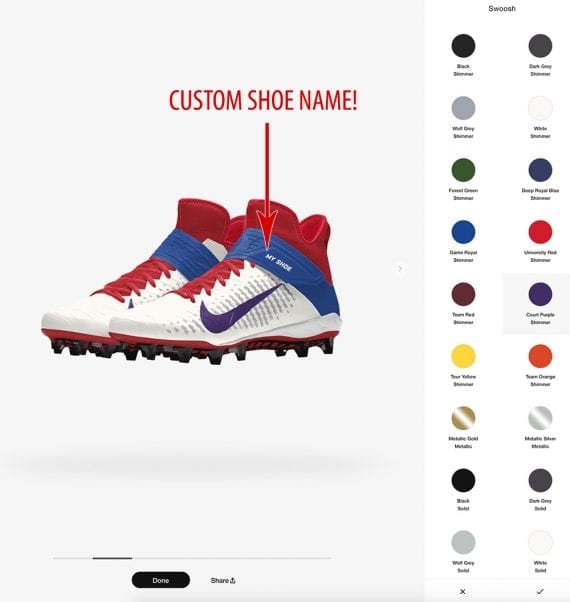
There was a time when customized products and personalized services were catered exclusively for the discerning and well heeled.

London’s Savile Row stands as a testament to personalized luxury.   In a world full of luxury dumbed down and mainstream, there has been an up-shift by certain manufacturers trying to offer tailored ranges and services to a wider audience.

This development is technically referred to as “mass customization” and “mass personalization”.  So why the shift?

Simply put, clients are demanding more and don’t share the same sense of brand loyalty as previous generations. Marketing strategists believe that focus must be on generating a community tied to customer satisfaction.  I won’t call this CRM on steroids but the analogy could hold.

With ever increased competition, brands must show genuine benefit to hold the client’s attention as well as affection. The trend is quite sweeping once you start to examine the determinants. Look at fashion apparel, beauty care products, shoes, bicycles, laptops, and even smart phones. All claim they are perfect for customization.

Mass Customization vs. Mass Personalization

According to Wikipedia, the definition of the term “mass customization” in marketing, manufacturing, call centers and management, is the use of flexible computer-aided manufacturing systems to produce custom output.

These systems combine the low unit cost of mass production processes with the flexibility of individual customization.

“Mass personalization” on the other hand, is the custom tailoring by a company in accordance with its end users tastes and preferences.

The main difference between the two concepts is the ability for a company to give its customers an opportunity to create and choose product specifications. There are however limits.

The Financial Times lists “personalized production” among six other factors driving the future of manufacturing – namely network manufacturing, technological innovation, industrial democracy, boutique manufacturing, cluster dynamics, and environmental imperatives.

A case in point: Pomarfin is a small family owned Finnish footwear company. With strong competition from Asian manufacturers, the firm decided to change its strategy.  It carefully looked at the adaptation to the mass customization paradigm, alongside a revision of its business model. Its choices were to either outsource the manufacturing of its shoes to China and simply become an ubiquitous brand, or differentiate itself while keeping its production in Europe.  It chose the latter, by deciding to compete in mass customization, making made-to-measure shoes for discerning and affluent men.  Pomarfin then introduced the clever concept of installing and utilizing a foot scanner in retail stores, which sells its shoes. The client’s foot gets scanned and the image is then uploaded to a server and sent to the firm’s manufacturing plant.  The client then decides if he wants his exact fitting shoes shipped directly to his address of choice or picked up at the retailer.

Moreover, as an additional convenience, the customer can reorder custom shoes through Pomarfin’s website. To be fair and retain loyalty with its retailing partners, Pomarfin pays them a royalty for life for each new pair of shoes purchased by a customer sent its way.

Untitled

Broad Marketing of Bespoke Products & Services

Clients have simply become more demanding. They expect more, and have no loyalty to brands that do not come up with the experience to match the product or service hype. This trend is both at the B2C and B2B level.

Everyone it seems is looking for the enviable win-win scenario.

It is natural to think that bespoke is the sole domain of the fashion industry whether shoes, suits, shirts or haute couture. These items with their stress on handmade carry heavy price tags and are geared to people with a high DPI.

You would be mistaken to believe that this is not possible for a mass market. For example, Dell computers was the first firm to offer customization to their entire range. In fact, designing your own computer needs with a consultant is the DNA of this organization. Dell understood that this type of differentiation would mark them apart from anyone else in the industry.

Other consumer goods operations quickly followed suit. For example, Adidas AG launched the miAdidas unit which offers custom sports shoes. Nestle delivered a market coup to the coffee industry with Nespresso, bringing single serve coffee into the home and office. Now you can serve different types of coffee within a group with no effort.

Individuality is a Sign of Personality: The Way Forward

The mass customization trend has been a rolling bandwagon. Understanding and harvesting this demand is easier said than done. Smart firms generally respond by building production facilities and systems with an increasing number of modifications in order to produce and deliver individualized units as per customer’s preference.

This certainly has its benefits and drawbacks:

Advantages
– Allows customers to create customized products
– Products deliver excellent value for money
– Makes comparative shopping difficult
– Shifts the focus from price to benefits
– Economies of scale/mass efficiency
– Manufacturer can justify charging a premium
– Easily differentiated against similar products
– Provides deeper form of customer engagement and data

Disadvantages:
– Increased overall complexity
– A significant initial investment + per unit cost of production
– Layover time – takes longer to manufacture
– No return policy on custom orders

Progress in manufacturing technology such as computer-aided manufacturing (CAM) and computer-aided design (CAD) have increased the flexibility, as well as the efficiency of the modern-day factory to achieve build-to-order products.

Ordinary is for the Mainstream – Do Luxury Brands Have Your Number?

Traditionally, the wealthy have great purchasing power. In theory, they are sophisticated and unafraid to express their taste as trendsetters and style mavens. They can also be the hardest segment to market to effectively because they are spoiled for choice.

Yet billions are spent catering to the tastes of this ever growing segment. Take the Paris Fashion Week shows and you can see the parade, the fanfare, and the glitz. Everyone is here: the paparazzi, fashionistas, and even fashion bloggers. Is it any wonder? Everyone craves glamor and it’s big business.

If you are one of the Jet-Set, do you want to be just mainstream? Of course, you don’t. The luxury trade has got your number, no matter how idiosyncratic your taste or preferences. Need private banking where professionalism and discretion are key? You got it. Want to stay in a boutique hotel so exclusive that few even know it exists? It’s there for the taking.

The providers of these services use what I refer to as “Bespoke Marketing” along with “Sensorial Branding” to differentiate their message and total customer experience respectively. These branding exercises are narrow in scope and speak of privilege the way its understood among the cognoscenti.

It is typical for certain shoppers at Louis Vuitton on the Champs-Elysees in Paris to serve the right customers flutes of champagne while they try things on or discuss their luggage needs upstairs. It must be said that LV knows how to coddle their clients.  As I am sure you can appreciate, LV is not the only store in this town to offer VIP red carpet treatment. Most major luxury firms do likewise such as Cartier, Dior, and Chanel.

Need a personalized briefcase? Why not pop over to Hermes? They are awaiting your next visit. The world of Hermes personifies exclusivity. Open one of their in-house magazines, and a special universe is revealed. The key beyond outstanding products is the creation of something bordering on revelation. The store itself has become a stage set, and sales pros are the players who embody the firm’s DNA.

Bespoke is the middle name of this institution. Real luxury brands understand this concept like Stradivarius handcrafted violins.

Needless to say, the term “luxury” has been misused over the years. It is mysterious and elusive. In essence, it revolves around subjective criteria referred to as lifestyle.

Gary Harwood at HKLM, one of the founders and directors of a leading strategic branding and communication design consultancy, stated:

“A luxury brand is very expensive, exclusive and very rare – not meant for everyone. When it ceases to be these things, then it’s lost its exclusive cachet. Commoditizing luxury brands and making them more accessible to the middle market puts them at risk of becoming ordinary, common and less desirable. And the more available a brand is, the less luxurious it becomes.”

Perfume connoisseurs are taking their choices a notch above most as the top-end of the fragrance industry is a very personalized one. Consequently, niche perfumes for the discerning and well-to-do are growing rapidly. This sector is creating new trends in the beauty and fashion world through an artisan approach.  Customers visiting bespoke perfumery shops expect highly trained staff to advise on fragrances. A great “nose” knows different clients value different scents, and thus will prescribe like an old fashioned doctor, who used to make house calls. Chemistry and diet also play a role in developing your own signature perfume.

Quite sophisticated and personalized indeed. But then, isn’t this the true symbiotic meaning of luxury?

novero_victoria_gold_stripes

The Final Take

“Mass customization” and “mass personalization” (or “build-to-order marketing” and “one-to-one marketing”) in delivering either products or services when properly implemented, bring about across-the-board improvements in all dimensions of a business. This includes, price, responsiveness, quality, and a positive experience. Competitiveness and operational effectiveness of a company also improve.

However, mass customization also has a few drawbacks as it does come with a cost. Along with a substantial initial investment in manufacturing equipment upgrades, the primary challenge in pursuing mass customization stems from increased complexity in its operations. A higher level of product customization requires greater product variety, which, in turn, entails greater number of parts, processes, suppliers, retailers, and distribution channels. As a result, bigger challenges exist to manage all those aspects of the business from raw material procurement to production and eventually to distribution. In addition, an increase in product variety has the effect of introducing greater uncertainty in demand realizations, increase in manufacturing cycle times, as well as an increase in shipment lead times.

In the luxury sector, traditionally there hasn’t been any shortage of customization for the ultra-high-net-worth. Exclusive and bespoke travel companies provide tailor made adventures and excursions, whereas, the ultra luxury and exotic automobile sectors such as Rolls Royce and Ferrari respectively offer a wide array of customization options. Each vehicle coming out of the studio will be completely unique and guided by a personal designer at the manufacturers.

“Good things come to those who wait.” Or so the saying goes.

Add to FacebookAdd to DiggAdd to Del.icio.usAdd to StumbleuponAdd to RedditAdd to BlinklistAdd to TwitterAdd to TechnoratiAdd to Yahoo BuzzAdd to Newsvine

__________________________________________________

Request your TWO FREE chapters of this popular book with no obligation.

EntrepreneurialEssentials - FrontCover Final

Learn how to start or expand a business for free at
How to start a business

Google

4 Comments

Filed under 1, B2B sales, Branding, Business, catering to picly clients, customer service, discerning clients, discriminating clients, luxury frgrances, Marketing, niche perfumery, perfume branding, perfume marketing, selling luxury

Ambiance Marketing/Sensory Branding — in IMAGES

Add to FacebookAdd to DiggAdd to Del.icio.usAdd to StumbleuponAdd to RedditAdd to BlinklistAdd to TwitterAdd to TechnoratiAdd to Yahoo BuzzAdd to Newsvine

Today, consumer purchase decisions are increasingly driven by consumers’ hearts. With ambiance marketing/sensory branding, a custom designed attractive setting, yet alluring with captivating style, invites customers to truly feel the brand experience by adding character. This is accomplished by connecting the emotions to a product or service, and infusing it with a tangible and intangible essence that remain in the customers’ minds.

See images and videos which depict the essence of ambiance marketing/sensory branding.

CLICK ON THE IMAGE for the link to the images/video page

Add to FacebookAdd to DiggAdd to Del.icio.usAdd to StumbleuponAdd to RedditAdd to BlinklistAdd to TwitterAdd to TechnoratiAdd to Yahoo BuzzAdd to Newsvine

__________________________________________________

Request your TWO FREE chapters of this popular book with no obligation.

EntrepreneurialEssentials - FrontCover Final


Google

Leave a comment

Filed under Branding, customer service, Luxury, Marketing, selling luxury

The Business Model: Prelude to the Business Plan

Add to FacebookAdd to DiggAdd to Del.icio.usAdd to StumbleuponAdd to RedditAdd to BlinklistAdd to TwitterAdd to TechnoratiAdd to Yahoo BuzzAdd to Newsvine

Viewpoint by James D. Roumeliotis

Traditionally, entrepreneurs know they need a road map we all call “The Business Plan.”  Some see this as a necessary evil and others welcome the concise texture of not launching a venture blind.

Average business plans describe the new venture’s offer to its target market. It also explains how the organization will reach its goals.

Such plans should include:
A) Brief bios on the key players
B) A section detailing the sales and marketing strategy section
C) The organizational structure of the project team or organization
D) Detailed operations description
E) Financial projections
F) Capital investment required to launch the product/organization

These days building a plan is simple enough. You can go to a bank or online and purchase a business plan template. You can even choose the option of hiring consultants who will set the plan up for you.

However, nobody can tell you what you want the business to be. No, I’m not referring to the ‘executive summary’, which is part and parcel of any coherent b-plan. It is my advice that prior to building your business plan, you need something else: call it a viable business model.

The Vision Thing

If the mantra in hospitality chants “location – location – location”, then an entrepreneur’s should be “vision – vision – vision”. Putting the vision on paper is crucial. It will help you secure financing, attract investors and even partners.

New Ventures need this to articulate how the new organization is going to achieve its operational, sales, marketing and financial goals.

Established Enterprises use this tool to depict their objectives in detail. There is a step-by-step engagement and procedure to move forward never forgetting the next level. I call this strategy the “Prelude to business planning”. You simply must have a model first. How can you test an hypothesis without a model? Simply put, you cannot.

Once this initial step has been accomplished, the business plan will be simpler to prepare as the foundation of the organizational structure can be produced. The idiom “putting the cart before the horse” clearly reminds us of this erroneous and common approach.

The business model also makes it easier to visualize and analyze a business from the customer’s perspective. A simple illustration of an apparel retailer’s business model is to make money by selling a specific line of clothing to consumers whose taste and budget are aligned with the store’s offering.

Anatomy of the Business Model

What is a clear definition of a “business model”?

What does it entail?

According to Investopedia.com it is regarded as:

The plan implemented by a company to generate revenue and make a profit from operations. The model includes the components and functions of the business, as well as the revenues it generates and the expenses it incurs.

Dr. Alex Osterwalder, a sought after speaker and advisor with a particular focus on business model innovation, strategic management and management innovation, as well as co-author of the business bestselling book “Business Model Generation”, produced a more succinct definition:

A business model describes the rationale of how an organization creates, delivers, and captures value (economic, social, cultural, or other forms of value). The process of business model construction is part of business strategy.

Developing a business model seems to be an overwhelming and a somber task. However, to alleviate those concerns, Dr. Osterwalder is further credited for creating an ingenious and popular visual version of the conventional business model.

His consists of nine building blocks which focus on the big picture as follows:

1) Customer Segments: Describing who a company offers value to
2) Value Proposition: Describing a company’s offer
3) Channels: Describing how a company reaches its customers
4) Customer Relationships: Describing the relationships a company builds
5) Revenue Streams: Describing how a company makes money
6) Key Resources: Describing what capabilities are required to make the operation function including your suppliers
7) Key Activities: Describing what activities are required to make the operation function
8) Key Partners: The partners that leverage the business model (if applicable)
9) Cost Structure: Describing the costs of a business model


The first 4 (right half of the model) are portrayed as the ‘front stage’ of the business where the client experiences transactions, whereas, numbers 5 to 9 (left half of the model) are the backstage where the action takes place to make the right half (‘front stage’) work seamlessly. The client doesn’t see this part. It’s analogous to a performance in a theater.

The above business model can be sketched on the wall on what is referred to as the “The Business Model Canvas” (see sample image below). A business can turn up with several business models but choose the most ideal for its circumstance after having tested each one through brainstorming, simulations and/or by approaching its intended market for feedback.

Nespresso, the Alluring Business Model

If there is a business success story worth noting and plotting on a business model canvas as an attractive case in point, it should be Nespresso. This brand of high-end single serving espresso coffee systems is a standalone operating unit of the Swiss food conglomerate Nestle SA and its fastest growing brands. Reportedly, Nespresso sales have been increasing by as much as 20% on average for the last several years and earns 4% of Nestle’s total annual revenues.

Nespresso has registered numerous patents for concept including its signature colored capsules containing the ground coffee. Initially, Nespresso wasn’t much of a success with its original business model as its sales channel, back in 1986, was based on the coffee machine partners’ own sales reps touting the distinctive looking apparatus and capsules in the office coffee sectors of Switzerland, Japan and Italy. In 1989, their coffee system is introduced to the consumer/household sector which became a sensation and opened up a new category altogether in the single serving market.

Nespresso’s strategy circumvents the wholesalers and dominant supermarkets. It’s positioned itself as an exclusive luxury good. Taking a branding page from genuine luxury houses, such as Hermes and Chanel, Nespresso too controls its own distribution channels. though its machines are sold in department and fine retail stores, Its capsules are sold solely via online, by phone orders or at its more than 300 boutiques in prime locations throughout the world. This is by far its most successful business model as the company controls pricing and has an intimate relationship with its customers – most notably with regards to the total customer experience and its proactive customer service. Recognize George Clooney in its ads? He’s been a strong connection to the brand which seems to work – at least for the female audience.

Business Reassessment: Strategic Planning Tool

Business models don’t merely apply to start-ups. They equally vital for growing and established businesses which should re-evaluate their business model when revenues are dropping or when working on strategic planning.

An organization should not be operated as a static entity but rather as a progressive and innovative type with foresight to changing economic, technological and market conditions. This includes at looking at new distribution channels and revenue streams.

A case in point are the companies that make up the recording industry. For decades, they had an attitude of arrogant superiority until the day the digital download era came upon them. This development caught them off guard despite the imminent warnings, Having been built on a brick-and- mortar distribution model, they were too complacent to adapt despite the threats and decline in revenues.

Rather than re-evaluate their business model, focus on innovation and ultimately transform by embracing an opportunity, Time Music Group, and several other members of the recording industry, chose a path of least resistance. They decided to hire an army of attorneys and began to aggressively hunt and sue the illegal downloaders, including minors.

Through legal means, they successfully shut down websites such as Napster, BitTorrent and others. Meantime, online music start-ups such as Ritmoteca.com came along and conceived a novel way to distribute and monetize digital downloads. As of April 2008, the largest online music store is Apple’s iTunes Store, with around 80% of the market (source: theregister.co.uk).

https://i0.wp.com/techli.com/wp-content/uploads/2012/07/business-plan1.jpeg

Closing Memo

Whether starting a new business or moving an existing one to a new direction, a business model is the first strategy to consider developing prior to the business plan. The former is a proprietary method used to acquire, service, and retain customers. It makes you think through your business plan, which in turn communicates the business model. Both should synchronize.

The business model need not be a chore to design. By utilizing a creative one page visual orientation named “Business Model Generation”, developed by Dr. Alex Osterwalder, one can view the business holistically.

Several business models should be considered, their hypothesis validated in the real world and finally the most ideal model chosen.

It took Nespresso almost 30 years, since its first patent, to refine its business model.

Add to FacebookAdd to DiggAdd to Del.icio.usAdd to StumbleuponAdd to RedditAdd to BlinklistAdd to TwitterAdd to TechnoratiAdd to Yahoo BuzzAdd to Newsvine

___________________________________________________

Request your TWO FREE chapters of this popular book with no obligation.

EntrepreneurialEssentials - FrontCover Final

Learn how to start or expand a business with free courses at
How to start a business

Google

1 Comment

Filed under 1, Business, business development, business model, business plan, entrepreneur, entrepreneurship, entrepreneurship success, starting a business success

Entrepreneurship — in Quotes & Images

Add to FacebookAdd to DiggAdd to Del.icio.usAdd to StumbleuponAdd to RedditAdd to BlinklistAdd to TwitterAdd to TechnoratiAdd to Yahoo BuzzAdd to Newsvine

Entrepreneurship is not for the insecure. It takes a good idea, a burning desire to execute it, and the right personal characteristics  including:

– At least some fundamental business knowledge

– Passion

– Drive

– Resilience

– Perseverance

– Persistence

– Curiosity and and open-mindedness

– Willing to take calculated risks

CLICK HERE for a collection of images that speak for themselves pertaining to entrepreneurship and the entrepreneur.

Add to FacebookAdd to DiggAdd to Del.icio.usAdd to StumbleuponAdd to RedditAdd to BlinklistAdd to TwitterAdd to TechnoratiAdd to Yahoo BuzzAdd to Newsvine

__________________________________________

Learn the significance of all of the above images BUT with the TEXT version in this book.

EntrepreneurialEssentials - FrontCover Final

Learn how to start or expand a business with free courses at

How to start a business


3 Comments

Filed under Business, entrepreneur, entrepreneurship, entrepreneurship success, starting a business success

Sales Management by Tactics (MBT) – in slides

Add to FacebookAdd to DiggAdd to Del.icio.usAdd to StumbleuponAdd to RedditAdd to BlinklistAdd to TwitterAdd to TechnoratiAdd to Yahoo BuzzAdd to Newsvine

Request your TWO FREE chapters of this popular book with no obligation.

EntrepreneurialEssentials - FrontCover Final
Google

Leave a comment

Filed under B2B sales, Business, business development, sales performance

GET YOUR FREE PRACTICAL INFORMATION

Receive two FREE chapters from my book, “Entrepreneurial Essentials: unconventional business wisdom & bold tactics.”

Your subscription includes additional complimentary exclusive information (slide presentations, webinar invitations).

CLICK IMAGE!

Leave a comment

Filed under 1

The Top 10 Most Popular Articles in this Blog for 2012

I am pleased to share with you the top 10 most read articles in my blog for 2012.  Thank you for your readership.

Add to FacebookAdd to DiggAdd to Del.icio.usAdd to StumbleuponAdd to RedditAdd to BlinklistAdd to TwitterAdd to TechnoratiAdd to Yahoo BuzzAdd to Newsvine

#1 Brand Awareness: the influence in consumers’ purchasing decisions

#2 Sensorial Purveyors: Creating an Enticing Ambiance in the Hotel Domain

#3 Defining the Luxury Brand

#4 A Philosophy Named CUSTOMER SERVICE – How to Refine it and Maintain It

#5 THE SEVEN KEY PRINCIPLES FOR BUSINESS SUCCESS – A Personal   Belief Through Years of Practical Experience

#6 The Art of Selling Luxury Products: Brand Story Telling & Persuasion

#7 Branding Bottled Water: Differentiating a commodity through various tactics

#8 Branding by Design: The Impact of Fashion on the Automobile Industry

#9 Perceived Quality: Why Brands Are Intangible

#10 How to Run an Effective Political Campaign – a Synopsis for the Aspiring Candidate

Add to FacebookAdd to DiggAdd to Del.icio.usAdd to StumbleuponAdd to RedditAdd to BlinklistAdd to TwitterAdd to TechnoratiAdd to Yahoo BuzzAdd to Newsvine

10 Second Survey

I’m planning something neat for those who participate here. If you don’t mind, would you kindly do my 10 second survey. In return, I will send you my book, “Entrepreneurial Essentials:…” in PDF format with my compliments.  Please click HERE for link to the survey.

2 Comments

Filed under Branding, Business, business development, customer service, description of luxury, description of premium, discerning clients, discriminating clients, Luxury, Marketing

The Smell Of Exclusivity: Evolution of the Niche Perfume Market

By James D. Roumeliotis

Smell Branding Image

Open any fashion magazine and you are immediately struck by the mystique of perfume adverts. It is an industry, which combines the power to make people dream, to imagine their ability to attract, and better still seduce. It plays on the psychological heartstrings of self worth and self-perception.

When the elements come together with force, people feel sexy and desirable. Billions are spent on their consumption. Large and small houses spare no expense in their creation and marketing. Perhaps this explains why so much effort is spent on designing an appropriate package along with creating the right name.

New Display for Fragrance Collection : r/fragrance

The Commercialization of Designer Fragrances

Mainstream body fragrances are usually a blend of synthetic elements. They are produced by only a handful of firms.

Niche perfumes however, are not generally associated with fashion labels, celebs or extravagant looking bottles. Their trademarks are rare components constructed to leave an indelible mark.

Such fragrances are built on a pyramid, harness raw materials and are aromatic. Many are botanically sourced and distilled by master perfume makers. Key ingredients include Damascus rose, jasmine, citrus from Sicily or Corsica, and even tree bark such as sandalwood, juniper, and cedar.

For these reasons, trained noses are in high demand. However, the use of perfume and the selection of ingredients are cultural and even generational. Take two well-known brands as examples:

Many young clients prefer the scent marketed by Abercrombie & Fitch. It is light, sweet and attracts. Although everyone knows Chanel No.5 not everyone will wear this fragrance. It is heavy and voluptuous. Marilyn Monroe might have worn nothing else to bed, but who else follows suit? Chanel’s new advert campaign online has been designed to capture a new generation of advocates.

When Only Luxury Perfume Will Do

Recent statistics show that the demand for fragrances continues to grow most notably in the Gulf and Middle East. Euromonitor, a consumer research firm states that perfume sales in Saudi Arabia top sales in 2010 ($827.5 million) followed by the UAE, ($205.8 million) during the same year. On average, a Gulf client will spend $380 per annum on perfumes.

Lifestyle and DPI do not alone explain the stats. It is also the demand for rare elements used in their preferred fragrances some of which contain oud and amber. Just last year Christian Dior has tried to tap this lucrative market with much success.

Other classic brands such as Armani and YSL have tried to do likewise. Historically however, more emphasis was placed on naming the product and the packaging rather than the actual contents. Lifestyle has always been the key market driver when a big fashion brand launches a new perfume. They are seen as key pieces of the accessories puzzle to the brand, which can include cosmetics.

I am often reminded how such brands will even create a timepiece, which sports the brand name. However, these timepieces have nothing in common with genuine luxury watches such as a Patek Philippe.

As consumers become more sophisticated, they begin to shop around for more articulate perfumes. Think of Annick Goutal, Kilian Hennessy (Kilian Paris), Roja Dove (Roja Parfums), Serge Lutyens, or better still Frederick Malle. These houses stress sophistication as well as natural ingredients whenever possible.

The luxury brand Hermes for example, has taken great care to hire some of the noses that work for Frederick Malle. The smell Terre d’Hermes immediately comes to mind. With each creation, there is an eau de toilette and for others there is the perfume. Both products commit the client to the brand and provide accessibility as well as exclusivity, which is the hallmark of Hermes in the first place.

Distinguishing Natural Perfumes from Mainstream Fashion Brands

Contrary to popular belief, France was not the first country in the world to conceive perfumes. The ancient Greeks and Romans were devoted users of fragrance. However, Grasse, a town on the South of France, is today considered the world’s capital of perfume.

The natural perfumer is both a scientist and an artist. He/She demands rigor in his/her quest of creating beautiful perfumes including his/her “nose” as an inherent talent.

According to The Natural Perfumers Guild – the world’s largest trade association dedicated to natural fragrance, natural perfumers do not use synthetic aromatic chemicals. Natural aromatics are natural biological chemicals, thus their scents come from nature. Additionally, the need is greater than the mainstream perfumers in developing a fixative base for the perfume (so it is held onto the skin to last longer.) Mainstream perfumery has a huge number of synthetic fixatives at their disposal, and natural perfumers do not, and would not, use them. Moreover, the bottles or body care containers are filled by hand which, typically, makes the entire process personal.

Niche perfumery maker Creed, established in 1760 and one of the oldest, uses such methods of hand production, including maceration and filtration, instituted at the company’s founding. It is the industry’s firm proponent of natural ingredients in fragrance. As a result, it has a loyal following that includes royalty, Hollywood stars, political leaders, legends in business, sports, music and the fine arts as well as discerning members of the public who value beauty and quality in scent.

Applying the slogan, “Fragrance without compromise” to his brand ethos, Frederick Malle  runs the exclusive fragrance boutique in Paris, Les Editions Du Parfum. His shop and the niche perfumes he sells epitomize how the luxury perfume trade has moved on from just name brands to something beyond marketing hype.


Of Art and Storytelling

The fragrance industry is a very personalized one. For this reason, niche perfumes for the discerning and affluent are growing rapidly. This sector is creating new trends in the beauty and fashion world through a niche/artisan approach. As the perfume market grows in important markets including the Middle East and BRIC countries, and as companies expand outward, the traditional perfume tastes are affecting the world of perfumery. Thus, these highly coveted and hard-to-find perfume notes are becoming ever so popular. Those boutiques able to offer the most sought after fragrances such as oriental amber, Agarwood (oud), and musk amongst others, along with their striking ambiance, will distinguish them from their competitors.

Customers expect highly trained staff at bespoke perfumery shops to understand the art of fragrances such as the origins and chemical make-ups as they are able to tell a customer why a certain fragrance will or will not work with her/his body chemistry and suggest alternatives. This includes the suitability of a perfume to someone’s skin chemistry and diet.

At specialty perfumery shops such as Madison, with a location in Bucharest and Budapest, fragrance aficionados will find an exclusive array of scents, niche colognes, hard-to-find perfumes, room scents, and incense. The 46 or so brands they carry are not available in traditional department store beauty and cosmetic counters.

The Role of the Influencer in the Fragrance Domain

With the advent of in the social media sphere, most notably on YouTube, the “influencer” persona was born. An influencer is someone in a niche or in a specific industry with sway over a large target audience. This individual can also persuade others to act based on their recommendations.

The fragrance domain has several of its own. These passionate souls with their YouTube channel have amassed hundreds of thousands and in some cases, over a million subscribers. One of those on the top spot is former German model, “Jeremy Fragrance” (née Daniel Sredzinski). Jeremy vlogs about both women’s and men’s perfumes and features niche fragrances as well as the popular scents. He is a smooth-talking YouTuber who began his video platform in 2014, He has a high influencer equity score. Another one on the top three spot, is New Yorker Tiff Benson, a fragrance and beauty vlogger and blogger. She shares perfume reviews on YouTube who also writes about beauty and lifestyle topics on her eponymous blog. Tiff is part of the Sephora Squad and founder of The Fragrance Society.

The Olfactory Take – in search for something new and singular

Great perfumes are like works of art. They are inspiring, delightful and memorable – despite their staid looking bottles in contrast to those of the designer house perfumes. Perfumes and emotions are also linked together since they impact our mood considerably. They are the new luxury category which is treated as a work of art.

The lesser-known fragrance brands are often touted by celebrities who publicly declare their preference for them, because of the mystique and rarity they possess. Niche labels often use exotic and rare ingredients which make their brand stand out from the rest. The more than two century old Creed Perfumery has a large freestanding store in New York, considered one of a kind in North America, where it sells its own limited produced fragrances.

Small and privately owned fragrance producers are, for the most part, family run – which make them personally involved in all aspects of the productions process. Their uniqueness ranges from fine-quality ingredients stories of pedigree to environment-friendly practices. Such niche brands normally cater to a small, yet extremely loyal clientele. Personalized service, through well trained front line staff, adds to the emotion, as well as the total customer experience demanded by its discerning patrons.

_____________________________________________

Request your TWO FREE chapters of this popular book with no obligation.

EntrepreneurialEssentials - FrontCover Final

2 Comments

Filed under Branding, Business, Luxury, luxury storytelling, Marketing, niche perfumery, selling luxury

Entrepreneurial Challenges in the New Economy: Overcoming adversity with savvy strategy, bold execution and the customer front & center

by James D. Roumeliotis

Add to FacebookAdd to DiggAdd to Del.icio.usAdd to StumbleuponAdd to RedditAdd to BlinklistAdd to TwitterAdd to TechnoratiAdd to Yahoo BuzzAdd to Newsvine

The new normal encourages an entrepreneur to deal with any current situation no matter how daunting. However, rather than lamenting the obstacles, confront and deal with such issues directly.

To quote Albert Einstein:

We can’t solve problems by using the same kind of thinking we used when we created them.”

A savvy business person and a leader views great opportunities in a rapidly changing world economy. Amongst other tactics, make sure you thoroughly plan with fortitude and execution.

Driving Initiative

Leadership with a clear vision is what’s needed first and foremost; otherwise everything else in an organization may not matter much. Businesses with inept leadership usually fail in the first year or two, but even established companies can stumble badly when they outgrow the capabilities of the founding team.

Research by the U.S. Bureau of Labor Statistics shows that nearly six in ten businesses shut down within the first four years of operation.

Being a successful entrepreneur is not an effortless task. It takes plenty of sacrifice and will power to confront various problems which not many are prepared to make. It takes strong faith, to believe in yourself, your product or service and to stay motivated on a daily basis to keep it running despite many obstacles, as well as the added challenge of staying ahead of your competition.

Note that there are no magic formulas. During trying times and particularly in the growth stages, you must stay on top of your project. Adapt to your new competitive environment. Do so in a proactive manner and in a spirit of authority.

Understanding Customer Relationship Management (CRM)

Entrepreneurs sometimes make the cardinal mistake that they are in business just for themselves. Don’t forget that you are working on behalf of your clients. Without the ability to attract and retain clients, revenues and cash flow will be greatly affected. Always be customer centric.

1) Build brands then launch products. People buy brands not products. Brands stand for something your target customer identifies with.

2) Having customer experience is never enough. It is the value created for a customer. You may buy great bagels at a place that has poor customer service, or mediocre tasting bagels at one which is very customer centric. It is all about value perception.

3) During economic downturns, marketing spend should continue, not decrease as you want to lay the groundwork for better times ahead. Maintain building and retaining your brand in the consumers’ mind. Just about everyone knows McDonald’s. The reason is clear: the firm never ceases to spend at least 5% of sales on marketing activities.

4) Listen to your customers who truly transform your business and deliver value, excitement, and surprise. Most importantly, learn how to truly engage with your customers.

Fate Favors the Bold

Forgo routine and avoid surprises. Complacency is a comfort zone which yields marginal performance. It can cause deficiencies, stifle growth and progress. This syndrome should be replaced with drive and consistent improvement. The culture of the organization, along with its structure, plays a major role with the challenges it faces and how it deals with them.

Fred Hassan, a former CEO and chairman of Schering-Plough (now merged with Merck & Co.), once discussed during an interview that “Adversity is part of life and part of business. By dealing with adversity effectively, both people and organizations become stronger and better. It makes them more resilient.  It makes them more confident ─ because they know they can prevail even in tough times.”

Goals and objectives of the business are reached by preparing for them and taking bold steps to implement, as well as monitor progress against plan and adjust accordingly. Nothing should be set in stone. Changes and adaptability with the circumstances should be adhered to.

Differentiate Yourself

Regularly brainstorm with your staff and outside advisers (accountants, mentors etc) on unconventional, yet lawful, ways of improving what you do. In fact, change your paradigm and as Simon Sineck wisely stated at a TEDx presentation entitled, How Great Leaders Inspire Action.

Every single person, every single organization on the planet knows what they do, 100 percent. Some know how they do it, whether you call it your differentiated value proposition or your proprietary process or your USP.”

He went on to say, “But very, very few people or organizations know why they do what they do…By “why,” I mean: What’s your purpose? What’s your cause? What’s your belief?” In other words, what Simon was questioning is why does the organization even exist?

Continuous improvement (or progress) is not a onetime event, it’s an ongoing process. “Business as usual” is no longer a viable option and consistency is vital. It takes a willingness and involvement from everyone within the organization, including suppliers, to be on the same page, the right fit/culture and with the right attitude to get seamless results.

Strict Internal Financial Controls

A businesses’ finances should be supervised closely, borrowing/leveraging done wisely, and spending conducted within a prescribed budget.

In certain industries, such as manufacturing and food establishments, financial ratios and yields, respectively, should be strictly adhered to at all times. The success of any business is, in many ways, measured by the bottom line.

Should a newly minted entrepreneur need to hire an accountant, he/she would still need to have a fundamental knowledge of accounting functions. Nothing in that area should be taken for granted regardless if the task was delegated.

It’s Time to Execute – a recipe for strategic success

Creating strategy is less formidable than implementation, thus execution is not without its challenges. In addition, the larger the organization, the less nimble it is at executing strategy. It’s akin to a large ship having to make a sudden turn to avoid catastrophe.

Needless to say, tough decisions need to be made and those given/accepting the task are accountable for the timing and manner of implementation. The requisites for such individuals include project management skills, a definitive understanding of the execution of strategy, tenacity and most certainly achievers who thrive on results.

Organizations with a bureaucratic mindset struggle making fast decisions. Bureaucracy creates a climate in which the customer is not as important as the management and the company’s other employees. It also kills the organization’s competitive spirit.

As Jack Welch, former CEO of the industrial powerhouse, GE, has stated, “Bureaucracy is the enemy – it means waste, slow decision making and unnecessary approvals.” Welch felt that ridding the company of wasteful bureaucracy was everyone’s job. He urged all his employees to fight it. “Disdaining bureaucracy” became an important part of GE’s shared values.

At Google, the role of the manager is that of an aggregator of viewpoints, not the dictator of decisions.

For an organization to avoid the complacency and bureaucratic trap, it should encourage creative thinking, consider making innovation its foundation, and if applicable, cut layers of its bloated management structure for a leaner decision making process.

Innovation is what a business should be carrying-out as often as it’s required for its long-term existence. The old adage that goes something along the lines of “If it isn’t broken, don’t fix it” doesn’t sit well today with forward thinking companies that thrive on practical improvements.

There is nothing wrong with change if done to enhance or replace the status quo. It’s part of collective progress. For this to work everyone within the organization must embrace continuous change, rather than resist it. That may be easier said than done due to typical resistance emerging from people as a result of fear of the unknown.

It’s up to management to persuade their subordinates of the mutual benefits of change.

The Heart Of The Matter – being at the top of your game

The way to solve an organizational problem is to confront it and have it resolved without delay. It begins by laying a foundation which mainly encompasses creating strategy, optimizing structure and managing execution of decisions, ideas and new products.

Long term potential outcomes and worst case scenarios should be anticipated before problems even strike. This type of planning constitutes part of risk management. Unfortunately, most decision makers/managers are capable of planning, not executing. This creates a lack of bravado when carrying out strategy and/or confronting adversity

For an organization’s clients to receive stellar service entails having its house in order. Besides structure and an efficient operation, employees should be trained and empowered to do their jobs efficiently.

Seth Godin, a renowned marketing strategist stated succinctly: “If you want to build a caring organization, you need to fill it with caring people and then get out of their way. When your organization punishes people for caring, don’t be surprised when people stop caring. When you free your employees to act like people (as opposed to cogs in a profit-maximizing efficient machine) then the caring can’t help but happen.

Well-tuned organizations are operated by executives who are focused, resilient and disciplined yet not so rigid and resistant to change that they don’t check their assumptions with trusted advisors/sounding board.

There should always be an element of adaptability in decision making and business policy changes in tune with circumstances and with the times. Planning for adversity before challenges even appear on the horizon is key to the strategic success of any organization – big or small.

The best managed companies have one factor in common: They are constant achievers, exude managerial excellence and a well-targeted CRM. Their financial performance is reflected in their results.

Add to FacebookAdd to DiggAdd to Del.icio.usAdd to StumbleuponAdd to RedditAdd to BlinklistAdd to TwitterAdd to TechnoratiAdd to Yahoo BuzzAdd to Newsvine

_________________________________

Request your TWO FREE chapters of this popular book with no obligation.

EntrepreneurialEssentials - FrontCover Final

Allow us to develop a sustainable brand for your existing SME/SMB or work on a strategy (with hands-on implementation) for your imminent start-up.

Inquire about our 30 minute free consultation

Google


Leave a comment

Filed under Business

What Every Entrepreneur Should Know — An interview with James

Editor and news correspondent, Kathy Tzilivakis, interviews James D. Roumeliotis, author of this blog and of the book, “Entrepreneurial Essentials: unconventional business wisdom and bold tactics.”

Click here for the interview in “The Pappas Post”

Add to FacebookAdd to DiggAdd to Del.icio.usAdd to StumbleuponAdd to RedditAdd to BlinklistAdd to TwitterAdd to TechnoratiAdd to Yahoo BuzzAdd to Newsvine

Google

Leave a comment

Filed under 1, Business

Luxury vs. Premium vs. Fashion: Clarifying the Disparity

by James D. Roumeliotis

Luxury vs Premium image

Add to FacebookAdd to DiggAdd to Del.icio.usAdd to StumbleuponAdd to RedditAdd to BlinklistAdd to TwitterAdd to TechnoratiAdd to Yahoo BuzzAdd to Newsvine

Luxury Brand Management is sometimes like weather forecasting. With the media and fashion industry in full tilt this autumn, there is wave upon wave of adverts, campaigns, and promotions. Within the glitzy magazines and online videos geared to seduce, consumers and even those within the industry have a difficult time distinguishing luxury from premium brands.

Price is not the only determinant. Add the crossover product strategies between the 2 types of brands and there is more confusion still. Luxury enthusiasts are always looking for the “best”. The problem arises on what this term really means if it means anything at all. Most studies indicate that the term “luxury” is highly subjective.

For this reason, I have decided to try to clarify this important topic and booming business sector.

Take for example the terms, “premium”, “luxury” and “fashion”. Is it possible to define and portray these ethereal ideas in concrete terms? Marketing hype blurs the lines, and of course, this is intentional only adding to the misinformation among diverse constituent audiences.

Defining Luxury

Definitions of “luxury” vary enormously and depend on with whom you discuss the topic and in what context. The term “Luxury” has never been something easy to define. It is relative, mysterious and elusive. In essence, it revolves around subjective criteria in the mind, which creates a mood and what is generally referred to today as lifestyle.

Gary Harwood at HKLM, one of the founders and directors of a leading strategic branding and communication design consultancy, stated:

“A luxury brand is very expensive, exclusive and very rare – not meant for everyone. When it ceases to be these things, then it’s lost its exclusive cachet. Commoditizing luxury brands and making them more accessible to the middle market puts them at risk of becoming ordinary, common and less desirable. And the more available a brand is, the less luxurious it becomes.”

Authentic luxury brands compete on the basis of their ability to invoke exclusivity, prestige and hedonism to their appropriate market segments not the masses. There is a classic litmus test:

Is the product manufactured in artificially limited quantities?
(i.e. the rarity factor)

Does the firm have a story to tell? (i.e. history & pedigree)

Is the firm portraying a unique lifestyle?

Is craftsmanship the hallmark, which delivers products that only High Net Worth individuals (HNWI/UHNWI) can purchase without question?

Does the brand offer authenticity?

Identifying Luxury Sectors

Luxury is classically defined in two key segments:

1) Luxury Goods: Fashion & Accessories, Watches & Jewelry,
Well-being & Beauty products

2) Lifestyle Purchases: Automotive, Experiential Travel, Home & Interiors, exclusive alcoholic beverages (read exceptional wines, champagne & spirits)

Brands Which Claim Authentic Luxury Status

Few brands can really claim the trademark of luxury. Those that do combine allure, sex appeal with pedigree and quality. Discounting is not part of their strategy and their entire raison d’être is geared to UHNW (Ultra High Net Worth).

Anyone in this business can rattle off the litany of names recognizable to most people:

Hermes, Chanel, Louis Vuitton, Bottega Veneta, Rolex and Cartier.

Other players to this core list include: Bentley, Rolls Royce, Gucci, E. Goyard, Charvet, Salvatore Ferragamo, and Bulgari.

Contrast the above lists with Daimler’s Mercedes-Benz. This firm has reduced its cachet ever since it introduced the entry levels A, B Classes respectively and the SMART car.

The firm also does not hesitate to harness frequent promotions to boost sales revenues. This type of strategy is pursued when the board is under pressure from stakeholders to tap what is referred to as affluent consumers of the mass market. DPI (Disposable Personal Income) of this segment is over $100,000.

Because of this strategy such brands can no longer be considered as “luxury” in the true meaning of the term.

Genuine luxury purveyors should remain relatively small and select in their industry. Wealthy consumers purchase luxury products because they seek to distance themselves from the mass through the emotional value of acquiring flawless and rare objects of desire.

Luxury service brands follow a similar pattern. On the basis of my expertise and experience I would list Hotel de Crillon, Hotel Plaza Athenée, Ritz Carlton, and Hotel du Cap. All these hotels provide the perfect luxury experience of outstanding service, exclusivity, and pedigree.

Identifying department stores is a bit more tricky considering the makeover of this retail concept in the last 15 years. Despite the changes consider the following 3: Harrods (UK), Le Bon Marche (France), and Saks Fifth Avenue (USA).

Exclusive and bespoke travel companies provide tailor made adventures and excursions. The four key players in this category include: Abercrombie & Kent, Kuoni, Orient-Express and Cunard Line.

Broadening our view of luxury services, certain firms offer services and privileges to a rare percentile. Such services include credit cards with no limits, jet ownership, private plan charters, global concierge services and the like. Think NetJets and Amex.

Considering magazines, if I were asked to name one magazine catering to this crowd and speaks its language, I would nominate: Monocle. It has been described in certain circles as “Foreign Policy meets Vanity Fair.”

“Premium” Clarified

If luxury brands are related to scarcity, quality and storytelling then premium goods, on the other hand, are expensive variants of commodities in general: i.e. pay more, get more.

These brands are less ostentatious, more rational, accessible, modern, best in class, sleek design, and manufactured with precision.

For example, take the case of L’Oréal. The firm is a giant in the cosmetics sector. It positions its “premium” products with subtly. Clients get the luxury feel they hanker for and the presentations are done with élan.

Dior on the other hand makes no pretense. It is categorized as a luxury beauty product and is priced accordingly.

What about Fashion?

This is quite a question. Is it luxury, premium or neither? If you were to stroll into Camps de Luca in Paris for a bespoke suit, you will be treated like royalty and the titans of business, who make up the firm’s client base. Afterwards, you can meander over to Place des Victoires and place an order at arguably the best shirtmaker, Charvet and order a dozen shirts cut to your specifications in sea island cotton.

Clearly, these firms are luxury in every meaning of the term.

Designer labels or “fashion houses” are a different kettle of fish. Some can be quite pricey. However the nature of fashion is ephemeral and change. Pick up a copy of September Vogue and judge for yourself.

Do not confuse what you see in Vogue with “haute couture”. This niche is always there and the French keep it this way. Clients are limited by definition of the cost involved, not to mention the intense hand labor, fabric selection, and attention to the tiniest details.

These luxury fashion statements convey ostentation, glamor, lavishness, and elegance. They are one-of-a-kind garment.

The following fashion houses measure their creative worth with the designer talent, which marks the brand: Chanel, Hermes, Ralph Lauren, Burberry, Brioni, Prada, Gucci, Dior, LV, Valentino, YSL, and D&G.

Needless to say, quality control is fundamental and is offered in lifestyle controlled environments at the above brands flagship stores worldwide.

Luxury Time Waits for No One

If you need a watch to tell time, a Timex vintage piece made simply for that purpose will do the job. If you want to make a statement that you have arrived, you will undoubtedly look to see which watch best suits your personality and budget. Think James Bond and the flagrant exposure of Rolex and later Omega.

Luxury timepieces exist in many categories and can accommodate a wide variety of budgets. A good example of an entry level timepiece is a Movado at $500. At the other end of the spectrum, you could chose a Chopard at $70k. Watches are often sold via adverts of sports heroes or movie stars. The reasons are clear. Personification and self-identity play a large role in watch acquisition and social status.

Chronocentric categories watch brands in the following groups:

Basic Luxury Watches
Description: Attractive and functional
Brands include those of fashion designers such as Michael Kors, Fortis, and Movado.

Retail prices: > $1,000 stainless steel; ( >$2,000 for gold)
Strategy: Moderate to heavy discounts available among specialized dealers.

Pseudo Luxury Watches
Description: elegant and stylish
Brands: Baume & Mercier, Raymond Weil, Tag Heuer

Retail prices: $500-$2,000 (steel); $750-$4,000 (gold)
Strategy: discounting via accredited dealerships

Luxury
Description: accent is on prestige. Quality and durability are stressed. Elegance and value underpin the watch.

Brands: Breitling, Cartier, Ebel, Omega, Rolex

Retail prices: $1,000-$4,000 (steel); $2,500-$8,000 (gold with leather strap); $5,000-$20k (gold with gold bracelet)

Strategy: modest discounts sometimes available via brand-authorized dealers. (The unauthorized “gray market” can give bigger price breaks)

High-End Luxury
Highly crafted timepieces made by experts. These watches are highly “refined” and easily recognized by collectors and people “in the know.” Sold with a strong emphasis on exclusivity, design, and craftsmanship. Produced in small numbers, available via specialized dealers. In short, these are the Rolls Royce class of timepieces.

Brands: Alain Silberstein, Audemars Piguet, Blancpain, Breguet, Franck Muller, JLC, Parmigiani, Patek Phillipe, Ulysse Nardin, Vacheron Constantin.

Retail prices: starting at $5000 (steel); starting at $20k (gold). Some watches can exceed $2m.

Selection

Watch selection is highly personal. This is true no matter what the person’s budget. Even if you are shopping in a budget category, there are many to chose from. Think Swatch or Nixon.

However, once a person seeks to make a watch statement then choice will be determined by social class, DPI, sports inclinations, sense of self-esteem, pedigree, craftsmanship and of course function. Your average person does not need a chrono watch with its multiple dials and buttons. Yet, the 25-35 year old segment see these pieces as a station in life.

A youngish successful profile will not usually be drawn to a Patek Phillipe. But someone over 40 will. Most Westerners will not go gold unless it is old gold meaning a vintage high end timepiece, which is thin and elegant.

You will also notice that in certain milieus that watch brands count. People weigh there status, revenue generation, prestige in tandem to the watch or even watches that they own and collect. Lastly, even though there are many successful business women who own and wear high-end watches, men seem to be the more obsessed. This can be attributed to the fact that it is one of the few pieces of jewelry a man can wear and not draw too much attention to himself.

Baby You Can Drive My Car

In my other two columns, I tried to clarify the differences between “luxury” and “premium” in the fashion industry and in the horology markets. Similar problems also exist when assessing the automobiles.

It is quite clear to most professionals that luxury cars carry high price tags many of us normal mortals would consider exorbitant. Price aside a luxury car should embody a cache selling prices. Read here: exclusivity, pedigree, craftsmanship and limited production.

R.L. Polk and Company, a global automotive information and marketing firm that provides solutions to automotive and related industries, has re-defined the term with the appellation, “super luxury”, i.e. cars that cost +$100k. This category includes brands such as Rolls Royce, Bentley, Aston Martin, Maserati, and until 2013, Maybach, by parent Daimler AG.

Premium cars are defined as those, which offer clients cutting edge design and technology. Their target market are individuals in the upper middle class. Some label these vehicles as such because they have creature comforts with all the bells and whistles.

Cars in this category normally range from an entry level BMW 1 or 3 series (depending on the country) from ~ $30k- +$95k.

Competition for market share in the profitable premium category is fierce amongst rivals BMW, Mercedes Benz and Audi, along with their Japanese counterparts Lexus and Infiniti.

Acura and Volvo are not regarded as strong contenders. Instead, they are viewed as part of the compact executive car segment. This category is a combination of the standard class vehicles from the top name brands and top models from automakers not necessarily known as being premium category brands.

Impeccable service is also another important measure for premium automobile brands with a strong emphasis on the total customer experience.

At the same time, we are witnessing aspiring premium brands from deep rooted economy class automobile manufacturers such as Hyundai with their Genesis (including the coupe version) and Equus models. However, compared to their established counterparts, they’re lacking “brand cachet”, thus in their clever marketing, Hyundai is pitching “Smart Luxury & Engineering” as its differentiator.

There had been internal discussions within Hyundai about creating a separate brand to feature the Genesis sedan as well as the imminent Equus sedan in North America, but due to prohibitive costs and potential delays, those models will still remain labeled with the Hyundai brand.

For exotic sports cars such as Ferrari, Lamborghini, Bugatti and others, Ferrari chairman Luca Cordero Di Montezemolo, explained at a recent FT Business of Luxury Summit:

“I tell my employees listen, be careful, we are not selling a car, we are selling a dream. Because we sell something that is not a typical car, in this rests the emotion of driving.”

Ordering any one of those cars can quote an average wait of 24 months before delivery.

As with the ultra luxury cars, the exotic sports car (limited) producers are now offering their own customization program. Ferrari, for example, offers no limit on imagination to potential buyers who want something different or want to make their Ferrari unique to them.

The Takeaway

The proliferation and marketing misuse of the word “luxury” on many products across sectors is quite evident. Brands either do it out of ignorance or to enhance the desire for the consumer to purchase their products.

Some “premium” products are labeled as “luxury” and promoted that way vigorously. This is where mass brands imitate luxury and its characteristics. As a result, it has caused confusion amongst consumers along with plenty of fancy jargon adding to the perplexity.

Luxury is not premium – and premium is not luxury. They are two dissimilar categories catering to different market segments.

A luxury brand is more about prestige and appearance – it’s about pedigree and social stratification. As objects of desire, they stand out as aspirational to all but a few souls. These crucial elements keep these products exclusive on purpose. Premium, on the other hand, stands for performance, value added, state-of-the-art, craftsmanship, and timeless design.

Certain brands deliberately generate this confusion, while others can’t figure out the messages they want to send to potential clients themselves. Obviously, the wealthy know the difference. Perhaps now, so will you.

__________________

Your views are welcome

Add to FacebookAdd to DiggAdd to Del.icio.usAdd to StumbleuponAdd to RedditAdd to BlinklistAdd to TwitterAdd to TechnoratiAdd to Yahoo BuzzAdd to Newsvine

12 Comments

Filed under Branding, Business, discerning clients, discriminating clients, Luxury, luxury storytelling, Marketing, selling luxury, what is fashion, what is luxury, what is premium