


_____________________________________________________
For further information, visit http://www.thinkab4s.com
_____________________________________________________
For further information, visit http://www.thinkab4s.com
A viewpoint by James D. Roumeliotis


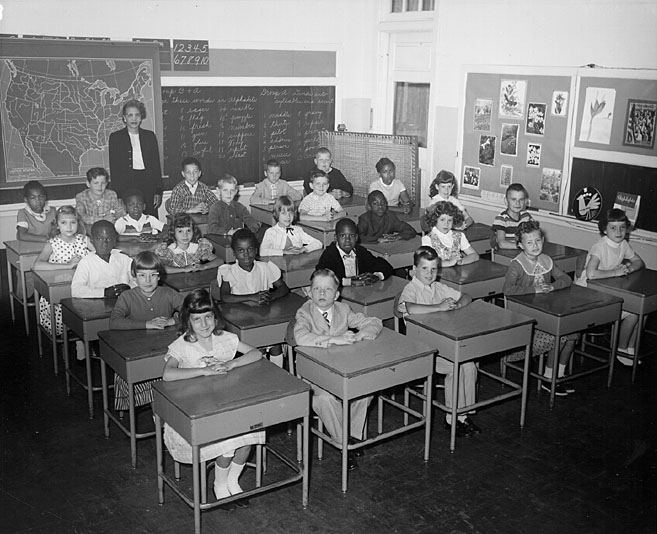
Change is everywhere and whether it’s our hometown or in our daily activities, adjustment and fine tuning is inevitable. The challenge to traditional education should be no exception and applies to all levels – whether it’s the elementary school, the vocational center or the college. Cookie cutter thinking ought to be replaced with personalization, customization, as well as design thinking.
Evolution in technological advancements, increased stress levels and different attitudes and values from students, as compared to their parents, have all influenced and changed how education is achieved today. Instead, students continue to be told what to learn, how to behave, how and when to learn it, and then are evaluated in ways that may not reflect the diverse intelligences that exist in every student population.
From Standardized Schools to Personalized Learning
Most will agree that education should be perpetual. Since we ought to continuously hone our academic skills along with applied skills, learning at all academic institutions, including workshops and seminars, should cause students to enjoy rather than endure the sessions.
The profile of our learners has changed over time. Today, they are digitally wired including Web 2.0+, video games, and carrying their tablets and/or smart-phones everywhere they go. While many educators today bemoan that these learners are difficult to engage, game designers on the other hand are successful at attracting a plethora of loyalists. It’s a dilemma for educators who still grapple with getting students to master something that is time consuming and challenging, as well as derive pleasure from it.
Creativity expert Sir Ken Robinson, an outspoken critic of the existing educational model, challenges the way we’re educating our children. He champions a radical rethink of our school systems, to cultivate creativity and acknowledge multiple types of intelligence. He strongly encourages moving away from the industrial method by reforming it and personalizing it to the people we’re teaching. In the follow-up to his fabled 2006 TED talk, Sir Ken Robinson makes the case for a radical shift from standardized schools to personalized learning – creating conditions where students’ natural talents can flourish.
John Rassias, the William R. Kenan Professor at Dartmouth College in New Hampshire, U.S.A., and developer of the innovative and highly effective approach to teaching languages, known as the Rassias Method® or the Dartmouth Intensive Language Model, claims that unlike the conventional way, his technique is widely successful because it aims to:
“…make the participant feel comfortable and natural with the language in a short period of time” involving “teaching procedures and dramatic techniques which seek to eliminate inhibitions and create an atmosphere of free expression from the very first day of class.”
Prof. Rassias has written several books and is the subject of more than 400 articles in regional, national and the international press. At his talks he preaches the importance of teaching heart-to-heart. Since his approach has been utilized by all language departments at Dartmouth College (including Chinese, French, German, Modern Greek, Hebrew, Italian, Japanese, Latin, Portuguese, Russian, and Spanish), the number of foreign language majors has steadily increased. This statistic stands out as a startling reversal of the national trend in recent years of declining enrollments in foreign language courses. Teachers in other colleges introducing the Rassias Method report similar renewals of interest.

Design Thinking – the Next Competitive Advantage
Classrooms and schools across the world are facing design challenges every single day, from teacher feedback systems to daily schedules. The challenges educators are confronted with are real, complex, and varied. As such, they require new perspectives, new tools, and new approaches. Design Thinking from Ideo, the company that conceived the idea, is one such method. Ideo is an international design firm and innovation consultancy founded in Palo Alto, California.
The following graphic was developed by Design Thinking for Educators to explain the process of design thinking:
“We’re seeing people use design thinking to create change at multiple levels—from national education reform to individual classroom needs. Teachers find it to be an engaging pedagogical approach, because in order to create new solutions, you cannot help but learn about people and their interests, about business or math or science or engineering. Plus, while students are learning the specific knowledge set required to develop a relevant and buildable solution, they’re also developing highly valuable skills such as empathy, the ability to collaborate, to deal with ambiguity, and of course, to create.”
He further elaborates:
“We’re also seeing teachers use design thinking to redesign the curriculum around experiences that engage students, and shift their physical classrooms based on feedback from students. We’re seeing school leaders engage faculty to develop a shared philosophy on teaching and learning; district administration using design to re-imagine tools they create to help teachers be successful. We’re even seeing community volunteer groups engage in a process to help redesign schools that are less successful within their state system. Each of these stories alone is not the answer to whole-scale education reform—but if you multiply these activities by three million teachers across this country, and magnify that by the organizations that are creating new, human-centered tools and services to support our students—it can add up to a big impact on the system.”
A working design thinking example of the above is Michael Schurr, a 2nd grade teacher in New York. He realized that he never asked his students what would make them comfortable in the classroom. He decided to talk directly with his students to figure out the best design for their environment.
Based on his students’ input, he was able to redesign his classroom to better address the needs and desires of his students. He lowered the bulletin boards so that his students could actually see the content he’d spent hours assembling, and created a more comfortable semi-private space for the students to study by rethinking the student cubbyhole space. His students are more engaged, and move more fluidly in the classroom space. Now Michael consistently engages his students in helping him more effectively shape their learning experience. Essentially, Michael is using design to re-imagine his classroom through the lens of his students’ needs.

The Unconventional MBA Program: Where Art, Science and Craft Meet
Unlike the traditional case-study approach, one truly global MBA program has been redefined and totally revamped. Class sessions involve everyone, with a 50-50 rule that gives participating managers half of all class time to spend in conversation with colleagues, learning from one another’s insights and suggestions. This breaks away from traditional lecture formats where only the professor is considered the expert in the room. The unique 50-50 rule ensures that the focus remains on experience, nurturing discussions that often become much more intensive and educational than an average case study, simply because participants have an interest in helping their colleagues resolve their business issue at hand. Welcome to The International Masters in Practicing Management (IMPM) – a real alternative to the mainstream of MBAs.
It is designed for highly experienced managers and entrepreneurs, enabling them to refine their leadership skills and make a lasting impact on their organization. Its design and processes were inspired by the lifelong study of managerial practice by Professor Henry Mintzberg, the Canadian management authority, who has taught on the IMPM since its foundation.
The program focuses on five modules designed around managerial mind sets rather than functional silos. Each module lasts approximately ten days and is delivered in a different country such as the U.K., Canada, India, China and Brazil.
Participants move between concept based training and their real life experiences, and also benefit from peer to peer learning, with observation, visits, and feedback.
Over 50 leading companies and organizations from around the world have sent staff to participate.

Disruptive Innovation in the Higher Education Industry – Free University Online Courses
In the last few years, we have begun to witness the accessibility for all with free online courses/modules with the platform known as massive open online course or “MOOC”. Udacity, Coursera, EdX and Academic Earth are the most popular well funded providers that connect students to the world’s top universities and scholars. Their aim is to provide everyone with the opportunity to earn a world-class education whether looking to advance a career or take courses of interest.
According to Wikipedia, a massive open online course (MOOC) is an online course aiming at large-scale interactive participation and open access via the web. In addition to traditional course materials such as videos, readings, and problem sets, MOOCs provide interactive user forums that help build a community for the students, professors, and teacher assistants.
Salman Khan, a 36-year-old former hedge fund analyst, founded what’s considered the classroom revolution. It is revered by many including Bill Gates who called Khan “The world’s favorite teacher.” Today, the Khan Academy, which Khan himself established as a result of tutoring his niece and nephew, now has 3,400 short video tutorials, most of which Khan made himself along with 10 million students.

Team Dynamics – Workshop Approach to Learning
For many, lectures, workshops or seminars can be weary – certainly not an enjoyable experience to endure. Even if you’re not the funniest or most entertaining speaker/presenter around, you can prepare your content so that it resonates with your audience. To be in that position requires speakers and facilitators to design their talks, seminars or workshops geared for even those with brief attention spans.
When it comes to bringing engaging and provocative business workshops, Team Business is a good case in point. The programs were developed in South Africa in the mid nineties. Over the years, the educational organization has expanded overseas and teaches senior high school students, college/university students, as well as company management level staff about entrepreneurship and team dynamics via hands on, interactive entertaining simulations (unlike computer-based) in 3–6 hour sessions. The program learning outcomes include business and financial literacy, team dynamics lessons and the importance of face-to-face communication.
Workshops have been conducted at mid-size to large corporations, as well as at Ivy League schools such as Wharton, Tuck and Georgetown. Team Business also works with International Business Schools in Europe. In all our business simulation workshops, teams run their own companies in competition with other teams. Competition breeds creativity and their level of success is based on the business decisions they make and on how well team members lead and interact with each other. Time pressures and a dynamic environment bring hidden individual traits to the surface where behavioral models can be examined in a safe and constructive way.
When conducting workshops and seminars the following ought to be considered.
– The average attention span is between 45 minutes to an hour;
– Use storytelling without exaggerating. Most enjoy listening to other people’s experiences;
– Utilize stimulating multimedia presentations such as engaging slides (mainly with images like a storyboard), videos, demonstrations, several examples of practical concept implementation, and more.
– Rather than creating standard slides with the default MS Power Point Presentation software, get bold using cloud based alternatives such as Prezi; Do away with excess bullet points, dreary graphs, cheesy colors, and other overwhelming visual distractions. Apply the KISS method when creating slides;
– Presentations should be personalized by making them specifically relevant to the audience being addressed;
– To further engage with the audience, handouts and/or worksheets should be given which also prevent attendees from having to take notes when, instead, should be paying their undivided attention to the presenter and his/her visual material;
– Consider group discussions which will give the audience a chance to better understand the workshop and delve into areas the presentation may not have covered.
– The speaker should be animated with his/her voice and enthusiasm resonating across the audience.

Coaching Ourselves – a Unique Take on Ongoing Corporate Training
Coaching Ourselves is an organization which was born out of its founder’s frustration searching for a way to help his management team work through the difficult challenges resulting from the dot com crash at the time. It brings management development directly into the workplace where groups of managers get together for 90 minute meetings, with or without a facilitator, to talk about work, guided by one of over 70 Coaching Ourselves management topics. The chosen topics stimulate and guide discussion. This enables reflection, collaborative learning, team bonding, and management development.
Coaching Ourselves works with over 40 world renowned management and business thinkers to develop the topics including David Ulrich, Michael Beer, Marshall Goldsmith and Henry Mintzberg covering a wide range of managerial concepts and competencies and available in six languages. They are licensed to organizations for use in programs and initiatives aimed at all levels of management. Its mission is to help as many managers as possible to improve their practice of management.

The Abstract – Looking Beyond the Ineffective Status Quo
Like most events in our life, there is continuous progress whether evolutionary or revolutionary. Moreover, there are practical changes which improve the way we go about doing things and designing objects to enhance our lives – think technology. The education system should not be immune to progress. Complacency breeds mediocrity.
To move forward with vital changes/improvements begins with a positive attitude, an open mindset, fortitude and empowering those that look to us for nurturing and leadership. Education ministries and school administrators ought to cut down on their bloated and stifling bureaucracy by permitting forward thinkers to tinker with and reform the antiquated public school/educational model. There must be no mixing of politics and education. Instead, teachers should be accountable for improving the system as it’s their call and area of professional expertise ‒ along with continuous honing of their knowledge/skills.
Schools which are highly regarded by students and peers are those that have strong leadership/headmasters with a vision which creates a vibrant culture. This includes teachers who constantly update their professional skills, plan effective lessons, are enthusiastic and creative. Moreover, well-functioning and forward thinking schools deliver a broad and flexible curriculum. Extra subjects, such as foreign languages and/or vocational courses are taught alongside the usual subjects. No cookie cutter approach or subject matter. Successful schools also consider the needs of each individual student.
Finland’s educational system is renowned as consistently at the very top of global educational rankings because it takes an unconventional, yet practical approach along with a first rate structure of the system. In addition, its teachers are highly trained and well compensated, their students are not tested until they reach their teens, there isn’t much homework – and surprisingly, there are no private schools in that country.
Purging of and replacing the status quo requires forward and design thinking, as well as actual implementation in the classroom of the following:
– Re-designing the classroom setting/ambiance;
– Encouraging creativity with students through empowerment – it’s not the same as giving away control of the classroom but rather helping students take control of their own education;
– Making learning/subject matter stimulating, empathetic, and engaging.
There’s an old Chinese proverb: “If you are planning for one year plant grain, for ten years plant trees, but for 100 years educate the people.” Let’s not get left behind! Time to think about the future, as well as time to teach children to think and not just remember. Since we can’t change government behavior overnight, the least we can do is make a difference by focusing on the variables that we can control to the best of our ability along with resources readily available.
Finally, we have to eliminate the corporate mentality from education, where students are seen as a ‘product’ and parents as ‘customers’. There is no reason why public schools can’t be at the same caliber as private schools. Are inept or discouraged administrators to blame – or perhaps a failed existing structure which is out of touch? As demonstrated by MOOC, education doesn’t need to be a privilege but rather a right with equal access anywhere for all who possess the appetite to learn. Isn’t that what true democratization of education is about?
_______________________________________________
Request your TWO FREE chapters of this popular book with no obligation.

Learn how to start or expand a business for free at

Filed under 1, education management


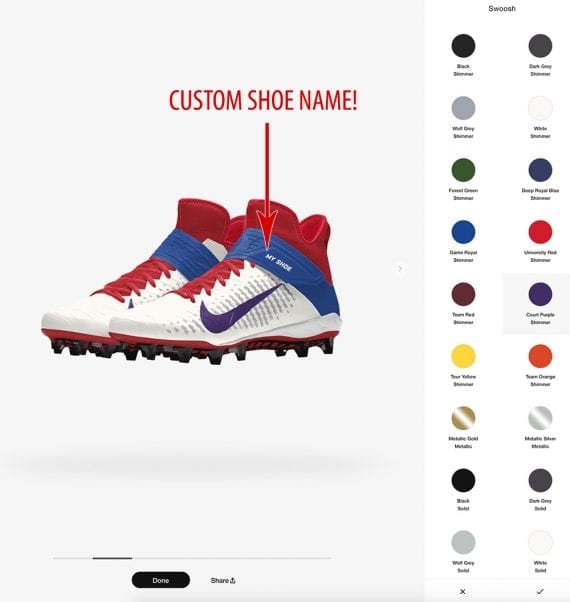
There was a time when customized products and personalized services were catered exclusively for the discerning and well heeled.
London’s Savile Row stands as a testament to personalized luxury. In a world full of luxury dumbed down and mainstream, there has been an up-shift by certain manufacturers trying to offer tailored ranges and services to a wider audience.
This development is technically referred to as “mass customization” and “mass personalization”. So why the shift?
Simply put, clients are demanding more and don’t share the same sense of brand loyalty as previous generations. Marketing strategists believe that focus must be on generating a community tied to customer satisfaction. I won’t call this CRM on steroids but the analogy could hold.
With ever increased competition, brands must show genuine benefit to hold the client’s attention as well as affection. The trend is quite sweeping once you start to examine the determinants. Look at fashion apparel, beauty care products, shoes, bicycles, laptops, and even smart phones. All claim they are perfect for customization.
Mass Customization vs. Mass Personalization
According to Wikipedia, the definition of the term “mass customization” in marketing, manufacturing, call centers and management, is the use of flexible computer-aided manufacturing systems to produce custom output.
These systems combine the low unit cost of mass production processes with the flexibility of individual customization.
“Mass personalization” on the other hand, is the custom tailoring by a company in accordance with its end users tastes and preferences.
The main difference between the two concepts is the ability for a company to give its customers an opportunity to create and choose product specifications. There are however limits.
The Financial Times lists “personalized production” among six other factors driving the future of manufacturing – namely network manufacturing, technological innovation, industrial democracy, boutique manufacturing, cluster dynamics, and environmental imperatives.
A case in point: Pomarfin is a small family owned Finnish footwear company. With strong competition from Asian manufacturers, the firm decided to change its strategy. It carefully looked at the adaptation to the mass customization paradigm, alongside a revision of its business model. Its choices were to either outsource the manufacturing of its shoes to China and simply become an ubiquitous brand, or differentiate itself while keeping its production in Europe. It chose the latter, by deciding to compete in mass customization, making made-to-measure shoes for discerning and affluent men. Pomarfin then introduced the clever concept of installing and utilizing a foot scanner in retail stores, which sells its shoes. The client’s foot gets scanned and the image is then uploaded to a server and sent to the firm’s manufacturing plant. The client then decides if he wants his exact fitting shoes shipped directly to his address of choice or picked up at the retailer.
Moreover, as an additional convenience, the customer can reorder custom shoes through Pomarfin’s website. To be fair and retain loyalty with its retailing partners, Pomarfin pays them a royalty for life for each new pair of shoes purchased by a customer sent its way.
Broad Marketing of Bespoke Products & Services
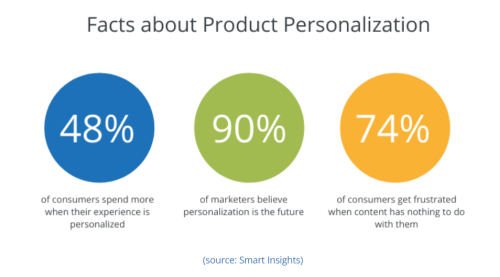
Clients have simply become more demanding. They expect more, and have no loyalty to brands that do not come up with the experience to match the product or service hype. This trend is both at the B2C and B2B level.
Everyone it seems is looking for the enviable win-win scenario.
It is natural to think that bespoke is the sole domain of the fashion industry whether shoes, suits, shirts or haute couture. These items with their stress on handmade carry heavy price tags and are geared to people with a high DPI.
You would be mistaken to believe that this is not possible for a mass market. For example, Dell computers was the first firm to offer customization to their entire range. In fact, designing your own computer needs with a consultant is the DNA of this organization. Dell understood that this type of differentiation would mark them apart from anyone else in the industry.
Other consumer goods operations quickly followed suit. For example, Adidas AG launched the miAdidas unit which offers custom sports shoes. Nestle delivered a market coup to the coffee industry with Nespresso, bringing single serve coffee into the home and office. Now you can serve different types of coffee within a group with no effort.
Individuality is a Sign of Personality: The Way Forward
The mass customization trend has been a rolling bandwagon. Understanding and harvesting this demand is easier said than done. Smart firms generally respond by building production facilities and systems with an increasing number of modifications in order to produce and deliver individualized units as per customer’s preference.
This certainly has its benefits and drawbacks:
Advantages
– Allows customers to create customized products
– Products deliver excellent value for money
– Makes comparative shopping difficult
– Shifts the focus from price to benefits
– Economies of scale/mass efficiency
– Manufacturer can justify charging a premium
– Easily differentiated against similar products
– Provides deeper form of customer engagement and data
Disadvantages:
– Increased overall complexity
– A significant initial investment + per unit cost of production
– Layover time – takes longer to manufacture
– No return policy on custom orders
Progress in manufacturing technology such as computer-aided manufacturing (CAM) and computer-aided design (CAD) have increased the flexibility, as well as the efficiency of the modern-day factory to achieve build-to-order products.
Ordinary is for the Mainstream – Do Luxury Brands Have Your Number?
Traditionally, the wealthy have great purchasing power. In theory, they are sophisticated and unafraid to express their taste as trendsetters and style mavens. They can also be the hardest segment to market to effectively because they are spoiled for choice.
Yet billions are spent catering to the tastes of this ever growing segment. Take the Paris Fashion Week shows and you can see the parade, the fanfare, and the glitz. Everyone is here: the paparazzi, fashionistas, and even fashion bloggers. Is it any wonder? Everyone craves glamor and it’s big business.
If you are one of the Jet-Set, do you want to be just mainstream? Of course, you don’t. The luxury trade has got your number, no matter how idiosyncratic your taste or preferences. Need private banking where professionalism and discretion are key? You got it. Want to stay in a boutique hotel so exclusive that few even know it exists? It’s there for the taking.
The providers of these services use what I refer to as “Bespoke Marketing” along with “Sensorial Branding” to differentiate their message and total customer experience respectively. These branding exercises are narrow in scope and speak of privilege the way its understood among the cognoscenti.
It is typical for certain shoppers at Louis Vuitton on the Champs-Elysees in Paris to serve the right customers flutes of champagne while they try things on or discuss their luggage needs upstairs. It must be said that LV knows how to coddle their clients. As I am sure you can appreciate, LV is not the only store in this town to offer VIP red carpet treatment. Most major luxury firms do likewise such as Cartier, Dior, and Chanel.
Need a personalized briefcase? Why not pop over to Hermes? They are awaiting your next visit. The world of Hermes personifies exclusivity. Open one of their in-house magazines, and a special universe is revealed. The key beyond outstanding products is the creation of something bordering on revelation. The store itself has become a stage set, and sales pros are the players who embody the firm’s DNA.
Bespoke is the middle name of this institution. Real luxury brands understand this concept like Stradivarius handcrafted violins.
Needless to say, the term “luxury” has been misused over the years. It is mysterious and elusive. In essence, it revolves around subjective criteria referred to as lifestyle.
Gary Harwood at HKLM, one of the founders and directors of a leading strategic branding and communication design consultancy, stated:
“A luxury brand is very expensive, exclusive and very rare – not meant for everyone. When it ceases to be these things, then it’s lost its exclusive cachet. Commoditizing luxury brands and making them more accessible to the middle market puts them at risk of becoming ordinary, common and less desirable. And the more available a brand is, the less luxurious it becomes.”
Perfume connoisseurs are taking their choices a notch above most as the top-end of the fragrance industry is a very personalized one. Consequently, niche perfumes for the discerning and well-to-do are growing rapidly. This sector is creating new trends in the beauty and fashion world through an artisan approach. Customers visiting bespoke perfumery shops expect highly trained staff to advise on fragrances. A great “nose” knows different clients value different scents, and thus will prescribe like an old fashioned doctor, who used to make house calls. Chemistry and diet also play a role in developing your own signature perfume.
Quite sophisticated and personalized indeed. But then, isn’t this the true symbiotic meaning of luxury?

The Final Take
“Mass customization” and “mass personalization” (or “build-to-order marketing” and “one-to-one marketing”) in delivering either products or services when properly implemented, bring about across-the-board improvements in all dimensions of a business. This includes, price, responsiveness, quality, and a positive experience. Competitiveness and operational effectiveness of a company also improve.
However, mass customization also has a few drawbacks as it does come with a cost. Along with a substantial initial investment in manufacturing equipment upgrades, the primary challenge in pursuing mass customization stems from increased complexity in its operations. A higher level of product customization requires greater product variety, which, in turn, entails greater number of parts, processes, suppliers, retailers, and distribution channels. As a result, bigger challenges exist to manage all those aspects of the business from raw material procurement to production and eventually to distribution. In addition, an increase in product variety has the effect of introducing greater uncertainty in demand realizations, increase in manufacturing cycle times, as well as an increase in shipment lead times.
In the luxury sector, traditionally there hasn’t been any shortage of customization for the ultra-high-net-worth. Exclusive and bespoke travel companies provide tailor made adventures and excursions, whereas, the ultra luxury and exotic automobile sectors such as Rolls Royce and Ferrari respectively offer a wide array of customization options. Each vehicle coming out of the studio will be completely unique and guided by a personal designer at the manufacturers.
“Good things come to those who wait.” Or so the saying goes.
__________________________________________________
Request your TWO FREE chapters of this popular book with no obligation.
Learn how to start or expand a business for free at


Viewpoint by James D. Roumeliotis
Traditionally, entrepreneurs know they need a road map we all call “The Business Plan.” Some see this as a necessary evil and others welcome the concise texture of not launching a venture blind.
Average business plans describe the new venture’s offer to its target market. It also explains how the organization will reach its goals.
Such plans should include:
A) Brief bios on the key players
B) A section detailing the sales and marketing strategy section
C) The organizational structure of the project team or organization
D) Detailed operations description
E) Financial projections
F) Capital investment required to launch the product/organization
These days building a plan is simple enough. You can go to a bank or online and purchase a business plan template. You can even choose the option of hiring consultants who will set the plan up for you.
However, nobody can tell you what you want the business to be. No, I’m not referring to the ‘executive summary’, which is part and parcel of any coherent b-plan. It is my advice that prior to building your business plan, you need something else: call it a viable business model.
The Vision Thing
If the mantra in hospitality chants “location – location – location”, then an entrepreneur’s should be “vision – vision – vision”. Putting the vision on paper is crucial. It will help you secure financing, attract investors and even partners.
New Ventures need this to articulate how the new organization is going to achieve its operational, sales, marketing and financial goals.
Established Enterprises use this tool to depict their objectives in detail. There is a step-by-step engagement and procedure to move forward never forgetting the next level. I call this strategy the “Prelude to business planning”. You simply must have a model first. How can you test an hypothesis without a model? Simply put, you cannot.
Once this initial step has been accomplished, the business plan will be simpler to prepare as the foundation of the organizational structure can be produced. The idiom “putting the cart before the horse” clearly reminds us of this erroneous and common approach.
The business model also makes it easier to visualize and analyze a business from the customer’s perspective. A simple illustration of an apparel retailer’s business model is to make money by selling a specific line of clothing to consumers whose taste and budget are aligned with the store’s offering.
Anatomy of the Business Model
What is a clear definition of a “business model”?
What does it entail?
According to Investopedia.com it is regarded as:
The plan implemented by a company to generate revenue and make a profit from operations. The model includes the components and functions of the business, as well as the revenues it generates and the expenses it incurs.
Dr. Alex Osterwalder, a sought after speaker and advisor with a particular focus on business model innovation, strategic management and management innovation, as well as co-author of the business bestselling book “Business Model Generation”, produced a more succinct definition:
A business model describes the rationale of how an organization creates, delivers, and captures value (economic, social, cultural, or other forms of value). The process of business model construction is part of business strategy.
Developing a business model seems to be an overwhelming and a somber task. However, to alleviate those concerns, Dr. Osterwalder is further credited for creating an ingenious and popular visual version of the conventional business model.
His consists of nine building blocks which focus on the big picture as follows:
1) Customer Segments: Describing who a company offers value to
2) Value Proposition: Describing a company’s offer
3) Channels: Describing how a company reaches its customers
4) Customer Relationships: Describing the relationships a company builds
5) Revenue Streams: Describing how a company makes money
6) Key Resources: Describing what capabilities are required to make the operation function including your suppliers
7) Key Activities: Describing what activities are required to make the operation function
8) Key Partners: The partners that leverage the business model (if applicable)
9) Cost Structure: Describing the costs of a business model

The first 4 (right half of the model) are portrayed as the ‘front stage’ of the business where the client experiences transactions, whereas, numbers 5 to 9 (left half of the model) are the backstage where the action takes place to make the right half (‘front stage’) work seamlessly. The client doesn’t see this part. It’s analogous to a performance in a theater.
The above business model can be sketched on the wall on what is referred to as the “The Business Model Canvas” (see sample image below). A business can turn up with several business models but choose the most ideal for its circumstance after having tested each one through brainstorming, simulations and/or by approaching its intended market for feedback.
Nespresso, the Alluring Business Model
If there is a business success story worth noting and plotting on a business model canvas as an attractive case in point, it should be Nespresso. This brand of high-end single serving espresso coffee systems is a standalone operating unit of the Swiss food conglomerate Nestle SA and its fastest growing brands. Reportedly, Nespresso sales have been increasing by as much as 20% on average for the last several years and earns 4% of Nestle’s total annual revenues.
Nespresso has registered numerous patents for concept including its signature colored capsules containing the ground coffee. Initially, Nespresso wasn’t much of a success with its original business model as its sales channel, back in 1986, was based on the coffee machine partners’ own sales reps touting the distinctive looking apparatus and capsules in the office coffee sectors of Switzerland, Japan and Italy. In 1989, their coffee system is introduced to the consumer/household sector which became a sensation and opened up a new category altogether in the single serving market.
Nespresso’s strategy circumvents the wholesalers and dominant supermarkets. It’s positioned itself as an exclusive luxury good. Taking a branding page from genuine luxury houses, such as Hermes and Chanel, Nespresso too controls its own distribution channels. though its machines are sold in department and fine retail stores, Its capsules are sold solely via online, by phone orders or at its more than 300 boutiques in prime locations throughout the world. This is by far its most successful business model as the company controls pricing and has an intimate relationship with its customers – most notably with regards to the total customer experience and its proactive customer service. Recognize George Clooney in its ads? He’s been a strong connection to the brand which seems to work – at least for the female audience.
Business Reassessment: Strategic Planning Tool
Business models don’t merely apply to start-ups. They equally vital for growing and established businesses which should re-evaluate their business model when revenues are dropping or when working on strategic planning.
An organization should not be operated as a static entity but rather as a progressive and innovative type with foresight to changing economic, technological and market conditions. This includes at looking at new distribution channels and revenue streams.
A case in point are the companies that make up the recording industry. For decades, they had an attitude of arrogant superiority until the day the digital download era came upon them. This development caught them off guard despite the imminent warnings, Having been built on a brick-and- mortar distribution model, they were too complacent to adapt despite the threats and decline in revenues.
Rather than re-evaluate their business model, focus on innovation and ultimately transform by embracing an opportunity, Time Music Group, and several other members of the recording industry, chose a path of least resistance. They decided to hire an army of attorneys and began to aggressively hunt and sue the illegal downloaders, including minors.
Through legal means, they successfully shut down websites such as Napster, BitTorrent and others. Meantime, online music start-ups such as Ritmoteca.com came along and conceived a novel way to distribute and monetize digital downloads. As of April 2008, the largest online music store is Apple’s iTunes Store, with around 80% of the market (source: theregister.co.uk).

Closing Memo
Whether starting a new business or moving an existing one to a new direction, a business model is the first strategy to consider developing prior to the business plan. The former is a proprietary method used to acquire, service, and retain customers. It makes you think through your business plan, which in turn communicates the business model. Both should synchronize.
The business model need not be a chore to design. By utilizing a creative one page visual orientation named “Business Model Generation”, developed by Dr. Alex Osterwalder, one can view the business holistically.
Several business models should be considered, their hypothesis validated in the real world and finally the most ideal model chosen.
It took Nespresso almost 30 years, since its first patent, to refine its business model.
___________________________________________________
Request your TWO FREE chapters of this popular book with no obligation.
Learn how to start or expand a business with free courses at
Receive two FREE chapters from my book, “Entrepreneurial Essentials: unconventional business wisdom & bold tactics.”
Your subscription includes additional complimentary exclusive information (slide presentations, webinar invitations).
CLICK IMAGE!

Filed under 1
Editor and news correspondent, Kathy Tzilivakis, interviews James D. Roumeliotis, author of this blog and of the book, “Entrepreneurial Essentials: unconventional business wisdom and bold tactics.”
Click here for the interview in “The Pappas Post”


by James D. Roumeliotis
There was a time when the Olympic Games stood purely for global athletic competition. Nowadays, you have to be somewhat paranoid considering the gross commercial exploitation. The management team in charge of the IOC (International Olympic Committee) have gone for tight-fisted brand control. In today’s economic environment, everyone is brand conscious. The defining line between sports and business and non-profit endeavors is a thing of the past.
Like Christmas, the Olympics have been hijacked by commercialism. What was once a tribute to athleticism has been transformed into an indulgence of consumerism.

Change In Perspective
Do you realize that the Olympic games went from honoring the Gods to becoming a vehicle for financial gain?
It is common knowledge that the Greeks invented the Olympics in 700 BC. However, the “modern” Olympics as we currently know it was established by Pierre de Coubertin, a Frenchman in 1896.
Until the year 1972, the International Olympic Committee (IOC) would not accept money from corporate sponsors because it believed that due to their influence, the decision making authority of the IOC would be diluted. Until that year, the IOC was operating on a scanty budget with assets of $2m.
Following 1972, there was a radical shift on managing and running the Show. Members took the radical step to accept corporate sponsorship. In the next 8 years, the IOC accumulated assets worth $45 million. In the last four-year cycle that includes the London summer games as well as the Vancouver winter Olympics of 2010, the IOC raised $4.87bn in sponsorship and broadcast fees. On top of this, it earns a handsome sum on venue ticket sales, as well from licensing products/souvenirs.

The Commercialization of the Games
A new program called TOP (The Olympic Program) was created by the IOC in order to increase the Olympic brand value. To acquire a membership in TOP, a company has too forfeit $50m for four years. If a company becomes a member, then it has the right to use the Olympic symbol of the intersecting rings in its advertisements.
The 11 major brands have invested for the prestige and global celebrity. This intense exposure adds an exceptional opportunity to bond closely with their worldwide consumers. Alternatively, the IOC benefits from the revenue it earns from the sponsors, as well as the additional publicity it receives for the Olympics which the sponsors are contractually obliged to offer through their ads.
As for TV broadcasting rights, the bidding process can reach amounts in the low billions with some notable broadcasters such as NBC Universal. Despite lucrative advertising revenues, it is believed that it loses oodles of money for the sake of the title as “official broadcaster” to the Games.
An Excessively Antagonistic Brand
Prior to and during the actual Games, the IOC brand thugs are busy chasing down grandmas who sell muffins, a butcher who had to remove a bunch of sausages made to look like the iconic five ring logo and a shopkeeper who displayed intertwined bagels in alleged violation of branding rules. If that wasn’t enough, they have also threatened legal action to a dry cleaners operation named “Olympic”, whose business name existed for two decades, including improv comedians and Facebook users who mentioned or attempted to showcase any corporate entity that is a competitor to the official Olympics sponsors.
Renowned marketing expert Seth Godin articulated it best in his recent blog post by stating:
“Today, of course, everyone is a media company. In their misguided attempt to stop guerrilla marketers, squatters and media pirates, the IOC has completely missed the point of what a brand is. It’s not a word. It’s a set of expectations. You can’t build a brand by trying to sue anyone who chooses to talk about you.”
On the contrary, you have a Tennessee based distillery brand which handled a trademark violation with finesse and won it plenty of positive publicity and admiration. Referring to a recent story of a lawyer who defends trademarks for Jack Daniel’s whiskey and who was in the news for writing a cease-and-desist letter that is exceedingly polite, encouraging and empathetic. The letter was sent to the author of the satire “Broken Piano for President.”
Apparently, the book cover bears a striking resemblance to the label for Jack Daniel’s Tennessee Whiskey. All in all, both sides settled quickly and amicably with the absence of any needless strong arm tactics from the Whiskey’s legal counsel.
To add to the debacle, the IOC designates certain car lanes which are restricted to Olympic officials and athletes. Under normal every day circumstances, those are available to taxis for pickups and drop-offs. As a result, the “Olympic lanes”, although under-utilized for their intended purposes, in the interim create a great deal of inconvenience for drivers and passengers along with a significant drop in revenue for the cab drivers.

Suitable Sponsorship
Corporate sponsorship has also created controversy with the validity of some which go against the image of the athletic games such as McDonalds, Coca Cola and Dow Chemicals. With the McDonalds and Coca Cola, health food activists claim that the IOC could have taken a stand against obesity. They’re junk-food companies and have no business being associated with sport, health and performance.
Dow also a major sponsor, including its contribution of the fabric wrap around the stadium in east London, has caused a debate with campaigners arguing it holds responsibility for the disaster in Bhopal, India in 1984 which killed an estimated 15,000 residents. It’s a claim which it denies because Dow bought Union Carbide, the company which ran the plant at the time –16 years after the disaster and argues it has no responsibility.
Brash Marketing
In an online survey of 1,034 U.S. consumers, a week prior to the opening of this year’s summer games, respondents incorrectly mentioned Nike, Pepsi and even Google as brands behind the Games. Thirty-seven percent of respondents identified Nike as an Olympic sponsor, and just 24% said, correctly, that Adidas is one. That may be partly due to Nike’s success in identifying its brands with serious athletes of all types. Nike is also a master of ambush marketing.
Rival sponsor activities also invite bold antics from non sponsors who are willing to make a point by pushing the envelope to the edge. One sponsorship adversary who’s standing up to the Olympic branding czars is Nike. It’s got a longstanding reputation as a slick ambush marketer with more chutzpah and success than any other player on the field. Their latest “dare you” campaign has been named “Find Your Greatness” (theme: “Does greatness get handed out?”) and pokes fun at rival Adidas who is an official sponsor. Nike’s aim is to diminish them while elevating everyday athletes.

Bottom Line
Sponsorship should not be used to secure an unfair advantage. The Olympics may need sponsors, but they should refrain from applying bizarre brand exclusion zones to protect their investment. Sponsoring a big event gets the sponsor immense exposure and that’s its reward as a business. It shouldn’t buy special privileges. This is a big opportunity for the Olympics to get maximum exposure and conversation by anyone who cares to talk about the Games rather than stifle and control any discussion by ludicrous brand policies which only satisfy its sponsors.
Olympics sponsorship should not imply or allow carte blanche for sponsors to take jabs at their competitors. A case in point, Visa’s first Olympic campaign was full of ruthless antics. Having displaced American Express as the official payment card for the 1988 Winter Olympics, its ads bragged: “At the 1988 Winter Olympics, they will honor speed, stamina and skill – but not American Express.” Visa demonstrated how an Olympics sponsor can get away and deliberately put down its rival, in this case American Express.
Sponsors accepted by the IOC should be appropriate. Adidas, for instance, is a sports company and a fitting partner for the Olympics.
As politics and religion don’t mix, we should add that global athleticism, whose founding principle was to assemble top athletes from all corners of the earth to compete, should not mix with commercialism either.
_____________________________
Your views are welcome.
Request your TWO FREE chapters of this popular book with no obligation.
Learn how to start or expand a business with free courses at
by James D. Roumeliotis


Today’s approach to marketing & sales must be smooth and sophisticated. Pressuring people and the “hard’ sale are relics of a bygone era. The films, ‘Boiler Room’ and ‘Glengarry Glen Ross’ highlight the former pushy tactics.
Although I realize that a more suave sales technique is needed to woo the customer, the stereotypes of brash sales forces persist on a small scale. Think of cultures where the words “Hello my friend…” are still considered coins of the realm. Culture is partly responsible for the nature of this marketing style, and the other reason is a lack of regulatory procedures.
Let’s face facts. Business is about sales. No sales revenue, no business. You can have the greatest products or the finest service. If no one recognizes this and the offerings do not convert into receipts, there is only a limited time you will be allowed to remain open unless you are running an NGO. Speaking of NGOs, even they need to raise money. Their sales pitch might be different owing to the nature of their organization’s activities, but it is still a sales pitch.
The Sales Function
What makes sales an interesting subject is the nature of how the sale is conducted. When client need and desire are matched to the offering, the products or services sell themselves. The sales force become the bridge; provide information or even counsel. They should in theory also become part of a positive experience. This principle should hold true in any organization, public or private, large or small.
A contemporary salesperson should be a listener more than a talker. The offering must be tailored to fit the customer’s needs. When it is handled in this manner, the customer makes an “intelligent” buyer behavioral decision.
A smart and well-trained sales team recognizes that understanding human psychology and diplomacy acts as a form of persuasion.
Liked v. Valued
As in any profession, most sales people appreciate being liked and trusted by their clientele. The key I have found is the concept of value. When clients sense that you value their needs, you understand the principle of caring. Do not make any client feel that they are just part of “turnover”. Authenticity must be genuine. Anyone can tell a fake from the real McCoy.

Bought vs. Sold
Marketing strategist Seth Godin states in his blog that there are products that are “bought”, and there are products that are “sold”. “Some things are bought – such as bottled water, airplane tickets and chewing gum. The vendor sets up shop and then waits, patiently, for someone to come along and decide to buy.
Other things are sold – such as cars, placement of advertising in magazines and life insurance. If no salesperson is present, if no pitch is made, nothing happens.”
Seth goes-on to stress: “Both are important. Both require a budget and a schedule and a commitment. Confusion sets in when you’re not sure if your product or service is bought or sold, or worse, if you are a salesperson just waiting for people to buy.”
If a company’s products or services need to be “sold”, there are different sets of challenges to overcome. These include:
– Clarifying how the products or services can make prospective clients’ lives better;
– Creating and expressing an emotional connection to your niche audience/prospects – whether it’s cool, innovative, or rebel etc.
– Indicating to your audience/prospects what they get to lose by not acquiring the products or services.
When it comes to a product or service being “bought”, not much effort is required in convincing prospective clients that they should purchase, but that they should buy yours. Even perceived necessities need to be marketed and sold – It’s just that they have a different focus.
Sales Online
The Internet and social media have had an effect and changed the way customers are buying. Their selling process has been reduced to a mere buying process; although the consumer continues to seek guidance in their purchases.
This is where the “value’ factor plays a role. Sales staff should always look for ways to offer solutions to keep their customers satisfied. It is thought that a quarter of all Online shopping is made by frequent “shopping lovers” whose influence spread the word to others about joys of online shopping whenever they have the opportunity. They represent an ideal target for retailers who should not be taken for granted.
Think Zappos!
Pull vs. Push
Push marketing and pull marketing are different yet complementary marketing methods for promoting a business – most notably online.
Push marketing is more traditional methods of advertising – essentially, you are pushing your message to your audience, regardless of whether they want to receive your message or not. Push marketing focuses on product features and awaits the audience to respond. Examples of push marketing include email marketing, website advertising, and cold calling.
Pull marketing is more proactive, pulling the customers toward your brand/product with targeted messages they care about. Pull marketing is all about brand building. Examples of pull marketing include media interviews, public speaking, and word of mouth advertising.
Consultative Sales = CRM
What differentiates a consultative sales process from a traditional presentation of features and benefits is the relationship that is established between the prospect and the salesperson at the beginning stages of the sales cycle. Traditional product salespeople rely mainly on their product and service expertise and may not pay enough attention to the relationship aspect. For an effective consultative sales conversation to develop, a prospect must believe that the sales consultant has practical and credible expertise and someone that the client wants to work with.
The contemporary approach to selling is when the sales person guides the prospective customer in making sound purchase decisions – someone seen as an ally and adviser. This can be accomplished by keeping the following in consideration:
– Clearly identify the prospect’s needs – does the product or service proposed fill-it?
– Is the price offered deemed value for the money?
Ensure a long-term relationship by achieving customer satisfaction.
To do this requires some skills – either instinctively or acquired through training and practice. This includes:
– The capability to understand what the prospect wants;
– The knack to recognize, through ample product knowledge including features, which of the products and services are deemed most appropriate for the prospect;
– The ability to convey the specific benefits gained by using specific products and/or services that are meaningful to this customer;
– The capacity to deliver the “package” (products or services). Focus on the desired results expected by the prospective client.
Luxury Brand Management: Selling the Intangible
Selling luxury products or services in a sluggish economy is no easy task. Focus on the affluent. Simply put, such consumers buy no matter what the state of the economy.
Next step is not to sell them on the product or service per-se but rather on what the true meaning of luxury represents:
• Self-expression
• An exceptional experience
• Made/formed with authenticity
• Craftsmanship & quality
• Created/produced in small numbers – rarity factor
• Emotional bonding
• Upscale mystique
• Status and prestige
This is what affluent buyers are looking for. All high-end purchases must have a storyline, pedigree or heritage. Pressure of any kind is pointless here. Think Ralph Lauren. RL sales teams never pressure clients. Ralph’s “dream” has either made the sale or it hasn’t. The sales team is just there to advise and be of assistance. Shared beliefs, attitudes, and values between sales team and client can push the sale forward because it is one of bonding and mutual recognition of being part of the “club”.
Any one who understands the points of being an “brand ambassador” knows what I am taking about here.
The Bottom Line
As in all professions, sales techniques continue to evolve and adapt to the nature of the times in which we live. Great service, good pricing and loyal relationships have become yesterday’s sales standards. Using the consultative sales approach and providing clients with value-added solutions is compulsory in today’s business arena.
Salespeople should evolve as businesses do. Today’s clients demand a partnership arrangement. Since all of us are also clients is it any wonder?
Request your TWO FREE chapters of this popular book with no obligation.
Learn how to start or expand a business with free courses at

It doesn’t take a genius to realize how few companies these days actually “Walk the talk”. What does this mean, you ask? I refer to “the total customer experience”.
Richard Owen, vice president of Dell online worldwide, says: “It’s the sum total of the interactions that a customer has with a company’s products, people, and processes. It goes from the moment when customers see an advert to the moment when they accept delivery of a product and beyond.
Sure, we want people to think that our computers are great. However, what matters is the totality of customers’ experiences with us: talking with our call-center representatives, visiting our Web site, buying a PC, and owning a PC. The customer experience reflects all of those interactions.”
You can claim that Richard Owen would say this considering the customer centric position of Dell and the nature of their business. However, his poignant statement is applicable to any business of any size. Having a vitally active and dynamic Customer Relations Policy is should be crucial to your business.
If your staff is inadequately trained, this lack of insight into CRM only aggravates the problem. When we act as clients ourselves, we can clearly see this process in action. Just pick up the telephone and call a company, which does not value CRM. It can be an exasperating experience.
People love to hate the phone tree where you have to go through a maze of menus until you eventually get to speak to a human. To make matters worse, there are companies that outsource their call center offshore to a country where employees have a peculiar accent and pronunciation not well understood by the average North American or European – and who simply follow a script they can’t deviate from.
Common intelligence tells us that it shouldn’t be this way. How a customer is dealt with reflects on the integrity of the brand, and the image of the company in the mind of the consumer.
Out of 362 leading companies surveyed, 80% believe they deliver a superior customer experience, but only 8% of their customers agree, states Bain & Company, a leading management consultancy firm. Moreover, the larger the market share of the firm in question, the greater the risk that this firm will take its customer base for granted.
YOU CAN READ THE REMAINDER OF THIS SUBJECT MATTER IN THE BOOK “ENTREPRENEURIAL ESSENTIALS: UNCONVENTIONAL BUSINESS WISDOM AND BOLD TACTICS”
For a no obligation FREE preview (2 chapters), kindly click here.
by James D. Roumeliotis


According to Wikipedia, the word “bureaucracy” is clearly defined as “The collective organizational structure, procedures, protocols and set of regulations in place to manage activity, usually in large organizations and government.” In other words, it’s a frustrating, rigid, process driven, and a snail paced institution. This shouldn’t exist in democratic countries and ought to be controlled by developing nations if they are to effortlessly succeed. Not doing so, bureaucracy will become increasingly self-serving, complacent and breed corruption, rather than properly serve society as its intention.
In the private sector, if people don’t work productively, their businesses will go bankrupt. But, in the public sector, seniority trumps performance regardless of employee efficiency or lack thereof. Competence in an organization is directly linked with its organizational system. In bureaucracy the hierarchy is typically very complex with many levels providing a highly differentiated structure of authority.
The faceless bureaucracy also exists in the private sector. Employees there get frustrated when they can’t perform their work in a wholesome way because of restrictive yet superfluous rules set by their organization. Add to that corporate politics and it’s not hard to see why there are high levels of employee exodus/turnover due to their malcontent. There are organizations which thrive on their ability to allow individuals to remain faceless. It permits them to act badly which is not in the best interest of their customers.
YOU CAN READ THE REMAINDER OF THIS SUBJECT MATTER IN THE BOOK “ENTREPRENEURIAL ESSENTIALS: UNCONVENTIONAL BUSINESS WISDOM AND BOLD TACTICS”
For a no obligation FREE preview (2 chapters), kindly click here.
by James D. Roumeliotis

To say the global recession was a wake-up call for the most consumers would be quite an understatement. It is just one of many events that have weakened people’s sense of security in the past decade along with political instability, terrorism and environmental issues such as global warming where already significant even before financial markets collapsed. As a result, there has been a mood of mistrust and anxiety that developed among many people around the world, which has produced a reexamination of priorities and values.
A recent study from Ogilvy & Mather in the U.S. identified new consumer priorities with quality of life and peace of mind at the top – and a focus on living life in a more sustainable way from both an environmental and financial point of view.
Marketers to respond to shift in consumer behavior
YOU CAN READ THE REMAINDER OF THIS SUBJECT MATTER IN THE BOOK “ENTREPRENEURIAL ESSENTIALS: UNCONVENTIONAL BUSINESS WISDOM AND BOLD TACTICS”
For a no obligation FREE preview (2 chapters), kindly click here.

Ask any consumer what they think of all the advertising messages they are exposed to on a daily basis and chances are the majority, as most surveys have revealed, believe there is far too much advertising noise – whether offline or online. A sizable percentage of consumers have also admitted that they avoid purchasing products that over-advertise.
Several months ago, I attended a local conference organized by a Canadian marketing group. I was drawn to one of the key note speakers, in particular, who made a compelling presentation on the benefits of “experiential marketing”. To me this clever approach was the antithesis to traditional advertising which is generally a monologue. Rather than sell the features of products or services, you apply innovation to draw your ad audience’s full attention to your wares. What’s more, this tactic builds brand awareness which settles longer in the mind of the consumer – allowing people to experience the benefits for themselves. As consumers are bombarded with multiple messages daily, companies ought to find a way to keep their brands top of mind and earn loyalty.
YOU CAN READ THE REMAINDER OF THIS SUBJECT MATTER IN THE BOOK “ENTREPRENEURIAL ESSENTIALS: UNCONVENTIONAL BUSINESS WISDOM AND BOLD TACTICS”
For a no obligation FREE preview (2 chapters), kindly click here.

Sales compensation is a crucial factor in motivation. It is the sales executive’s best strategic tool to drive sales performance and motivate specific selling behaviors. When designing sales compensation plans, one of the most important steps is to identify the appropriate measures on which your sales representatives will be paid. A combination of salary, commission and bonus is usually most effective. The question then becomes how to successfully blend all three that will entice achievers, as well as reward them according to performance. Nevertheless, the plan needs to be kept as simple as possible.
The total compensation mix: what does it entail?
Total compensation depends on the complexity of the sales person’s selling tasks. The mix between performance and fixed pay depends on:
1) Balancing salesperson and company needs;
2) The type of salesperson you want to attract;
3) The salesperson’s influence on the sale;
4) The type of product or service sold; and
5) Rewarding the salesperson’s specific actions or results most important to the company’s success.
Sales force compensation involves not merely salary, commission and bonus but also fringe benefits and reimbursed expenses – though these last two are considered non-compensatory since they are not influenced by sales results.
An ideal compensation plan should:
YOU CAN READ THE REMAINDER OF THIS SUBJECT MATTER IN THE BOOK “ENTREPRENEURIAL ESSENTIALS: UNCONVENTIONAL BUSINESS WISDOM AND BOLD TACTICS” – TO BE LAUNCHED/PUBLISHED IN EARLY JUNE 2012.
When Faddy Sidaros, a Regional Sales Director for Pitney Bowes, was asked what he considers to be his biggest challenges, his emphatic response was: “Coaching the coach to be on the same wavelength and linking the sales representatives’ personal goals to those of the company.”
There is no doubt that sales are the heart and soul of any public or private enterprise. It’s about the need for a constant stream of new business, which brings in the necessary cash flow. This should explain why nothing happens until a sale is made. That simple point underscores the critical importance of sales to the business – regardless of its size. However, in today’s global marketplace, owners and managers face many challenges related to fulfilling the customer’s ever-changing needs and expectations. With that come refined methods of selling a product or service to a well-informed and discerning customer – especially with the advent of the information age and plethora of choices.
Sales management can be most easily defined as planning, implementing, and controlling personal contact programs designed to achieve the sales and profit objectives of the firm. Overall, sales managers and sales directors are responsible for leading the firm’s sales program. More specifically, they are accountable to reviewing and analyzing sales performance against programs, quotas and plans to determine effectiveness. To excel in those areas requires discipline, planning, executing, as well as frequent checks and balances.
YOU CAN READ THE REMAINDER OF THIS SUBJECT MATTER IN THE BOOK “ENTREPRENEURIAL ESSENTIALS: UNCONVENTIONAL BUSINESS WISDOM AND BOLD TACTICS”
For a no obligation FREE preview (2 chapters), kindly click here.
Filed under 1, Business, business development

A political campaign can be an exciting and challenging experience especially with the great deal of circumstances that will transpire between the start of the campaign until Election Day. Whether a person is running as an independent, an active member or leader of a party, to be effective requires the same skill set similar to running a business. Disregard how the public service sector operates since it’s bureaucratic and a process driven entity.
The difference between winning and losing is what goes-on inside the campaign.
Decision: Why run in the first place?
No one runs for office alone. There is a heavy reliance on the people around the aspiring candidate. With that in mind, the first thing a prospective candidate usually does is to host a small gathering in his/her home to pitch the idea and see what kind of support might be available. If the support is sufficient and we presume that the candidate has a clean background and credibility intact, the ultimate decision then rests with that person as to whether or not he/she should make the commitment to run for office. One needs to carefully weigh the pros and cons since a campaign is very time consuming and constantly drains one’s energy. Compensation, if an incentive, should not be the main cause. Privileges, networking and serving local constituents can be very beneficial, as well as satisfying. Part of or an additional reason to seek office can be the dissatisfaction for the way the public sector is run and/or passionate about certain issues.
Support from the candidate’s family is imperative as long hours and a volatile schedule will most certainly be expected. Equally important is to obtain assurances from a group of potential supporters who can add credibility to the campaign and spread the word to their sphere of influence.
Being organized, energetic, articulate, versatile, patient, perseverant, tenacious, consistent, well informed and persuasive are important characteristics the candidate should possess. The list may seem like a tall order; however, members of his/her competent team can compensate for any deficits/weak points.
Research: Knowledge is an asset – particularly when applied
For starters, it is important to first know the issues involved in the office sought. By identifying the specific needs of the community or beyond the candidate wishes to serve, this person will put himself/herself in a position to do the maximum for his/her potential political constituency.
Depending on how involved the candidate is with issues of public policy, the research process can vary. Regardless, of the sources and methods one will use at his/her disposal to gather factual information, the person must have a very good command of all the important issues he/she will be facing and managing.
Organization & Coordination: Key elements and structure of the campaign
Like every project and endeavor, the key to a successful campaign is good planning. This can be done before or after establishing a campaign team, although it is often helpful to have input from the campaign team during the planning stages. It helps to ensure that all members of the team are on the same page throughout the campaign. The more comprehensive the plan, the fewer decisions will have to be made in the heat of the moment and the team will have a greater capacity to adapt and respond throughout the campaign period.
One of the most significant factors in the success of any political campaign is the number, quality and commitment of volunteers used to guide, implement and promote the campaign. Volunteers have many roles to play, and getting the right person to fill each of these roles is essential to success. The number of volunteers needed in a campaign will depend on factors such as the size and scope of the campaign, the number of staff and the recommendations of the campaign advisors/consultants. Once all the volunteers are in place, the next task is to keep them interested and involved in the campaign. They need to believe in the mission of the organization. Without this belief and passion for what the organization is doing, it will be hard to keep volunteers motivated.
Another valuable campaign and planning tool is to create an information database. This should contain names, phone numbers and e-mails of potential supporters who say they will support the candidate or work for him/her during the campaign and to contact them for their unequivocal support. It is important to follow through with anyone who offers to contribute their time to the campaign. The campaigner can stay in touch with those in the campaign database via e-mail. On the day of the election, it will be useful to contact all of the identified supporters and ensure that they will be heading to the polling station.
A time-line is also one of the best planning tools. It is a chronological list of tasks, events, interviews, deadlines and other events of importance which details what must be done throughout the campaign period. This helps ensure that nothing is overlooked.
Platform & self branding/image: Creating a distinct identity
There are candidates seeking office due to strong feelings on a single or several issues. However, if the voters don’t share the candidate’s strong feeling, the candidate needs to determine if he/she is comfortable focusing on other issues. Likewise, decisions need to be made about comfort levels with negative messages including advertising. Will the campaign refer to their opponent(s) in any way? If so, what issues are fair play? When such questions are answered, can the campaign put together a realistic strategy?
A candidate should make promises he/she believes in, take a stand on issues, but does not promise that position will be implemented. Moreover, this person should promise to stand up for certain projects not the outcome, do as much research as possible into every issue and promise being made. Most importantly, emphasis should be a value-based platform rather than a specific promise regarding an issue.
Branding is the promise that the campaign is making. It is demonstrated by the campaign logo, slogan, website, brochures, and direct mail campaigns. Further, it is demonstrated by the way a candidate’s staff answers the phones and the manner in which the candidate conducts himself/herself during public events. It is infused into all actions and interactions. For an effective marketing approach, a candidate should focus on being distinctive. Self-branding with strong yet meaningful taglines and a logo ought to be considered that people can relate. In addition, it boasts a recall factor. Clear, succinct and consistent messaging must printed on all of the campaign literature. This can be accomplished by seeking professional help for graphics and signage.
Along with branding the personal name, a candidate’s differentiation can also be branded. Herewith, messages that are developed should immediately communicate why the campaigner is a better choice than the incumbent and other opponents, if any.
Fundraising activity: Creating a realistic campaign budget
Once a candidate knows the circumstances of the constituency he/she wishes to lead, that person will want to arrange for a funding scheme. Where funding for the average local campaign likely require very little monetary resources, for many, campaigns for higher office such as big city mayor positions, money will be key to success. It’s a good idea to consider local businessmen, investors and party committee members; people who are likely to hold the same views as the candidate often find it a good investment to back like-minded political candidates. Of course, it is important to note that rules and laws apply to campaign fund-raising. Prior to any attempt to fund- raising for the campaign, rules, regulations and policies relating to this activity should be verified and adhered to.
Modern campaign tools
Without going into much detail, an effective campaigner, along with his/her team, realizes that all resources at the candidate’s disposal should be exploited for maximum results. These tools include marketing material, publicity/the media, campaign software to remain organized and create a database, as well as making the most use of the internet such as a website, blogs, e-mail and other sites that will add exposure and interaction with the constituents.
Canvassing: Bringing the message door-to-door whilst selling oneself
A staple of local elections in particular, door-to-door campaigning is a great way to meet people and to introduce one’s candidacy. Demonstrating willingness to hear voters out, canvassing is a very effective and proven method of ensuring success on Election Day. It is most effective when utilized by small groups and doesn’t have to be considered a chore but rather a fun and social event. Asking influential and supportive residents to tag along will be beneficial given that they will be construed as an endorsement of the candidate. If no one is home, a door hanger or postcard should be left with a “Sorry I Missed You” message along with a reminder of the election date. Either way, the candidate’s mark should be left behind.
Dealing with the Media: Preparation eliminates the element of surprise
There is usually adequate media coverage during municipal elections. It may be that reporters will want to conduct an interview at least once throughout the campaign. A candidate should not get intimidated by reporters other than get used to them. Naturally, though, they need information from candidates to produce their stories as much as the candidate should embrace media coverage to project his/her image and inform voters about his/her platform. It is a mutually beneficial relationship. That said, one must be careful about what is said to reporters and, as much as possible, ascertain what will be asked in advance of an interview. Answering reporters’ questions with short and concise answers is a useful strategy that helps one to avoid having his/her words misconstrued or taken out of context. Role playing in advance with someone who will ask impromptu type yet anticipated questions is a great idea – provided that speaking notes and draft responses to such questions are prepared in advance. Public speaking skills should be practiced – speaking simply, factually and in an articulate manner.
Seeking endorsements is imperative with the aim of exploiting political capital. But just as effective, are the endorsements of current elected officials, plus the local chamber of commerce. Gaining this public backing will maintain the candidate’s campaign on track and show the voters that important, politically involved people trust his/her motives.
If an aspiring elected official wants to run a political campaign, applying these strategies can increase the likelihood of success. Whether running for a local school board position, mayor or for higher office, there are certain tactics that will help, regardless of the context of the race. Exploiting all means at one’s disposal offers the best chance at competing in the tough yet ultimately rewarding world of politics.
___________________________________
James may be available for hire as a campaign manager or adviser for a reasonable fee. E-mail: jdr@affluencemarketing.ca


Filed under 1


What do we conjure-up in our minds when we see or hear the expressions, “upscale restaurant” and “high-end restaurant”? Undoubtedly, they denote “fine dining”. Expanding those adjectives further and we think of pricey, presentation, ambiance and service – including restaurants which could be described as “trendy” and “nouveau” anything. An upscale restaurant should strive for top ratings in every category which enhances its image and reputation. Therefore, focus is multi-dimensional as in good food, extensive wine selection, atmosphere, including striking and tidy washrooms, choice furniture, tableware, cutlery, glassware along with courteous and seasoned staff. It’s easy to see that these essentials combined can amount to sort of a “show” business within the dining experience.
Despite the recession still lingering and value with premium replacing luxury, fine dining is in the process of redefining itself swiftly. Tourists, special events/celebrations and corporate dining have all scaled back their generous spending. The truth of the matter is, the desire for great food and service will never change – no matter how bad the economy gets. There will always be folks who have the desire to indulge the highest level of the culinary experience. It simply becomes a much smaller market where additional creativity becomes ever so essential to capture those discerning clients. Menu offerings for business lunches are also being injected with “a la carte” prices which present tremendous value for money going as low as $20 – provided the diners take advantage during lunch hours only.
YOU CAN READ THE REMAINDER OF THIS SUBJECT MATTER IN THE BOOK “ENTREPRENEURIAL ESSENTIALS: UNCONVENTIONAL BUSINESS WISDOM AND BOLD TACTICS”
For a no obligation FREE preview (2 chapters), kindly click here.
Allow us to add sex appeal to your brand identity and products.
Inquire about our 30 minute free consultation
Filed under 1

Much is touted by companies about CUSTOMER SERVICE but surprisingly only a few actually deliver on their promises. At the outset, it appears that many lack a vital customer relations policy. Inadequate staff training amongst other factors further aggravates the problem. Picking up the telephone and calling certain companies, for example, can sometimes lead to an exasperating experience. People love to hate the phone tree experience where you have to go through a maze of menus until you eventually get to speak to a human – assuming you’re lucky. It shouldn’t have to be that way. How a customer is dealt with is a reflection of the brand – the image of the company in the consumers’ mind.
“Customer service is a philosophy that starts with how a company or individual demonstrates their behavior in service and product,” says Marvin Sadovsky, founder of Leadership Strategy LLC and author of Selling the Way Your Customer Buys.
The organization may call its division “customer relations”, “customer experience”, or other fancy designation. No matter what’s decided to label it, its focus will be primarily on serving the customer. Yet, it won’t make a difference if its executives/owners all the way down to those directly involved with clients, are not on the same wavelength. They all ought to be committed. This applies for business-to-consumer, as well as business-to-business markets, product or service industries.
YOU CAN READ THE REMAINDER OF THIS SUBJECT MATTER IN THE BOOK “ENTREPRENEURIAL ESSENTIALS: UNCONVENTIONAL BUSINESS WISDOM AND BOLD TACTICS”
For a no obligation FREE preview (2 chapters), kindly click here.
by James D. Roumeliotis

Today’s consumer spending pattern has shifted. As high-end consumers everywhere have suddenly curtailed their appetite for luxury goods, what was once considered a recession-proof industry has been hit hard. Early this year, in Tokyo, Louis Vuitton canceled plans for what would have been its largest and most glittery store anywhere while Chanel announced the layoff of 200 temporary employees – which the daily newspaper Le Parisien called the latter news a bombshell.
No category in the luxury domain has been spared a significant drop in sales including fine spirits, watches and yachts. Suddenly, the perception on the street is that – luxury goods are considered a sign of immorality, superficial and ostentatious. Restraint and modesty are in.
On the indulgence services side, lifestyle spending rose on health and wellness but dropped on luxury travel.
YOU CAN READ THE REMAINDER OF THIS SUBJECT MATTER IN THE BOOK “ENTREPRENEURIAL ESSENTIALS: UNCONVENTIONAL BUSINESS WISDOM AND BOLD TACTICS”
For a no obligation FREE preview (2 chapters), kindly click here.
Filed under 1
by James D. Roumeliotis

THERE’S A FALLACY that most public relations firms do PR. Essentially they do publicity. How’s that possible, you ask? Well, this according to marketing gurus and what’s stated in Wikipedia (as follows): “Public relations and publicity are not synonymous but many PR campaigns include provisions for publicity. Publicity is the spreading of information to gain public awareness for a product, person, service, cause or organization, and can be seen as a result of effective PR planning.” PR, then, is the creative strategy of a story. It’s focused on its intended audience and with the full utilization of the tools at its disposal, such as press releases, speeches and public service activities amongst others, can determine what and how people talk about a company, a brand, a product.
YOU CAN READ THE REMAINDER OF THIS SUBJECT MATTER IN THE BOOK “ENTREPRENEURIAL ESSENTIALS: UNCONVENTIONAL BUSINESS WISDOM AND BOLD TACTICS”
For a no obligation FREE preview (2 chapters), kindly click here.
Filed under 1
Opinion by James D. Roumeliotis

As a Canadian citizen of a country that was once very proud our health care system, nowadays I’m greatly disappointed with its mediocre state of affairs.
As an advocate of a dual health care system, as I had experienced firsthand with such a structure in both Greece and France, I’m convinced that it’s a practical model for both the citizens (when it comes to choice and timely access) and the government (less burden from a monetary and management perspective).
The Canadian province of Quebec, where I presently reside, is considered the worst province in the country when it comes to access for family doctors and front-line care. There is strong evidence of a structural problem. The long waiting times in the emergency, the waiting lists with elective surgeries, and a short supply of personal physicians is frustrating to say the least. This situation may pose a health risk, hence, prompts calls for the right to add private health care that runs alongside the existing one.
In 2007, with pressures mounting from the public, the Quebec provincial government made mandated an independent commission to write a report about the state of health care and make sound recommendations. Following its thorough research, the commission, recommended the development of a parallel private system based on the European experience as the only way financially to salvage/save health care in Quebec. Incidentally, the person who headed the inquiry, Mr. Claude Castonguay, was one of the pioneers of the province’s socialized medicine dating back in the 1970s when he served as Quebec’s health and social affairs Minister. Sadly, most of the report was publicly dismissed by the government of the day.
A parallel private system functions very well in most European countries and there’s no collapse of the public system contrary to those who argue that this could potentially lead to the dismantling of our existing Medicare model. To prevent doctors from abandoning the public system, the Castonguay Commission envisions having doctors perform a mandatory minimum quota of work in the public sector before they would be allowed to perform in the private sector.
The public system should always function and be accessible for those who can’t afford the private health care system. However, no one should be forced to use it as is the case today.
Co-existence of the public and private sectors through a mix of co-payments (partial direct payments from those receiving treatment), private service providers paid for with public funds, as well as from private insurance plans. Among the practices to consider: The Netherlands operates with private medical insurance for all, governed by law to safeguard the principles of universal access. Denmark offers a guaranteed start of cancer treatment within 48 hours of diagnosis and Belgium has a “no wait times” policy along with equality of access and freedom of choice — packaged with a 25-per-cent user fee and capped for low-income earners.
In France, 60 per cent of elective surgery is done in private establishments, but paid for with public funds. As this is working properly, the French are naturally very proud of their system.
In 2005 a Canadian Supreme Court decision, from a lawsuit brought by a Quebec patient and his doctor (George Zeliotis and Dr. Jacques Chaoulli respectively) proved to be highly controversial due to both its political nature and its conflict with the present government’s policy on health. The verdict clearly stated that the Quebec government cannot prevent people from paying for private insurance for health-care procedures covered under Medicare. It’s considered unconstitutional under the Quebec Charter of Rights. The 73 year old retired salesman, Mr. Zeliotis, was fed-up having to be placed on an eight month hospital waiting list for a hip replacement surgery. This prompted the lawsuit along with his personal physician who fully supported his cause.
This ruling would have a direct effect on most provinces that currently have laws that are designed to discourage the private sector, in particular Ontario, Manitoba, British Columbia, Alberta, and Prince Edward Island, which all have legislation very similar to the impugned laws in Quebec.
The implicit message from Supreme Court verdict is loud and clear: Anyone should have access to private-sector health services and private medical insurance in circumstances where patients cannot obtain timely access to care through the existing social health care system.
What the Canadian health care system needs is not more money to be spent, but better management and choices for its citizens. There is no perfect system. At least for now, the province should pay for private treatment if the patient isn’t treated within a certain time frame.
YOUR VIEWS ARE WELCOME.


 Unconventional Business Wisdom for the refined entrepreneurial mindset - by James D. Roumeliotis