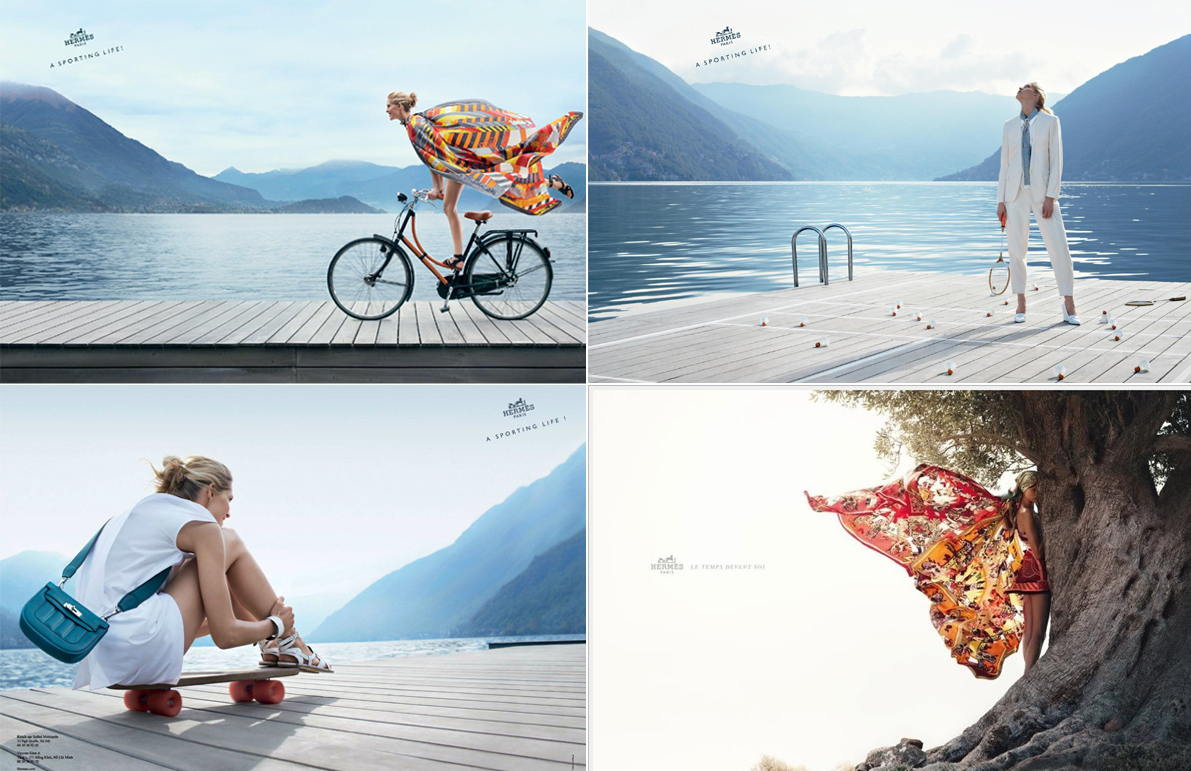
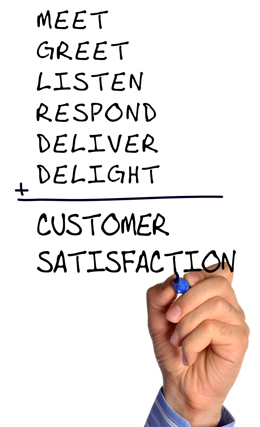
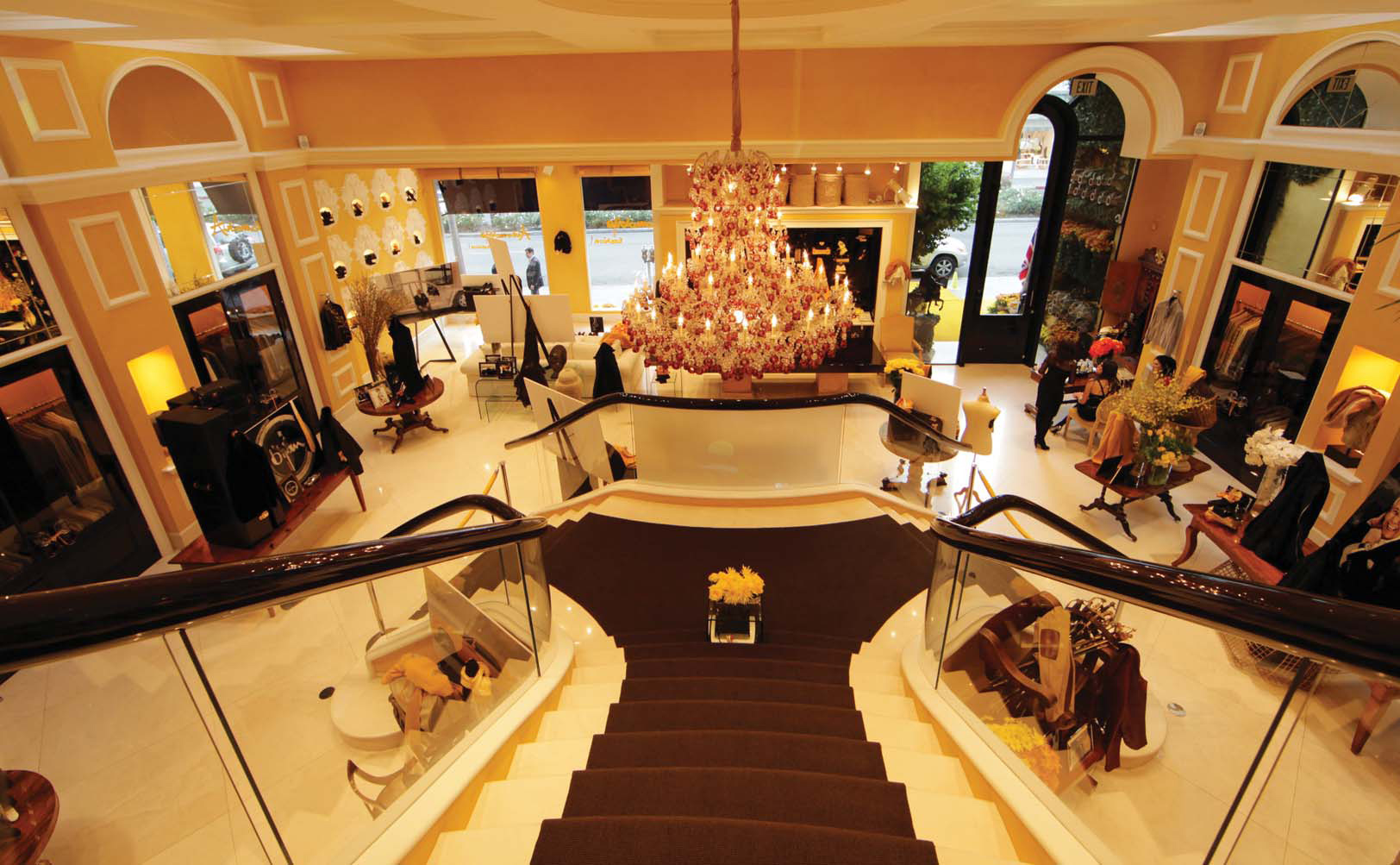
It is not surprising that luxury home buyers have much higher expectations compared to mainstream home buyers. It is about the amenities and the enhanced lifestyle which comes with the property in an upscale neighborhood. Those buyers also prefer a new home which is in a move-in condition and has an open floor plan alongside a fully automated home environment. Wealthy home buyers also remain attracted to high-end real estate because of a strong perception of value and location.
Another important factor to consider is that luxury home buyers are becoming ever more interested in holistic experiences.
Mainstream vs premium vs a luxury home
Most homes for sale are considered “mainstream”, or “conventional.” Their standards differ from country to country subject to local traditions, construction criteria and bylaws, cost of living, and other economic indicators. These type of homes includes basic amenities for the average population and considered affordable for the working class and middle class.
Premium homes are a better alternative to mainstream homes. They are larger, more attractively designed, built with finer materials, include many upgrades, as well as additional comforts. Moreover, part or the entire home can be custom built as per buyer’s personalized wishes.
As for “luxury” homes, they have it all – location (neighborhood, schools, affluent community), imposing and attractive architecture, high beamed ceilings, plenty of lighting, quality millwork, top end materials throughout, perhaps even a gym, movie theatre, temperature controlled wine room, indoor garage space for at least three to four vehicles, as well as an elaborate layout with a great deal of living space. In some cases, unobstructed views and high-tech home gadgets. Above all, they possess elegance, quality, integrity and are distinct with no expense spared. The threshold for a property to be considered luxury is at least $1 million depending on location. Large urban condominiums are also included into this mix ─ most notably penthouses. Generally speaking, luxury is considered “exclusivity” and what separates an ordinary house and an extraordinary house ─ with classifications such as a “villa”, “mansion”, a “manor”, “estate”, or even a “ranch.”
The art of living – going beyond beautiful homes
Luxury real estate projects should be marketed in similar fashion to what Cartier, BMW or Rolex are achieving. This marketing approach is based on demographic and psycho-graphic analysis which equates to extreme attention to customer experience and demands; integrated marketing across every touch point. The formula is straightforward: the right designer and appliance brand, the right location, the right product, and the right ambiance for the luxury customer. A custom luxury home is incomparable which is designed specifically for a client and explicitly for the location chosen or owned by the client. It resonates with the client’s personality.
Understand what your home offers which is unique to its competition. There is an emotive component of any luxury purchase. Create a display area on the property that allows your potential buyers to have the emotional experience of what living in the residence would be like. It is all about evoking and engaging the potential new owner. Creating a sense of a desirable lifestyle. Seduce and dazzle your clients with the emotional “wow” factor. Create an experience. Very good examples of this are the marketing techniques applied by luxury real estate brokers Sotheby’s International Realty, Christie’s International Real Estate, Savills (U.K.), as well as New York City luxury condominium project maven, Michael Shvo. The theme is the same: dazzle them and emphasize “lifestyle.”. This helps in spreading the word. Associate the property with renowned names/brands/designers as part of the cachet. That’s what helps trigger a sale and at prices beyond what one would expect to pay for the property.
“Irreplaceable Property Marketing” ─ Unique & Hard to Emulate
Make the look and experience authentic with the impression that it’s irreplaceable. People want to feel they own something that has a personality and a story. This entails more than just the usual appliance upgrades or other high-end amenities. It is also the staging of the appropriate furniture making the prospective home buyer feel at home and envisioning himself or herself what it feels like living there. Doing so requires applying the art of elegance, art, culture and design along with a touch of pizazz. The key to a successful sale with a high-end property is to offer something the buyer is not able to find elsewhere.
New developments and modernized properties should be design conscious and unique – able to cater to the discerning as with single detached residential homes. They ought to be promoted and presented with panache, flair, and hype but tasteful. A professional marketer, with refined brand image skills and savoir-faire in the luxury real estate domain, can develop and execute a strategy that will make the project and its identity speak on its own. Branding is not a logo, it is a perception in the mind of the consumer about the personality of a company and what it stands for. With a favorable brand name, which in essence is “reputation”, attracting and making the sale requires less effort.
Seductive marketing: Demonstrating the properties by unconventional methods
New York City entrepreneur, luxury real estate broker and diplomat Paolo Zampolli applies novel methods of promoting and selling his listings while offering his high net worth clients the first-rate treatment. He hires former fashion models as his assistant agents touting exclusive properties ─ or taking them onboard his yacht, by way of the Hudson river, for clients to view their potential properties. His creative mind takes it one step above, literally, as he hires a helicopter to give the prospective buyer’s spread a bird’s eye view.
Raymond Bolduc, the top real estate agent with Sotheby’s International Realty in Florida, believes that closing a deal requires throwing a party. As a means of advertising and promotional exposure, he creates attention by hosting lavish social events at his multi-million-dollar home listings to lure in prospective buyers. He does so with panache complete with luxury cars ─ and yachts if it is a waterfront property.
The following marketing channels should be considered to increase the exposure of the properties for sale.
Global websites
Glossy print campaigns
Newspaper inserts
National media coverage
Advanced social media platforms
Mobile technology
In the end
Since luxury home buyers are inherently wealthy, they should be approached and sold to differently. That said, property consultants/real estate agents should be well trained and very knowledgeable in sales, marketing, as well as thoroughly familiar with the unique properties they sell. They also retain client confidentiality and avoid conducting typical open houses to ward off the curious public since multi-million dollar homes demand pre-qualified buyers only.
Luxury home builders and real estate agents should focus their marketing activities to well-heeled and tech savvy Millennial buyers who seek turn-key homes that are eco-friendly, smart wired and cater to their busy and connected lifestyles.
As Lew Geffen, the Sotheby’s International Realty partner in South Africa, states in its marketing collateral, “Property marketing is essentially ‘Show Business’ but Sotheby’s International Realty has aimed at ‘theatre’ ─ with all the levels of drama and passion the brand is fully capable of carrying.”
The status quo is a complacent syndrome which exists with most established brands regardless of which sector they are categorized in. Despite a large capital chest, they are short-sighted, dull and lack the nimbleness to adapt swiftly. However, there those such as Nike and Amazon, among others, which innovate constantly. Nowadays, newbie companies fill in the gap and disrupt entire industries with revolutionary business models, products and services – whether in the service domain (think AirBnB, Uber and Netflix), automotive (consider Tesla) or in the consumer product domain (such as Dyson, Under Armour, Warby Parker and Hampton Creek’s Just Mayo brand).
The anatomy of the challenger brand
A “challenger brand” is defined as a company or product brand, whether a start-up or established, which faces up to the category leader in an advocacy stance. As a result, this type of brand/company is brusque to the point of creating and applying bold tactics. Furthermore, it is distinct and emotionally driven to be able play from a position of strength behind the dominant player in its sector. Consequently, the challenger brand eagerly takes on a unique position and showcases with conviction, to its target audience, why it is the logical alternative to the segment leader. Unique features offered may include enhanced features and benefits from those offered by the category leader. These may include better materials, technology, functional and attractive design, craftsmanship, performance, above average service, better value for the money, as well as social responsibility to name a few. This works well with consumers who are either under-served or under-valued by the leading brand.
Uber, with the birth of the ride sharing app, came along and challenged the taxi domain through a paradigm shift. It took the taxi leagues worldwide by storm which got the cabbies up in arms and resulted with them protesting and asking their local government to legislate against their nemesis. Rather than looking inward and reforming to compete, the cabbies chose the path to ferociously protect their precious monopoly. One taxi trade magazine even printed a column that condemned Uber as a “corporate pariah,” a “malignant tumor,” and a “giant octopus” that has “spread its tentacles globally.”
A challenger brand is determined to persist and persevere to constantly make a point to undermine the leading standard in order to change the rules to the benefit of the customer.
How to outsmart the category leader
When the challenger brand does not have the marketing budget to go head-to-head with the established brand in its category, it is easy to see why the latter can fail. To overcome this problem, the challenger creates unconventional marketing tactics which are more effective than traditional ones with much less ad spending. Sometimes that advertising is giving jabs to the weakness inherent with the category leader and it can include clever yet subtle messages which, if effective, may be able to persuade consumers who were leaning toward the established brand that it is not all that great as always thought.
Advocating and standing for something compelling, such as Patagonia with its social responsibility mission which is: “Build the best product, cause no unnecessary harm, use business to inspire and implement solutions to the environmental crisis.” The idea is to make a strong emotional appeal about the changes they seek to make a difference with. It is demonstrating and personifying not only through mere words but also with deeds that they are a better alternative to the incumbent brand. This takes being and acting confident through passion, beliefs and a purpose against the norm in return for something that matters.
Jude Bliss, the editor of the online blog The Challenger Project, had made this noteworthy statement: “Challengers are as clear about what they are rejecting as they are about what they are championing, which involves clearly defining what you see in the current market that is broken, as well as what change you can bring.”
It does not matter whether you are a new and small brand or the largest. Everyone can partake as a challenger brand. As long as your largest competitor defies with your ethos, then you have a cause for a challenge. No better example of this than Apple vs Microsoft with their witty advertising jibes at each other as to whose PC is the smarter choice for the user.
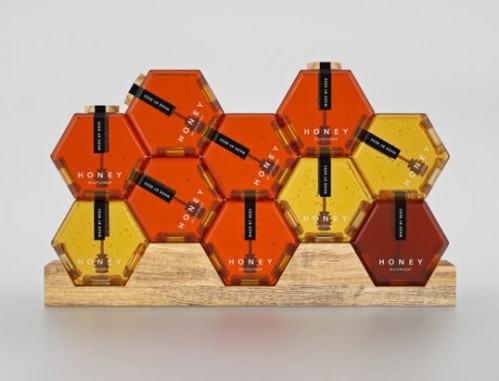
Another tactic to use as a challenger brand, if you are in the consumer goods domain, is to be creative and stand-out among the crowd with exceptionally designed yet functional packaging. Taking away the bland and ordinary and making the product desirable. Consider what Toblerone chocolate, Veuve Cliquot champagnes, SKY Vodka and others have succeeded in doing which eventually spiked their sales.
Audi has taught other brands how to challenge
BMW and Mercedes Benz are two German premium leading auto brands which command an equal level of prestige and respect. Both are in the same league in terms of German engineering and precision. However, each has a distinctive style which distinguishes it in the target audience – younger who prefer dynamic driving and older demographic with preference for a luxury drive respectively. As regards to Audi, up until the several years ago, the brand was deemed as the awkward stepchild of the parent VW group — the Toyota of the German elite of sorts. Lately, Audi has stepped up its game and finally entered the world as a true competitor along with their German tagline exuding what they stand for: Advancement through Technology. Audi has been gaining on its German rivals. Its firm commitment to excel has brought Audi to an audacious position to vigorously challenge its opponents BMW and Mercedes.
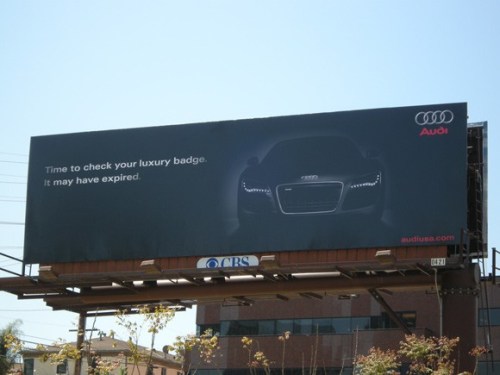
In 2009 in a busy Los Angeles, California intersection, a billboard ad rivalry between what Audi initiated and with BMW responding had escalated to a new level. A tit-for-tat had ensued when Audi placed an image of the all new Audi A4 along with the headline: “Your move, BMW”. Santa Monica BMW, a local dealership, took on the challenge and entered a virtual chess game when it added a billboard not far from Audi’s which featured a photo of the BMW M3 with the counter punch, “Checkmate.” A few days later, Audi unveiled a new billboard to replace the one with the A4. It featured an R8 super-car and read: “Time to check your luxury badge. It may have expired.” In the end, BMW moved its billboard to some other place and the billboard ad war came to an end.
In a Brand Channel blog interview with Loren Angelo, director of marketing for Audi of America, has said that “As a challenger brand, you have to look at your category, your situation…and attack it head-on.” He further elaborated: “We need to continue to challenge. That’s what allowed us to drive our position and to turn the brand around beginning in 2008. A challenger brand doesn’t mean we only challenge the competition, but we communicate how we challenge the status quo and challenge complacency in our industry and in culture.”
That being said, as a challenger brand, constant and persistent messaging with conviction to the target audience ought to be applied along with the delivery of unique customer experiences to solidify brand loyalty.
Whether offering products or services, a business is expected to create connections and engage in conversations with its prospective clients ─ but equally important, with its existing clienteles. While these connections might come in the form of attractive print ads, or utilizing social media/digital platforms, or even face-to-face interactions at various touch points, they should all be tailored to initiate meaningful conversations between brand and consumer. Conversations that can achieve sales targets along with obsessive fan followings which ultimately boost the popularity of the brand.
Customer engagement: the essentials
More than 20 years ago, a popular method for companies to obtain sales was to utilize a sales force and apply pressure tactics. Some companies used the telephone as their tool of choice for cold calling. This was a typical marketing and sales approach. Sales staff where trained in persuasion and closing techniques including answering the most popular objections. This is what is known as a “push” strategy. Today, customer engagement works in reverse. It is the customer, whether an end-user or a business, who decides if and when to communicate with a company. The typical contemporary consumer has the power of the internet and word of mouth in determining great deals and which brands they should be transacting with. Moreover, on the consumer side, there are countries with strict national regulations concerning telephone solicitation. This has had companies scrambling to stay relevant with the times and is considered a “pull” strategy. There is also a refined marketing method known as “Permission Marketing” (opposite of interruption marketing) which was coined by marketing maven Seth Godin. As a result, marketers have been adjusting their strategies and integrating them with online and offline marketing activities, along with a laser focused approach with their specific audience. This has resulted in deep customer engagement.
Customer engagement is not a single outcome ─ it is an ongoing dialogue. They have come to expect more personalized interaction, customized solutions, timely results and most certainly a “bang for their buck.” This requires brands to be customer centric ─ with everyone in the organization on-board, in addition to being well versed in the digital age. This includes blogging, Twittering, Instagram posting and viral marketing among others. One other notable trend is towards widespread audio and video production and communication. From podcasting to mobile video, audio and video is predominating in our digital world.
Push vs. Pull marketing
Push marketing and pull marketing are different yet complementary marketing methods for promoting a business – most notably online.
Push marketing is more traditional methods of advertising – essentially, you are pushing your message to your audience, regardless of whether they want to receive your message or not. Push marketing focuses on product features and awaits the audience to respond. Examples of push marketing include email marketing, website advertising, and cold calling.
Pull marketing is more proactive, pulling the customers toward your brand/product with targeted messages they care about. Pull marketing is all about brand building. Examples of pull marketing include media interviews, public speaking, and word of mouth advertising.
The holistic approach
Consumers today are more brand conscience, better informed and with more options. Despite this, there are companies which continue to spend money advertising and selling product rather than brand. They place emphasis on price and quality as differentiators despite these two being overused by many copycats. Successful brands take a holistic approach to selling by exploiting the five human senses which now constitute the brand. This is accomplished by what I regard as “ambiance marketing” and “sensory/sensorial branding”, through a captivating designed setting, yet alluring. This adds character and invites clients to truly feel the brand experience.
The five senses, when applied toward the customer, are regarded as follows:
Visual – lighting, decor, colors, layout…you can get a real sense of movement using these elements.
Auditory – music, effects, volume, vibrations…you set the tone and the energy of the room with your sonic selections.
Tactile – textures, comfort, climate…this is all about how your guests interact with the environment. This is a big thing to consider when you are designing the layout.
Olfactory – fragrance, emotion, ambiance…this sense is under-rated and powerful. Of all our senses, the sense of smell is most closely linked to emotion and memory. You can use something as simple as burning incense or candles to something far more complex like computer controlled scent machines to enhance your environment. This could just be the extra touch needed to set the mood.
Gustative – with food establishments, the challenge is in finding the perfect balance between sour, salty, sweet, and bitter during menu designs and beverage selections. The presentation also makes an impact on the overall image.
Storytelling along with the total customer experience
Standard products and mundane user experiences don’t offer compelling reasons for consumers to do business with certain brands. If a business can’t articulate its USP (unique selling proposition) ‒ as to why anyone should do business with your brand, your product and/or service merely becomes a “commodity” whose price will be the sole determinant in any transaction. Being formidable and considered top of mind in your B2C sector requires a philosophy – a certain culture which will develop a following by consumers who share your values.
Quality materials, assembly and final product look increase a company’s competitiveness. The quality of a product may be defined as “its ability to fulfil the customer’s needs and expectations”. If the characteristics and specifications of a brand’s product line are equal or superior to its competitors, along with a fair price-value equation, the brand will turn out to be a preferred choice.
Storytelling, on the other hand, builds relationships by the stories that are well told. Stories add personality and authenticity to products which customers can better relate to and feel affinity with. Luxury brands tend to boast their pedigree since their discerning clientele desire a deeper level of involvement and understanding of the history and heritage of the brand when it comes to their luxury purchase. This is referred to as “experiential luxury.”
It is essential that the sales professional be product proficient and adept at assisting and guiding the client to the purchase making use of flattery, romance and showmanship. To illustrate, when selling a niche automobile such as a Porsche, the sales consultant can talk about racetracks, describe road-holding capabilities, build-up a fascinating story – after which time he/she can bring-up reliability and the technical details which confirm to the discerning client what he/she is already aware of.
When consumers are delighted by a particular brand experience, they begin to bond emotionally with it. They become brand loyalists and advocates – purchasing the brand more often and recommending it to others. This behavior serves to build the brand’s reputation.
In the end
With a plethora of marketing noise, differentiation in the delivery of non-evasive communication, personalized service and focus in niche markets will be the determining core value equation for success in attracting and retaining clients.
When consumers are treated with honesty and delighted by a particular brand experience, they begin to bond emotionally with the brand. They become brand loyalists and advocates – buying the brand more often and recommending it to others. This behavior serves to build the brand’s reputation. This approach is priceless –even though it may take longer to take positive effect.
Prior to his sudden demise, I always had quite the fondness and following for Prince, “The Artist.” Ever since I discovered his music in the late 70s, what never seize to amaze me since was his eclectic work (comprised of dance, funk and rock tunes), vocal range and the method in which he always managed to integrate it all seamlessly during his formidable stage presence.
However, what many may not have been aware of was his show business acumen. Prince built and sustained his personal brand along with the resources he exploited which comprised of his musical entertainment enterprise.
What I have learned from this beloved and prematurely departed artist are three lessons which any business can use as a takeaway for implementation. They are as follows:
1) Stray from the ordinary and remain relentlessly competitive
“The Artist” was widely acclaimed by his fans, the media and fellow musicians as one of the most influential and creative musicians of his generation. He seemingly left behind an impressive music legacy. Unlike most artists, Prince was a prolific songwriter, multi-instrumentalist, sang in a variety of vocals, produced his work, as well as displayed dance and theatrical antics on stage. Must we forget that he was also an actor ─ most notably in “Purple Rain” along with performances in four other movies including on television. Moreover, he wrote songs for and produced work for other musical acts including some he impacted and/or for whom he acted as their mentor and coach.
Prince also knew how to outdo his competition by standing out with his artistic performances including the eccentric outfits he sported along with his leaping dance acts he displayed with his platform shoes ─ as he only stood at 5’2”/1.58m. Some of his singles, which eventually turned into big hits, were purposely targeted at some of his rivals.
An exemplary display of Prince’s unique and memorable performance was a video, recorded at the 2004 Rock and Roll Hall of Fame induction ceremony. The illustrious artists playing the Beatles’ “While My Guitar Gently Weeps.” include George Harrison’s son Dhani, along with old band-mates and collaborators Jeff Lynne, Tom Petty and Steve Winwood. However, most striking among this band, who stood slightly apart from the rest while they played ordinarily, was Prince. Despite his small frame and wearing a dark suit with a red shirt, a matching derby hat, and staying on the sidelines for the first 3:27 minutes or so (in the YouTube recorded video), he suddenly steals the show with his passionate guitar solo. As the song ends, Prince abruptly takes off his guitar, tosses it in the air and then disappears off stage. That was probably the most memorable part of the video from my perspective. Many more who watched it share the same sentiment.
2) Branding, image and reputation are your equity
As with traditional businesses, Prince had created a personal persona – where the brand and performer were synonymous. He created a logo dubbed the “The love symbol” ─ one that blended the symbols for male and female which was instantly recognizable. It was also the shape of his customized guitars. Prince even owned a signature color in the mind of his followers – purple. His occasional provocative lyrics, seductive singing, dramatic performances and distinctive album covers all depicted a unique style as an icon and as a showman of his personal brand.
As one Twitterer remarked in his Tweet following Prince’s death, “Prince built a brand around his music and his genius before content marketing and personal branding became a thing.” Another stated, “Like Bowie, Prince reminded us that it’s not just OK to be weird—it’s cool to be weird.”
The moral of this narrative is that as a business, follow what Prince did ─ by working on building your brand image consistently, by establishing unique features with your products/services that distinguish them from the competition, and by being true to yourself, as well as by what you truly stand for.
3) Become vertically integrated
Prince was more than an artist, he was one who only entrusted himself with songwriting, arranging, producing, naturally performing his own music, as well as distributing it through his own label (NPG Records and Paisley Park Records before it). To do so, he built a $10 million state-of-the-art complex in a suburb of Minneapolis, Minnesota which he named Paisley Park Studios. That said, he became his own vertically integrated corporation. This was, after all, a multi-talented musical artist who believed in taking control of his own destiny and in return, earning the maximum revenue and profits rather than giving much of it away – most notably to a record label. He considered the role of record labels exploitation and slavery. He was a fierce advocate for artist rights and independence and in he had standoff with Warner Bros., his label at the time. In protest, Prince removed his name from his album releases and changed his name to a symbol. He also styled himself as “The Artist Formerly Known as Prince.” Furthermore, during a legal battle with Warner Bros., he scrawled the word “Slave” on his face during his appearances and performances.
The significance with this illustration is that a business with adequate capital, resources and expertise ought to consider amalgamating most or all of the processes under its own umbrella. A such, quality control and improved profits are now controlled by the business itself.
Paisley Park Studios
A final point of intrigue
On a noteworthy footnote, in his 37 years as an artist ─ and unlike many with his fame, he kept himself out of the negative spotlight. He never plagiarized a fellow artist’s work, never had to hire a ghost writer, and neither involved in a scandal which would drag him to the courts. In the end, he was capable of playing more or less 20 instruments admirably and having earned 19 Platinum albums, 6 gold albums, along with a double diamond record for his Purple Rain album which sold 21 million copies. Impressive for a personal brand to say the least.
A “luxury lifestyle” denotes a way of life which is pleasantly enhanced through well crafted products and exceptional services. These include dining at the best restaurants, lounging in the finest hotels, dressing in premium and bespoke clothing, wearing jewellery/watches produced in limited quantities, possessing and driving the most extravagant cars, traveling to exotic destinations, and playing with the most sophisticated tech products – amongst others. Needless to say, those consumers are connoisseurs of the finest products and services money can afford them.
According to a white paper and survey, conducted by the prestigious consulting firm McKinsey & Co., it indicates that there is no widely accepted definition of “luxury lifestyle.” It goes on to say that Attendees of the 2012 Financial Times Business of Luxury Summit suggested the following definitions: “a way of living,” a set of “attitudes and values,” or specific “consumption habits.” Consumers interviewed in London, Milan, Munich, and Paris gave equally diverse definitions. Some offered a broad perspective (“a way of being, dressing, behaving” that “sets you apart from the rest”); others referred to particular products, brands, and experiences (“staying at nice hotels”); still others took a cynical view (“it’s just brand names, that’s all” or “it’s marketing”). Its interviews with senior executives from luxury- goods companies such as Harry Winston, Hermès, and Roberto Cavalli yielded yet another varied set of definitions, including “embodying the lifestyle of an iconic designer” and “offering a holistic brand experience.” Although they all defined the phrase differently, 70 percent of the executives they interviewed said they regard their brands as luxury-lifestyle brands.
A company can define itself as a lifestyle brand when its products promote more than a product with key benefits and attributes. However, lifestyle branding is more than just promoting “a way of life.” It is a product or service that provides consumers with an emotional attachment to the lifestyle of the brand. Take Versace, for example, which besides its fashion apparel and accessories also has hotels, home furnishing/décor, linens, beauty and more. Giorgio Armani also has his eponymous name on hotels, furniture, fashion, jeans and beauty. From these two fashion icons, we can certainly surmise that they have a legitimate claim as “luxury lifestyle” purveyors.
Developing the luxury standard of living through desirable customer experiences
Lifestyle branding is more than just promoting “a way of life”. it is a product or service that provides consumers with an emotional attachment to the lifestyle of the brand. think of Ralph Lauren and you can readily see it is not about the clothes. it becomes an attachment such as the sports car brand Porsche to an exclusive club in which you can be a member through emotional identification through use of the products in question. Smart companies understand these principles and look to keep the customer engaged. By doing so, they clearly forge the sort of long term relationships, which become the envy of their designated sector.
The “Total Customer Experience” is the sum total of the interactions that a customer has with a company’s products, people, and processes. It goes from the moment when customers see an ad to the moment when they accept delivery of a product and beyond.
The experiences customers go through with a purveyor of luxury determine the ultimate perception of its brand and image. Customer experiences also spread the word (offline/online) to others (friends, relatives etc.) about your brand. That said, each customer contact (“touch points”) should be handled with the utmost care to ensure that the total brand experience a person has is constant.
Lifestyle brands develop emotional attachment
Brand loyalty is about building an emotional, and in some cases, irrational, attachment in a product. The most ideal examples are the diehard brand enthusiasts and early adopters who must get their hands on the latest iPhone or iPad. This happens because Apple has built an emotional attachment to their products by creating a lifestyle choice rather than a product purchase.
It’s about how it makes you feel. Same goes for baby boomers, whether accountants or attorneys or business executives who purchase a Harley Davidson motorcycle and ride them for about four or five hours every Sunday afternoon. The bike makes them feel like a rebel – sort of an escape.
A brand that is designed for a lifestyle should have a much higher emotional value to consumers than one based on features like cost or benefits alone. The goal of a lifestyle brand is to become a way that people can utilize it to relate to one another. Those brands are an attempt to sell an identity, or an image, rather than a product and what it actually does.
Lifestyle brands have gained an increased share of the luxury market such as BMW, Armani, W Hotels, Louis Vuitton and Rolex ‒ just to name a few. These have given way to consumers to buy products that they associate with a “luxurious life.” They are essentially a status symbol.
The luxury lifestyle in the services domain
In the category of “services”, the luxury lifestyle is all about execution in delivering an exceptional experience with pizzazz to the discerning ─ whether it is a bespoke travel excursion in an exotic place, producing an exceptional dining experience or organizing an over-the-top event, each one ought to create a pleasant memory which would want to be repeated.
A successful service related luxury lifestyle exists when the following take place.
– Delivered with passion
– Exclusivity
– Discretion
– Exceeding expectations
– Seamless
– Refined
– Posh
– With attention to detail
Consider American Express − most notably for its “by invitation only” Black/Centurion card. For hotels, worthwhile mentions are the Hotel Plaza Athenée, the Four Seasons (including its private jet tours), the Ritz Carlton, and boutique hotels Hotel du Cap and Hotel de Crillon to name a few prominent ones. They splurge and provide the perfect luxury experience with outstanding service, exclusivity, and pedigree.
Exclusive and bespoke travel companies provide tailor made adventures and excursions. The four key players in this category include: Abercrombie & Kent, Kuoni Travel, Orient-Express and Cunard Line. Broadening our view of luxury services, certain firms offer services and privileges to a rare percentile. Such services include fractional jet ownership such as NetJets and FlexJet, as well as global concierge services such as Quintessentially.
In the final analysis
Whether offering a product or service, it is how a luxury brand delivers an experience that distinguishes it and makes it stand-out from the mainstream. In essence, it’s a holistic approach.
Luxury lifestyle brand offerings should be constantly refreshed, giving discerning customers a reason to repeatedly do business with the brand. Tiffany & Co., decided to undergo “investing in the theater of shopping in its stores”, as its CEO Frederic Cumenal implied as regards to the renovations of its largest store ever which it opened in China.
Selling a distinct lifestyle is what discerning clients crave and gladly relate to. Organizing exclusive by-invitation-only events should be considered. Exclusive events make one feel notable. For example, Italian sports automaker Maserati invited a select number of brand loyalists to a new experience in Europe that gave them the opportunity to sail on-board the 70 ft./21,3 m Maserati sailboat. In addition, they drove models in its current range including the new Maserati Gran Turismo Sport model.
In the end, living the luxury life is irresistible to many from every range of background and nationality. The temptation includes the aspirational affluent.
When it comes to marketing food products, known in industry jargon as “Consumer Packaged Goods (using the acronym “CPG”), it takes more than mere advertising. Any brand with a deep advertising budget can do so. However, the skill is in knowing how to best utilize a limited budget for maximum effectiveness. Surprisingly, many smaller brands seem to be running circles around their much bigger brand counterparts with greater resources. The key differentiator is in the strategy and implementation including the ideal target market, brand positioning and specific media sought.
Guerrilla marketing: Getting noticed on a shoestring budget
Persuading consumers to consider your product on their shopping list takes time and an ample marketing budget. However, getting consumers to take notice of your product can be swift if a combination of Guerrilla/unconventional marketing tactics are used in conjunction with unique packaging design.
The term “Guerrilla marketing” refers to an unconventional and bold approach for a business to promote its products and/or services in ways that capture the attention of potential customers. They are creative, memorable, attract people’s attention (some may be controversial) and require a limited budget which makes it ideal for small to mid size businesses. “Guerrilla marketing” was originally coined in 1983 by Jay Conrad Levinson who also wrote the book “GuerrillaAdvertising” with subsequent editions and derivatives which followed.
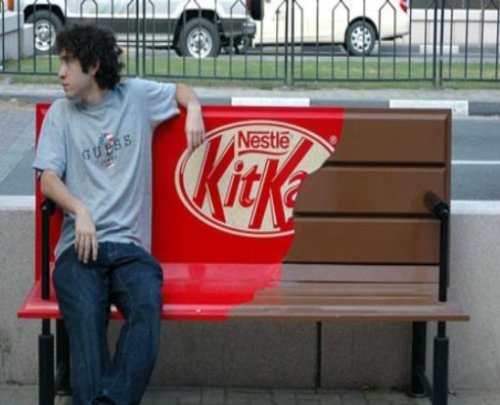
In keeping with the CPG theme, Nestle’s Kit Kat candy bar brand utilized Guerrilla marketing by placing creative candy-themed benches across large cities as the image below depicts.
Today, if a brand, especially a new arrival on the market, wants to stand-out in a crowded marketplace, it ought to consider the following means and tactics.
Online/digital ─ Content marketing: This is absolutely the medium/platform which should not be overlooked. Even large brands are placing more emphasis with digital in their integrated marketing strategy. Content is released frequently but in small doses utilizing Twitter, blogs, Linkedin etc. along with stunning lifestyle images and video with must view material (Instagram, Pinterest, Facebook, YouTube, Vimeo to name the most prominent digital venues).
Public Relations: As this is earned media, what is stated about a brand from a third party is considered trustworthy. Creating buzz through the media, including the use of press releases, is an inexpensive way to earn publicity in lieu of traditional advertising spend.
Alliances – associations – sponsorships: These are additional considerations to boost exposure which turns-out to be a win-win for both parties (sponsor and sponsored party/ beneficiary).
Storytelling: A brand should include storytelling which places an emphasis on the brand’s heritage, the reason for being and why it is offering such a product or products. It is more than content and a narrative, it is a picture made up of feelings, facts and interpretations.
Food packaging: Eating with our eyes
The value added in design, craftsmanship, branding and overall quality can elevate a product into an epicurean delight. Clever and innovative design significantly increases sales and improves brand performance. In addition, it can do plenty of silent marketing. Consider Toblerone, the Swiss chocolate bar brand, whose distinctive yellow triangular packaging and equally shaped product inside is instantly recognizable. It undoubtedly portrays a premium product yet offers a good value for the price. The brand’s marketing spend is much less than its competitors, though its sales and profits are known to be exceptional in its category.
There are many ways of seeing the value of design. For instance, you can measure sales and relative value as an output of changes in design. Design can also improve your standing among rivals and give you a competitive advantage. The Design Council published a report where facts and statistics concerning the value of design are highlighted. One interesting statistic is that design conscious businesses can expect a return on their internal design investments as high as 125%. That’s quite an impressive return compared to other types of investments made in a business.
What may be obvious is that if you have high quality design, you do not need to compete with your competitors on price. If the design of a product packaging has a “wow” factor to make it stand-out on the shelf, then consumers will choose it even if the price is slightly above the competing products. If the product inside is as good as its packaging, customers will enjoy what you have to offer and continue to be loyal to your brand. That is the result of offering something unique and of a higher standard.
Lifestyle marketing: Non-traditional methods to reach modern consumers
Generally speaking, a brand that is designed for a lifestyle should have a much higher emotional value to consumers than one based solely on features, benefits and cost. A study from the Kellogg School of Management revealed that brands serve as a means of self-expression along with the limitations of expressing a consumer’s identity through brands. The goal of a lifestyle brand is to become a way that people can utilize it to relate to one another. Those brands are an attempt to sell an identity, or an image, rather than a product and what it actually does.
Two CPG brands which have joined the lifestyle bandwagon and spending more money and resources away from traditional marketing are Oreo and Red Bull. The former has created one article and image on the pulse of pop culture per day for 100 days with not much revealed of what would come next. Red Bull which spends a staggering 30% of its revenue in marketing and sponsorship events, has also launched a magazine with over five million subscribers, including a record label and two film studios to produce its lifestyle and experiential material.
Healthy eating and acquiring new tastes are modern day trends which can’t be ignored by CPG marketers. Smaller portions are also a recent trend which equate to less calories for consumption along with much focus on natural and non-GMO ingredients.
Creating new categories and uncontested market space
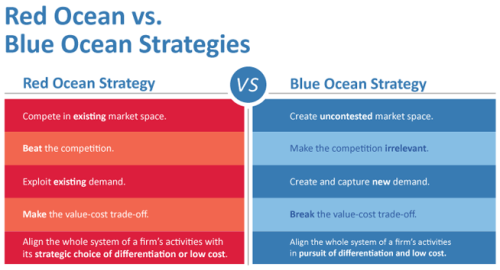
Instead of competing head-on in the same product category, as the majority of brands are accustomed to, consider creating an entirely new class which will be in an uncontested marketplace. This approach is known as Blue Ocean Strategy®. It was developed by two professors at INSEAD, W. Chan Kim and Renée Mauborgne who are also co-authors of Blue Ocean Strategy: How to Create Uncontested Market Space and Make the Competition Irrelevant (Harvard Business Review Press). As they put it, they observed that companies tend to engage in head-to-head competition in search of sustained profitable growth. Yet in today’s overcrowded industries competing head-on results in nothing but a bloody “red ocean” (as in cutthroat competition turns the ocean bloody red) of rivals fighting over a shrinking profit pool. Lasting success increasingly comes, not from battling competitors, but from creating “blue oceans” of untapped new market spaces ripe for growth.
An intriguing case study which puts the above strategy in perspective is Australia’s Casella Wines. In 2001, it entered the overcrowded and highly competitive wine industry in the U.S. with its Yellow Tail brand. By the end of 2005, it had reached sales with 25 million cases ─ achieved on a limited marketing budget. This triumph placed Yellow Tail in the category of the overall bestselling 750ml (25.4 U.S. fl. oz.) red wine, outstripping Californian, Italian and French wine brands. It accomplished this by applying the Blue Ocean strategy framework. Consequently, Casella Wines’ Yellow Tail brand targeted the beer and ready-to-drink cocktails in the U.S. market and created Yellow Tail to be easy drinking, an informal selection, fun and an adventure ─ in essence, an uncomplicated, fruity wine structure that was instantly appealing to the mass of alcohol drinkers.
A category which should not be ignored are Millennials (aka Generation Y). They are projected to spend $65 billion on consumer packaged goods (CPG) over the next decade, yet there are many misconceptions and challenges in reaching these shoppers, according to a white paper by WPP’s Geometry Global. Millennials are the largest generation since the Baby Boomers. They are known to be quite sophisticated, technology wise, unaffected by most traditional marketing and sales pitches. As a result, CPG companies should adjust and innovate to stay digitally connected with the Millennial consumer.
Sensorial branding: Exploiting the senses
In keeping with the spirit of the five senses, you can exploit them entirely to create a favorable experience in synergy, for guests and clients alike. Below are some of the most important factors:
SIGHT – choice of packaging, its design along with its images, the font type and colors. Add to that a stand-alone point of purchase (POP) display.
TOUCH – the feel and ergonomic design of the packaging. This is how the consumer interacts with it. Plenty of emphasis should be placed on this when designing the package.
TASTE – finding the perfect balance between sour, salty, sweet, and bitter. Food product samples ought to be available as consumers would prefer to try a product they are exposed to for the first time. Presentation is equally important which has an impact on the overall image of the setting.
SMELL – it is all about the smell of the product. This sense is closely linked to emotion and memory. You can use something like computer controlled scent machines to entice. Sensory technology can be very influential down an aisle. Case in point: a French bakery café can deliberately use ventilation to deliberately spread the smell of roasted coffee and baked items sold to induce clients to make or increase their purchases. A company which is known to furnish such state-of-the art equipment is Scent Air Technology.
By integrating the brand-building strategies to appeal to all, or most of the senses, sales have actually increased.
At the end of the day
Marketing done well can improve your brand’s awareness, lead to more sales, word-of-mouth, as well as gain client loyalty.
Using clever marketing approaches which do not cost a fortune, along with innovative and attractive packaging, can lead to impressive sales. However, to develop repeat purchases (think “sell-through” at the retail level), the product itself should taste good and produced with quality ingredients.
Stay in touch with your customers via social media interactions and occasional email newsletters and a blog. Do what you can to improve the lives of these people with valuable advice and special offers. The product should exude that it occupies a part in a pleasant lifestyle.
Remain true to what is making your CPG brand a success and refuse to become complacent. Keep refining, innovating, never mislead (through false benefit claims and nutritional information) and engage constantly with your loyal clients. These activities are not deemed a onetime event but rather an on-going process.
“Masstige” (a combination of two words: “mass” and “prestige” – aka mass with class) is a contemporary marketing term which denotes prestige for products perceived as luxurious and targeted to a wide range of customers known as the “mass affluent.” As per Wikipedia, the mass affluent are the high end of the mass market, or individuals with US$100,000 to US$1,000,000 of liquid financial assets, or consumers with an annual household income over US$75,000. These upper middle class individuals can afford to splurge on some of the finer (and affordable) things in life which include fashion merchandise, sporting goods, cosmetics, various accessories (silk ties, scarfs, small leather goods, perfumes etc.), high-end consumer electronics/gadgets, as well as culinary food and spirits. Brands in those categories depend on the “masstige” crowd for a majority of their sales, despite a few which also happen to be purveyors of inaccessibly priced products catered to the HNWI/UHNWI (aka the very wealthy or the 1% respectively).
This is purely an oxymoron and paradoxical since in the authentic luxury domain, “mass prestige” is an artificial term for “luxury” as it is not generally geared for the mass but rather the well heeled. Sadly, the true meaning of “luxury” has been bastardized by many brands who are falsely in the “luxury” business (in the true sense of the word and definition). However, there are luxury brands which have chosen to offer lowered priced products in a bid to join the “accessible luxury.” Think Coach with its leather bags and accessories or Chanel with its perfumes and cosmetics.
Defining the true meaning of the term “luxury”
Definitions of “luxury” vary significantly and depend on with whom you discuss the topic and in what context. The term “luxury” is not the easiest to define. It is relative, mysterious and elusive. In essence, it revolves around subjective criteria in the mind, which creates a mood and what is generally referred to today as lifestyle.
Gary Harwood at HKLM, one of the founders and directors of a leading strategic branding and communication design consultancy, stated:
“A luxury brand is very expensive, exclusive and very rare – not meant for everyone. When it ceases to be these things, then it’s lost its exclusive cachet. Commoditizing luxury brands and making them more accessible to the middle market puts them at risk of becoming ordinary, common and less desirable. And the more available a brand is, the less luxurious it becomes.”
Authentic luxury brands compete on the basis of their ability to invoke exclusivity, prestige and hedonism to their appropriate market segments not the masses. There is a classic litmus test as follows:
Is the product manufactured in artificially limited quantities? (i.e. the rarity factor)
Does the firm have a story to tell? (i.e. history & pedigree)
Is the firm portraying a unique lifestyle? (i.e. the product or service will enhance one’s experience through an exceptional appeal)
Is craftsmanship the hallmark, which delivers products that only High Net Worth individuals (HNWI/UHNWI) can purchase without question?
Does the brand offer authenticity?
Genuine luxury purveyors remain relatively small and select in their category. Ultra wealthy (UHNWI) consumers purchase rare luxury products because they seek to distance themselves from the mass through the emotional value of acquiring flawless and rare objects of desire.
“Aspirational” luxury, on the other hand, is another fancy marketing parlance which is generally defined as a brand that most want but only a fraction of them can actually afford it. Most cannot afford a $2000 bottle of vintage wine but may be able to occasionally splurge on a $200 bottle of one of the finest single malt Whiskey.
Identifying luxury sectors
Genuine Luxury is classically defined in three key segments:
3) Private/Executive Jets and Yachts: An absolute category in their own right.
Brands which fittingly claim authentic luxury status
Few brands can really claim the trademark of luxury. It is those which combine allure with pedigree and quality attributes. Discounting is not part of their strategy and their entire raison d’être is geared to the UHNW (Ultra High Net Worth). Many of their products actually increase in value over time since they are either discontinued or necessitate a long waiting list/time.
Most notable authentic luxury brands are in the haute merchandise category:
Hermes, Chanel, Louis Vuitton, Bottega Veneta, Rolex and Cartier.
Other players to this core list include: Bentley, Rolls Royce, Gucci, E. Goyard, Charvet, Salvatore Ferragamo, and Bulgari.
Exclusive and bespoke travel companies provide tailor made adventures and excursions. The four key players in this category include: Abercrombie & Kent, Kuoni, Orient-Express and Cunard Line.
Broadening our view of luxury services, certain firms offer services and privileges to a rare percentile. Such services include credit cards with no limits, jet ownership, private plan charters, global concierge services and the like. Think NetJets and Amex.
“Accessible” luxury is a marketing notion, not a merchandise category
The concept of making luxury available to the masses goes against what true luxury is as there is no such thing as accessible luxury ─ it is either luxury or it is not as “accessible” luxury is a marketing notion and not any product category. Think Michael Kors, Coach, Ralph Lauren, Godiva and Apple among others. Top luxury brands such as Hermes, Louis Vuitton and Chanel have accessible luxury with perfumes and cosmetics, sunglasses, as well as accessories (leather, silk scarfs etc.).
In marketing parlance, being coined as an “accessible” luxury good can be deceiving when the quality of materials is not quite at par as one would normally find in a “genuine” luxury product. For such companies, becoming too commonplace is a risk for such brands as they lose their cache due to a lesser price line, as well as risk their reputation for the sake of increasing their revenues. Then there are some non-luxury brands which use the codes of luxury strategy to grow their sales. Needless to say, many consumers will eventually catch-on that such products are merely a gimmick thus on their way to lose their luster.
“Premium” and “prestige” categories defined
If luxury brands are related to scarcity, quality and storytelling then premium goods, on the other hand, are expensive variants of commodities in general: i.e. pay more, get more.
These brands are less ostentatious, more rational, accessible, modern, best in class, sleek design, and manufactured with precision. Beats headphones and TAG Heuer watches are a case in point and so is Audi and Lexus in automobiles.
“Luxury” and “prestige” brands respectively both have a similar status. Although some may disagree, in some cases, brands such as Mercedes-Benz automobiles, are considered to be both “luxury” and “prestige.” There are also brands which are either labelled one or the other. It depends how they are identified in the eyes of consumers.
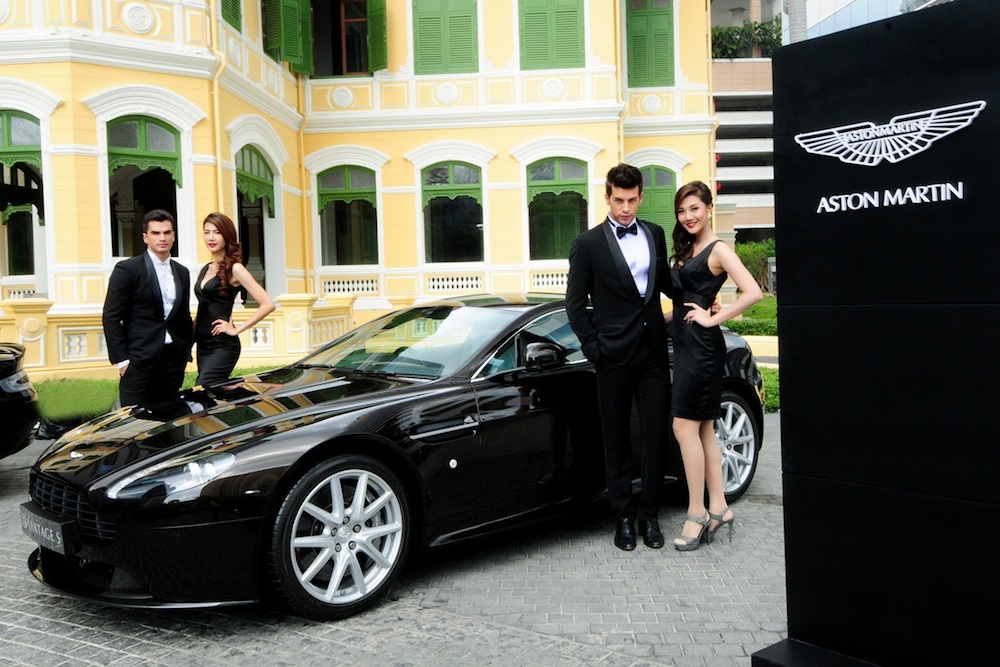
Prestige brands offer a high level of innovation, craftsmanship ─ and with some categories, the finest ingredients or raw materials. Due to their well-established names, status and pedigree, they boast quite a loyal following. As a result, they can command premium prices which their clients do not mind paying for since they are made to feel special. Examples of some prestige brands include Breitling watches, Lancome cosmetics and Aston Martin automobiles.
The distinction between a prestige brand and premium brand is simply one of perception. In automobiles it is Cadillac and Lexus vs their German counterpart of BMW and Audi. In watches, it is perhaps a Rolex versus a Breguet and a Cartier.
On a final note
When it comes to lower priced supposed “luxury” products for the affluent masses, they are essentially “premium” products ─ otherwise known as “masstige.” The brands succeed at creating fancy designs and utilize expensive looking material to make their products appear very expensive which are then sold at a fraction of the price compared to genuine luxury brands in the same product category. Add clever window dressing and marketing and the result is that those products become affordable objects of desire. Unlike authentic luxury brands which are manufactured at their country of origin (mainly Italy, France or the U.K.), they are outsourced to low labour cost factories in Asia or Turkey. Despite this, they are given a premium markup which is intentionally done to create an aura of high value.
As long as there is a big demand for massitige products that its target market can afford and make them part of their social status and lifestyle, the category will be around indefinitely.
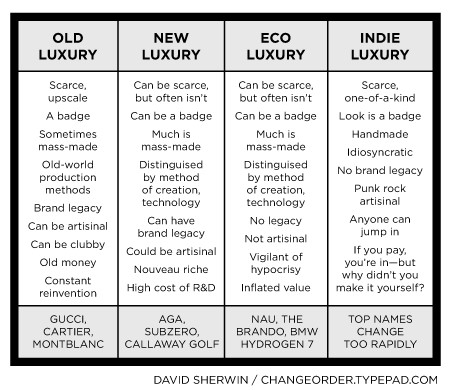
As a final point worth mentioning, at this day and age, there are luxury branding experts who claim that there are actually four categories of luxury: Old, New, Eco and Indie as exhibited in the following table (credit: David Sherwin). This translates into additional choices ─ categories to satisfy most desires.
As in every year, I have once again rounded up the ten most read/popular articles — this time for 2015. The following ten captured the most attention by numbers and from 154 countries in all. See them all below in descending order. Your views are always encouraged including subject matter you think I should be covering more of.
THANK YOU for your readership and I look forward to feeding your mind with much more business practical food for thought this year which can be applied for timely results.
Face it! Like it or not you are defined by the decisions you make. Think of successful organizations and the people responsible for guiding their authority and well-being. Often, high performance is the result of an executive choosing the right move at the right time. It’s not purely a lucky streak. Corporate strategy is not “Black Jack” nor 5-card stud poker.
Decision-making is a complex activity and at times a long process. Your ability to identify and excel in your decision-making tasks will greatly increase the chances that the choices you make will have a strong and positive impact on your organization. Why take any additional risks when you know instinctively that this is the case to sound growth and prosperity?
Where to begin in contemplation
Your first step is to understand the external and internal factors that affect decision-making, from aspects of the organizational environment to your personal decision-making preferences. While you aren’t always able to control these influences, recognizing and identifying these factors will enable you to take them into consideration as you strive to achieve the best decision outcome.
Reality check
Every day you make sense of what goes on around you by interpreting what you see and hear, taking into account your past experiences, values, needs, attitudes, and goals. Even your understanding of what another person says is only an estimate, as you can never completely share the viewpoint of someone else concerning the world.
Given the increasing complexity of organizational life, along with the quantity of information that must be processed, it is no wonder executives too often experience stress as they strive to balance agendas and please many of their people.
It can happen that you put a lot of time and effort into a decision study or a formal analysis, only to be disappointed in the results. When this happens, you need to re-evaluate both the information that went into the analysis including your expectations.
On the one hand, no process is any better than the information that goes into it and when you get a result that your experience suggests may be flawed or biased, this is a strong indication to probe.
On the other hand, it’s extremely tempting to tinker with the data until you receive a result that you’re happier with ─ but this is a form of deception that can lead to an adverse outcome. In this case, it helps to remind yourself to maintain a high standard of accuracy and objectivity and to seek a reality check from someone whose judgment you respect and who’s not personally involved in the decision.
The decisions you make are only as good as the process you use to make them. Asking yourself the following questions will help you to assess whether or not you are on the right track:
Have I done adequate research and gathered all of the appropriate information for the subject matter at hand?
Have I considered all of the stakeholders and their probable responses to various decision outcomes?
Have I been honest in assessing my own decision making style and taken that into account?
Have I recognized and acknowledged my personal agendas and bias?
Have I considered the various options available to me in selecting the most appropriate decision making method?
Have I solicited the advice and assistance that was required?
Am I prepared to be accountable for the consequences of the decisions I make?
You have the responsibility for making decisions that deeply affect your employees’ performance, morale and your organization’s future. You cannot afford to rely on personal preferences or hunches alone.
Now that you are familiar with some practical, yet highly effective approaches offered here, your challenge is to develop a positive future possible through the decisions that you make today.
Business man confused with his good and bad conscience
Bottom line
Your decisions are only as good as the information you use to make them. The cliché “Garbage in, garbage out” applies here. Your ability to recognize bias and evaluate the reliability and validity of the information you gather can make a tremendous difference in the effectiveness of your decisions.
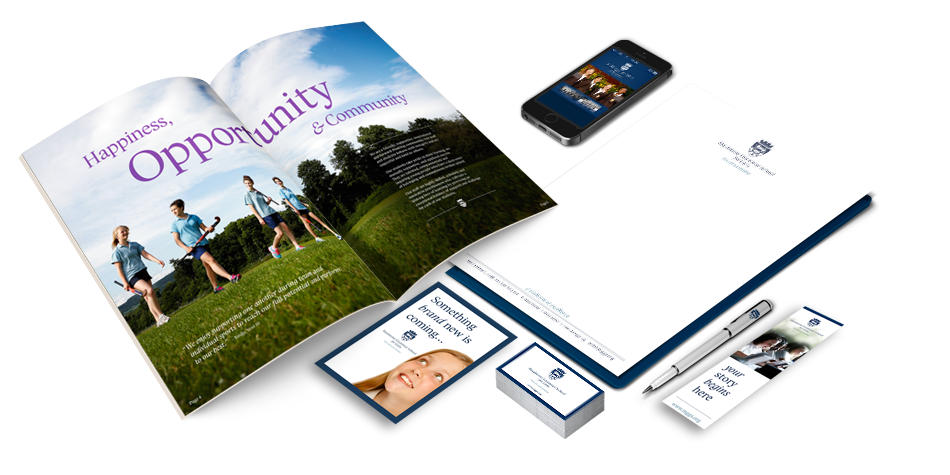
Cleverbox, UK – integrated school branding example
When we think of brands, we mainly think of companies. It is not often that we think of educational institutions. However, with competition amongst them, whether in the private or public sector, many have begun considering its importance and value. As a result, they are developing and implementing branding strategies so as to distinguish themselves. Branding is a powerful differentiator and creates top of mind with prospective students who are considering where to apply for college, university or a vocational/trade school/polytechnic institute. Private elementary schools and high schools also play into the equation but with the parents of the students primarily targeted.
As personal branding has become ever popular over the years – most notably for professionals in the job market, as well as practitioners in private practice (consider physicians, attorneys etc.), post-secondary schools in particular are also taking branding earnestly in consideration. To name a few that undertook a branding project at heart, and as a result have become renowned, are Babson College in Babson Park, Massachusetts, which describes itself as “immersed in business, engaged in liberal arts” and the Rensselaer Polytechnic Institute in Troy, N.Y. with its tagline, “Why not change the world?”. The for-profit institution of higher learning University of Phoenix, in Phoenix, Arizona, boasts its innovation in higher education which helped pioneer many of the conveniences that students now enjoy — evening classes, flexible scheduling, a university-wide academic social network, and an immersive online classroom which it has been offering for nearly 20 years.
As one would expect, educational institutions target diverse markets worldwide via their various programs offered. This makes their marketing messages all the more challenging.
Understanding privileges of Ivy Leagues
Pedigree, along with established high standards, unmatched curriculum, elite professors and lecturers and prestige, compel the Ivy Leagues’ inclination to seek only the top students for entry in their programs. Fewer than one out of ten students are usually accepted at Harvard, Stanford and Princeton for example. Prestigious and sought after colleges, trade schools and high schools can also be counted in following similar ranks holding on to their place in the top echelon which are also reflected by their exorbitant tuition fees. Parsons School for Design in New York City, the Career Training Academy in Pittsburgh (Pennsylvania) and The Lawrenceville School in Lawrenceville (New Jersey), respectively, have their own stringent criteria so as to retain their stellar reputation and cache. It is hard for the public schools to make such claims. This phenomenon is also driven by the plethora of applications received but with limited available places. It can also be stated that artificially set low admission quotas is vital to retain the brand prestige ‒ akin to authentic luxury brands production limits.
As a side note of interest, Ivy League universities have the most loyal, as well as wealthy alumni which contribute large sums of money as indicated by the universities’ vast endowments. By the end of fiscal year 2013, U.S. News’ three highest-ranked National Universities were Yale, ranked No. 3 with more than $20.7 billion in endowment monies, Harvard University, ranked No. 2, with nearly $32.7 billion, and Princeton, ranked No. 1, had nearly $18.8 billion.
Branding through emotional attachment and the total student experience
As universities and other educational institutions are having to confront challenges such as student enrollment, rising tuition fees, third party school rankings, and disruptive online course offerings such as Massive Open Online Courses (MOOCs), their distinction and relevance, amongst their rivalry, is in dire need of a jolt.
For starters, many institutions lack a target segment and a strategy on how they intend to reach it. Education is a knowledge service, thus a school’s campus facilities reflect its identity, whereas its teaching staff, administrative people, board members and alumni are a significant brand asset.
Branding is critical for success in any organization. It begins with the idea of what the organization will be perceived as. What do you want it to represent? What do you want your learning center to stand for? What type of image are you aspiring to portray? What type of students are you seeking to attract?
This brand promise comes in a form of quality, an experience and a certain expectation in the mind of the consumer ‒ in this case it’s the student. The brand should include the Unique Selling Proposition (USP), positioning (What should the brand stand for among its target group?), personality (Traits the brand possesses that consumers/students can relate to) and define the entire organization by touching every aspect of it. Those are crucial factors that will make it truly unique. Successful branding methods and results can also get the organization out of the commodity trap and attract value in terms of higher tuition fees ‒ or at least justify the value of existing fees.
Articulating what the brand stands for and why it is better than the competition, is where a brand communications strategy and execution come into play. Commonly used methods of brand communications include advertising, events, sponsorships, promotions, direct marketing, customer relationship management programs and public relations.
When students are delighted with their on-campus experiences, they begin to bond emotionally with the school. They become brand loyalists and advocates – transacting with the brand more often and recommending it to others. This behavior serves to build the school’s reputation.
Key points: a university with a well-respected brand has an enormous advantage
An article in The Guardian newspaper’s blog entitled, “What’s in a name? The value of a good university brand”, includes questions such as “In this rapidly changing marketplace, university branding is about much more than logos. But what does this mean for students and the role of branding in higher education in general? These queries formed the basis of a recent Guardian roundtable, held in association with brand communications consultancy Purpose. The debate was conducted under the Chatham House rule, which allows remarks to be reported without attribution to encourage a frank debate. Consequently, the discussion produced recommendations compelling enough that they should not be overlooked.
The roundtable heard that universities looking to brand themselves successfully should:
Focus on their core values, such as: academic integrity that links teaching, research and scholarship; business-friendly courses with employability appeal; and the positive student experience on offer.
Target communications at parents as well as students.
Involve academics as much as possible; their enthusiasm can often bring big dividends.
Highlight student testimony in university marketing materials.
Make the most of social media’s influence and reach.
Case Studies: a vocational education institute and a community college
New Frontiers School Board (NFSB) Continuing Education, in a suburb in Montreal, Canada, wanted to bolster enrollment and student engagement. Over a period of 12 months, The Watershed Media conducted an extensive communications audit, developed the blueprint for an online and offline marketing plan, and executed an entirely new digital and social media strategy and brand outlook. From their discovery, they knew that the success of the brand hinged on fostering intimacy and dialogue between the school and its students. Whatever they did had to be honest, authentic and true to life.
The Watershed injected the brand with a very personal narrative that celebrated the common theme of overcoming adversity and breaking through despite obstacles; a story that so many of their students shared in common. “I Choose Me” and the “Journey begins with you” were conversational brand elements that nurtured the empathetic quality that were the hallmarks of a school that was very student centered.
They revitalized the school’s social media presence through staff training and engagement, strategic content direction and social media marketing.
The website was built from the ground up and focused on reflecting a modern image that gave its users clear information, helped them make informed decisions about their future, and then act on those decisions through online conversion tools. The Watershed complemented student tools with community resources that would make the NFSB a valued asset to the communities it services. Site analytics are used to help refine content and define user experience in increasingly meaningful ways.
Equally important was their work helping NFSB shift the marketing culture at the school and discover their shared capacity to influence change through everyday inter-actions.
The brand strategy conceived and implemented by Words & Pictures Creative Service was to create an image campaign (print and radio, separate from the recruitment campaign) that would feature successful, famous, historical people who “could have been” Ramapo students. Shakespeare, Marie Curie, Andrew Carnegie, and Booker T. Washington were some of the role models who represented different schools in the College. This campaign elevated the College to a place where “some of the greatest minds in history could have started their futures” and where “the great young minds of today could start their futures.”
Results: Ramapo College experienced the following benefits and improvements over four years resulting in part from the image-building ad campaign:
Follow-up Eagleton survey conducted four years after original survey revealed overall dramatic increase in public awareness and improved perception.
Ranking in S. News & World Report moved to #1 public comprehensive college in the North for these consecutive years.
Combined SAT scores rose from 1120 to 1180.
HS rankings moved from top 24% to top 17%.
Full-time residential undergrads increased from 52% to 60%.
Retention rate from first to second year increased from 82.4% to 89.4%.
Retention rate from second to third year increased from 68% to 74.8% to 80% currently.
Graduation rate increased from 42.75 to 62.3% (well over national average of 50%).
Numerous industry and CASE awards recognizing excellence in the advertising image campaign and other collateral materials.
First-time donors increased by 35%.
In the final analysis
Educational institutions, whether in the youth sector, college level, vocational sector or in higher education/university ought to brand themselves succinctly to differentiate when communicating with prospective students, and perhaps with parents of students too. Needless to say, in the educational sector, the student is both the product and the customer. The service is the education delivered by its qualified educators. A well-crafted and compelling unique selling proposition (UPS), which the institution will consistently deliver upon, can give it a leg-up over its competitors in the category ‒ as well as build its brand. This is how a school creates well-earned attention, prominence and perceived value. It does this through its meticulous execution of its marketing and operating strategies, by way of a positive total student experience coupled together with its high academic standards. The approach is no different from a company selling apparel, food or hospitality.
Branding is an investment which offers the educational institution a distinction in competitiveness, awareness, a professional image and its reputation whilst adding equity to the organization’s assets. However, it’s a long term resource because it takes time to build a brand.
The practice of education branding building includes positioning. In this day and age change is a necessity not solely reserved for companies but equally important for schools – whether a university, college, vocational center and even in the youth sector (elementary and high school). Some may have require repositioning and re-branding. In the same way as the USP, this necessitates a well-defined (positioning) strategy so that the institution can build a consistent and successful brand in the course of time.
In re-branding, a new brand platform, including the identity and messaging should be carefully studied and developed.
As we look back and close the year, I have rounded up the ten most read articles of 2014 by my readers. The following ten captured the most attention by numbers. See them all below in descending order. Your views are always encouraged.
THANK YOU for your readership and look forward to feeding your mind with much more business practical food for thought which can be applied for timely results.
In part 1 of this 4 part series, the Aston Martin automotive brand was the star focus. In this part, the spotlight is on the customer expectations with the British luxury automaker Jaguar Motors. For over 90 years, this high-status marque has pushed the boundaries of what was once considered impossible in the automotive industry.
Sir William Lyons – founder of Jaguar Motors, combined performance and beauty in the designs and manufacturing of the ‘Jag’. A feat unprecedented of his time, his uncompromising vision set new benchmarks which is still followed by the manufacturer until today. Despite a tumultuous period during the Ford Motor Company ownership, its present owner (the Tata industrial conglomerate based in India) has invigorated a new model lineup together with a bold marketing strategy through a substantial cash infusion. It also acquired, from Ford, the Land Rover luxury SUV brand.
With the big news of Jaguar’s upcoming justDrive™ ‒ an industry-leading app technology that integrates multiple smartphone apps into a single, voice-activated in-car experience; it is now a leading contender amongst its competitors.
The Jaguar driver profile
The Jaguar customer is typically a refined man or woman – for the most part, a university graduate with a dynamic presence, and status symbol visible. Moreover, the Jaguar driver can be classified on some levels to the “blue temperament” – which is an analytical, prudent, detail-oriented and precise personality. In serving a Jaguar customer, one must not sway into personal details on the onset. In addition, the sales consultants have been trained to not ask many open-ended questions but rather ask close-ended questions and listen attentively. I also suggest note-taking, because the majority of Jaguar drivers (most in Executive positions) do not like to repeat themselves. By taking notes, one demonstrates the prospective Jaguar owner that you are unconsciously like them by mirroring their behavior.
Following is an outline on how authorized Jaguar dealers respond to customers – from Sales to Service.
Initial Sales Consultation
– Greeted promptly by the receptionist
– The sales consultant must greet the potential Jaguar consumer with the appropriate handshake (particularly the dominant handshake)
– Ask close-ended questions to ensure need and quality prospect.
– Initiate test drive
– Review objectives & listen to this customer clearly while note-taking
– Warning- there is a fine line between explain the benefits to this customer versus being aggressive in your approach. Allow this customer time to review the advantages of owning a Jaguar.
– An overnight test drive is quite rare, however during the test drive, outline the benefits of the drive and the technology.
Sales Process
Allow the appropriate time for this customer to choose options, colors and technology combinations. At this point, once trust and careful attention has been established- then proceed with open-ended questions.
Delivery
– Short and succinct (keeping in mind that this customer is discerning and either a professional practitioner, executive or a successful entrepreneur who may have to return to the office for an important meeting.
– The customer should be shown the basic functionality of his or her new Jaguar
– The customer should be asked to reschedule a one hour detailed information session at his/her place and time of convenience.
The automobile which reflects a luxury lifestyle
Premium and luxury car owners seek the total package with the car brand they choose to be loyal to as they would when checking in to a luxury resort. They seek more than just a vehicle they can enjoy from point A to B. In practice, its owner might use this automobile to commute to work, but this is not sole incentive. Jaguar is clearly a brand with authenticity and heritage. The principals shaping the consumer’s buyer behavior go beyond intention. There is a sense of engagement in fulfilling a dream. It can be to make a social status statement or a personal style choice. Whatever it is, it is not an unconscious choice. The codifiers are clear: This is who I am, and what I believe in. Ultimately, it can also articulate the owners’ sense of self-worth and their emotional aspirations. The most important emotional benefit is that a product of this caliber and class expresses itself when the consumer can declare: “It suits my lifestyle.”
Discreet and unconventional selling approach
Jaguar in North America is testing, in several major cities in the U.S., a novel way it presents new vehicles by showing appreciation to its most loyal customers, which it labels as “super-loyalists” by hosting elaborate receptions in their homes. In turn, the “super-loyalists” invite friends and associates who may be interested, and can afford, one of Jaguar’s elegant models. This idea takes away the perception of any high pressure sales normally associated with auto sales at dealerships.
Dealers of prestigious auto brands as custodians of heritage
A luxury dealership’s ultimate goal is to make an entire ownership experience a pleasure ‒ let alone a Jaguar. They strive to build relationships, which is why so many of their clients remain loyal. A luxury dealership serves as a guardian for the rich heritage of their prestigious brands thus make certain to continue their legacy.
When we encounter the word “luxury”, images of: seamlessness, awe, the rarity factor, cache, opulence, aristocracy, supreme workmanship, stellar service and reverence come to mind, amongst others
Now, close your eyes for a moment. What images come to mind when you consider mention of the following vehicles: Aston Martin, Jaguar, Bentley and Range Rover? That’s what we will be analyzing in this four part series of the luxury British automotive icons and the above average expectations of consumers seeking such extravagant motor vehicles.
What qualifies the authors to give such commentary? Having worked and served — most notably with prestigious brands such as Gucci, Aston Martin, Jaguar, Bentley and Range Rover, as well as with mega yachts and coupled with extensive research and consultations in this domain –, both can accurately define the exceptional treatment tendered to a HNWI (High Net Worth Individual) luxury seeking discerning consumer. Brands which qualify to serve this exclusive market provide attention to detail, a plethora of product knowledge/competence, and discretion along with an implementation of an anticipated flawless post-sale/follow-up policy.
Price aside, a luxury car brand should embody cache, exclusivity, pedigree, craftsmanship and limited production. R.L. Polk and Company, a global automotive information and marketing firm that provides solutions to automotive and related industries, has re-defined the term with the appellation, “super luxury”, ‒ i.e. cars that cost over $100K. This category includes brands such as Rolls Royce, Bentley, Maserati as well as the Aston Martin being featured here.
Aston Martin: License to thrill
We begin with the initial luxury automotive brand in this four part series: Aston Martin. This high valued motor car producer brings images of James Bond, a ladies gent, British heritage, sophisticated technology, sex appeal, speed, agility and soul.
Considering the above persona, the makeup of a typical Aston Martin customer.is a male (no gender discrimination intended), in his late 30’s early 40’s, handsome, successful, possibly with an attractive spouse (or if single, a striking companion), possesses a deep knowledge of refined luxury, knows what he wants virtually at any price level, and enjoys adventure, as well as thrives at constant new challenges.
Initial impressions and consultative sales process
When a prospective owner, or existing customer of an Aston Martin walks into any impressive looking Aston Martin showroom, the total experience should normally result as follows:
– To be greeted initially by the attractive receptionist/hostess (brand ambassadors) by the owner or General Manager of the dealership;
– Introduce the prospective client to an Aston Martin specialist;
– Offer a hot or cold fine beverage;
– Be given a tour of the impressive premises;
– Exhibit the various models and a test drive initiated during which time rapport is being built;
– Offer of an overnight test drive to create the feel and experience of the automobile and its performance characteristics;
– Thank and greet the prospect by the dealership owner or GM upon returning the vehicle followed by the sales specialist;
– Customer’s contact information should be entered into the dealer database (CRM);
– If a sale is initiated – the sales process should ensue. However, if a sale does not occur, effort should be exerted in a discreet and pragmatic manner (consider “consultative” selling) to close the sale. Statistics show that 60% of car purchases have been consummated on the spot when they received what they considered was an excellent presentation and demonstration. Either way, a follow-up is imperative within 24 hours.
Sale & delivery
– An appointment should be set for delivery;
– Upon arrival to pick-up the vehicle, customer should be congratulated by owner and/or GM;
– Explanation of vehicle model should be thorough along with a post-sale follow-up the following day;
– Customer should be offered a token appreciation for his/her business. This can be in the form of champagne from a strategic partnership for example, Moët & Chandon and/or an additional gift in good taste.
Exceeding customer expectations for the discerning client-driver
To succeed in gratifying the seemingly sophisticated client, a high-end organization should develop a comprehensive strategy along with efficient implementation tactics. These include:
– Having a clear and unique value proposition that hooks them;
– Consider exploiting the five senses to attract and retain them – categorized as “ambiance”/”sensorial” marketing and branding;
– Staff must be customer centric, patient, empathetic, and good listeners – remaining calm under duress during client interactions;
– Employee retention – hiring for attitude and training for skills;
– Utilizing a hands-on approach;
– Probing clients’ specific needs/requirements – recognizing their motivations – reading their body language;;
– Earning their trust and respect by exuding confidence, empathy and transparency;
– Offering a personal touch – individualized attention with customized solutions – It’s all about the customer;
– Being frank and transparent with pricing, offers, proposals and promotions;
– Proposing an expansive product selection and service options;
– Outstanding and consistent levels of customer service throughout the organization;
– Reducing or eliminating waiting times – whether on the phone (reservations, customer service etc.), as well as for service or an appointment at the physical location;
– Offering customer loyalty programs through joint collaborations with other luxury purveyors – a great way to make them feel special by receiving something extra;
– Asking for feedback with regards to service and product experiences for ways to improve those experiences. Discerning clientele are typically strongly opinionated and relish giving their views.
– Implementing the latest technology with all touch points.
The Aston Martin automotive brand with its power, beauty, soul and heritage as its tagline delivers to a specific and limited market segment by giving way to its consumer target to acquire their models they associate with a “luxurious and sporty lifestyle.” The brand is essentially a status symbol.
Brand loyalty is about building an emotional, and in some cases, irrational, attachment in a product. “Total customer experience” is not an option but rather compulsory as part of an alluring brand. It takes savvy planning, execution and perpetual refinements to stand above the crowd. It’s how you get noticed and remain relevant. Luxury brand desirability is driven by standout design, craftsmanship, as well as what is felt.
A typical Aston Martin showroom portrays a super luxury car brand able to offer a “wow” factor to its intended customers with an unconventional retail experience which exploits the five senses. This includes a showroom floor with ideal lighting, the various models well positioned/presented, impeccably dressed/groomed staff, and an upscale lounge ‒ overall, presenting sight, sound, smell, touch sensorial experiences and creating a feeling of lavishness. Some will go as far as offer art exhibitions on the premises, five star dining events and wine tasting to name a few. It’s what its type of clientele crave.
With the proliferation of Italian and French luxury brands bearing the ‘Made in China”, ‘Made in Turkey’ or made elsewhere remote from their land of origin, it makes one ponder whether the brands are diluting their image for the sake of lower prices and higher profits. This begs us to revisit the question of what constitutes an “authentic” luxury product and whether manufacturing in a country unknown and unfamiliar for evoking luxury is a good long term strategy for the brand with heritage.
Luxury vs. Premium vs. Fashion: Clarifying the Disparity
Definitions of “luxury” vary enormously and depend on with whom you discuss the topic and in what context. The term “Luxury” has never been something easy to define. It is relative, mysterious and elusive. In essence, it revolves around subjective criteria in the mind, which creates a mood and what is generally referred to today as lifestyle.
The proliferation and marketing misuse of the word “luxury” on many products across sectors is quite evident. Brands either do it out of ignorance or to enhance the desire for the consumer to purchase their products.
Gary Harwood at HKLM, one of the founders and directors of a leading strategic branding and communication design consultancy, affirmed:
“A luxury brand is very expensive, exclusive and very rare – not meant for everyone. When it ceases to be these things, then it’s lost its exclusive cachet. Commoditizing luxury brands and making them more accessible to the middle market puts them at risk of becoming ordinary, common and less desirable. And the more available a brand is, the less luxurious it becomes.”
Authentic luxury brands compete on the basis of their ability to invoke exclusivity, prestige and hedonism to their appropriate market segments not the masses. There is a classic litmus test:
Is the product manufactured in artificially limited quantities? (i.e. the rarity factor)
Does the firm have a story to tell? (i.e. history & pedigree)
Is the firm portraying a unique lifestyle?
Is craftsmanship the hallmark, which delivers products that only High Net Worth individuals can purchase without question?
Does the brand offer authenticity?
Does it implement an absolutely no discounting policy?
Is the product (and at least most of its materials/parts) manufactured only in its country of origin?
Luxury is not premium – and premium is not luxury. They are two dissimilar categories catering to different market segments.
Luxury Product Roots and Perception: Key Factors of Authentic Luxury
A luxury product is rooted in a culture and comes along with a small fragment of its native soil, of its heritage. This proposes that in order for a “luxury” product to remain true to its origins, as one of its main criteria, its production shall remain in the country of origin ‒ whether that is France, Italy or elsewhere (most notably in Europe). Tempting to relocate production elsewhere can cause the brand to lose its lustre and character.
Professor Jean-Noël Kapferer, an author and lecturer at the Kellogg Business School (Northwestern University, USA), as well as at HEC Paris, Europe’s premier academic research center on Luxury, clarified his views on this subject matter by stating that:
“Looking at luxury companies’ own attitudes, there is a clear segmentation, based on their brand positioning and business model. A first group (such as Louis Vuitton, Hermès, Chanel) emphasize quality and heritage as the main sources of their incomparability. They are patriots. For them, a country of origin is a homeland, much like the soil in a vineyard – a miracle made of earth, nature, sun, rain, and sophisticated human labor, loaded with culture. For them, ‘made in…’ tells a whole story, tying production to a long heritage.”
He further affirmed that:
“To remain a true luxury brand, following the luxury business model, entails sticking to local production. This is not an easy task for many luxury brands. Those that comply must create the conditions that are necessary to sustain this production. This is why they often buy their local sub-contractors in case the latter go bankrupt, to be sure to keep alive a historical know-how that might otherwise disappear.”
France and Italy are considered the leading countries for luxury and trend setters for clothing and accessories. Luxury watches (better known as “timepieces”) are manufactured in Switzerland ‒ the undisputed leader in this category. London, is considered to be the luxury spirit capital of the world with Burberry as the most prominent luxury brand. Whereas, Germany Italy, as well as the UK are for luxury automobiles. However, what they do produce elsewhere in the world are not ‘luxury’ but rather their lower priced “premium” derivatives (think BMW, Mercedes and Audi). Other illustrious automotive names, such as Ferrari and Rolls Royce, continue to manufacture solely in their native country.
Private vs. Public Luxury Purveyors
For the good of their distinguished image and cache, top-tier luxury brands should remain small privately held, with no pressure to sell and family run beyond the reach of speculators. These companies are managed, and their equity held, by those families. Consequently, management of brands, people and profits are done with the long term in mind, not necessarily the next quarter, which most investors would not have the patience to deal with if the luxury brand was publicly traded. In essence, the privately held have the luxury of taking risks as they desire and staying the course when they don’t. They have the freedom to invest for 5-10 years without receiving a financial return. In comparison, the publicly traded ones, which are accountable to their shareholders, are constantly under pressure to trim production costs and increase revenues and profits which lead them to cater to a larger audience ‒ the mass affluent. So much for all the elements of ‘genuine’ luxury purveyors which are doing away with scarcity and exclusivity.
The most prominent smaller and privately held ‘authentic’ luxury brands which fulfill every criteria ‘luxury’ truly exudes are as follows:
Soft Luxury Goods (high-end apparel, leather goods and exclusive fragrances) include: Hermès (70% owned/controlled by the Dumas family ‒ the descendants of its founder), Chanel (100% ownership by the Wertheimer family) and the niche perfume house, Creed Fragrance Company founded in 1760 (100% ownership by the Creed family ‒ descendants of its founder).
Hard Luxury Goods (products such as watches, jewellery and pens) include: Rolex, Chopard, Patek Philippe amongst others.
According to the Millward Brown luxury brand survey, which includes the large luxury groups, Louis Vuitton, Hermes, Gucci, Chanel, LVMH (Moët Hennessy Louis Vuitton), Rolex, Cartier, Fendi and Tiffany & Co. respectively, are the most successful family owned luxury brands. Moreover, research done by SDA Bocconi, renowned for providing world class luxury education, revealed that unique characteristics of most family-owned or managed business fit almost perfectly with the competitive logic of hard and soft luxury approaches. Needless to say, their management culture, retaining the mystique (crucial in the ultra-luxury domain), and long-term decision approach are all instrumental for cultivating and preserving their brand heritage.
Hermes 2013 Ad Campaign
In the Final Analysis
There should be no confusion between luxury and premium or even a fashion category. When someone buys a luxury object, he/she purchases craftsmanship, cache, pedigree, made in limited quantities, a special place in the world of lifestyle and exclusivity (made for the few). The premium business model is based on the manufacturing of best-in-class products, with an image of style. Fashion is a general term for a popular style or practice, especially in clothing, foot wear, and accessories. Fashion references to anything that is the current trend in look and dress up of a person. Usually not timeless. A “luxury” and a ‘premium” product can be both – as in a tailored made fine wool suit for example.
Therein lies the major differences between a luxury product and a premium product. It’s legitimate for a premium product to seek out the most suitable and most economical manufacturing location, so long as quality and service levels can be maintained.
Brands such as Nike, Adidas, Ralph Lauren, Hugo Boss, Tommy Hilfiger, amongst others, are doing an exceptional job of selling solely an image to the masses. Indeed, far from being a genuine ‘luxury’ brand, most of their products are manufactured in low labor countries such as China.
The ‘made in’ label plays a significant role for luxury aficionados who hold higher expectations including a value added quotient to ‘luxury’ brands who produce their products in their respective country of origin – mainly France, Italy and the U.K. For categories other than apparel and accessories, production should be elsewhere in Western Europe.
In the article “Building a Luxury Brand Image in a Digital World” by David Dubois, INSEAD Assistant Professor of Marketing and Debbie Teo, INSEAD MBA, they quote the following:
“Hermès has no desire to become ‘masstige’ (a mass producer of prestige goods) the company’s CEO Patrick Thomas stated in 2009. In essence, he asserted that his brand was not in a position to dilute its image and compromise on quality in the interest of short-term results. This is truly one of very few authentic “luxury” brands befitting the model and criteria in the sense of the word.
Privately held luxury brands are prone to view business with long-term vision and remain rigid with quality over quantity. Comparatively, their publicly traded counterparts go out of their way to please their shareholders which may dilute their “luxury” status for the sake of volume and short–term gains.
Good business decisions are not the domain of tactical “bean counters” — exploiting the luxury brands for all their worth. They may also come from strategic planning and overall financial leadership.
In larger companies, how often do we witness bickering between the sales and marketing departments? Too often it seems. In well-informed B2C and B2B markets, especially in a highly competitive sphere, businesses would be wise to make certain that their sales staff and marketing practitioners coexist rather than allow one side to blame the other for a lack of sales. This situation has long been a challenge — although it is not hopeless to rectify. Ignoring this situation certainly affects company performance amongst other adverse factors.
Sales and marketing complementing each other
Marketing as a function supports Sales. Marketing’s function is demand creation, which includes advertising, public relations, trade shows, white papers, and point-of-sales-materials.
The Sales function is to generate revenue. Neither exists without the support of the other. Peter Drucker, considered the top management thinker of his time, once wrote in The Practice of Management that “the aim of marketing is to make selling superfluous. If the marketing is well done, the products, and its features, sell themselves.” Despite this, sales staff don’t fully comprehend the role and value of Marketers and feel that their needs are being neglected, whereas, Marketers look down at Sales and consider them as merely a function, as well as short-sighted for the sale. In reality, Sales rely on Marketing for the tools to facilitate the sales process. If Marketing understands what the customer wants, then the prospect will purchase the product or service with less effort to sell.
Working in sync has benefits for everyone involved
To work together as a well-oiled team requires each side to contribute to the other, as well as clearly understanding each other’s role and the benefits of teamwork. This works by focusing on aligning sales and marketing to the same vision of how customers’ needs are addressed. This way they will reach a common ground. These days, marketing practices consider their sales force as “customers.” Since the sales force is the front-line, if they believe, they will be able to attract and retain a client base organically.
Collaboration and fusion of sales & marketing
The way forward: How do you unite the two plus the customer service department?
The way forward initially requires a strategy with an appropriate execution which stresses communication, understanding and collaboration. The elements to integrate Sales, Marketing, as well as Customer Survive into the equation should include:
Conduct one to two training sessions (as necessary) with all 3 sides/departments (Sales, Marketing & Customer Service) to clarify the importance of their roles, along with the company’s values and objectives – keeping in consideration the customer as the key figure in all this and sales performance as a major KPI.
A sales & marketing plan should be devised with the input of Sales and Marketing. There should be a common agreement along with management. This compels all sides to be on the same page, creates direction and synergy. It also allows the 3 to define how each one may impact the plan.
Establish a committee with Sales, Marketing and Customer Service to meet once a month to continually provide feedback to each other, as well as iron out any issues they may be encountering with one another. This way, any misunderstanding is dealt with and out aside in the same room.
When creating marketing campaigns and tools, the entire sales process should be emphasized. Marketing is serving two people – Sales and the Customer.
Implement a CRM system. Data sharing technology integrates Sales, Marketing, Customer Service, as well as management/operations and ensures they’re in sync working with the same customer data, both internal and on social media. The CRM also helps manage the sales cycle and track marketing efforts. For the Customer Service side, it provides service cycles, customer preferences and other pertinent information with data retrieval a seamless task.
Sales ought be coached to understand what the purpose and work of Marketing is, whereas Marketing should understand the sales process and helping the sales staff make sales rather than merely focusing on creating fancy promotional tools – whether physical or digital. Working with each other alongside can’t help but excel in their functions which will come to fruition through the company’s increased sales performance, improved morale, sales/marketing ROI, increase accountability and enhance customer experiences, thus retention.
Luxury Brand Management is sometimes like weather forecasting. With the media and fashion industry in full tilt this autumn, there is wave upon wave of adverts, campaigns, and promotions. Within the glitzy magazines and online videos geared to seduce, consumers and even those within the industry have a difficult time distinguishing luxury from premium brands.
Price is not the only determinant. Add the crossover product strategies between the 2 types of brands and there is more confusion still. Luxury enthusiasts are always looking for the “best”. The problem arises on what this term really means if it means anything at all. Most studies indicate that the term “luxury” is highly subjective.
For this reason, I have decided to try to clarify this important topic and booming business sector.
Take for example the terms, “premium”, “luxury” and “fashion”. Is it possible to define and portray these ethereal…
A place which wants to attract the most discerning souls, should be unique and embody a complete lifestyle concept which combines a relaxed, holistic approach amongst an elegant setting and decor with attention to detail. This includes, clean, updated and attractive guest rooms with no amenities spared. Pleasing food & beverage prepared and presented with pizzazz are complemented by soothing music which is also an integral part of the ambiance. The attractive, smiling and well-mannered staff is dressed stylishly. All of these elements combined will, undoubtedly, seduce the senses and generate good vibes along with positive memories created.
However, is all that adequate? Today, more than any other time in history, customers are the most sophisticated and increasingly demanding – whether they’re Boomers, GenXer’s or Millennials. The total customer experience in the high-end hospitality domain requires superlative attention to customer care from the moment a booking is made, during the guest’s stay and beyond. The use of an integrated approach is essential across various touch points with the purpose of engaging and retaining customers.
The sanctuary away from home
Astute guests consider hotels they choose to be an upgrade away from home in terms of comfort and services offered. One area of particular attention in the last few years has been the bed. It has been the focus of tremendous improvement. According to J. D. Power & Associates, a comfortable bed and pillow choices are must-haves ‒ especially for business travelers. In fact, 93% of luxury hotels offer a selection of pillows.
A high-end resort developer and operator, Kerzner International, renowned for its opulent One & Only luxury resorts brand has “Blow away the customer” as it core mantra. The company walks the talk by impressing its guests through grandiose entrances, facilities, overall ambiance and luxury amenities – then making absolutely certain that they are pampered throughout their stay. It’s all an integrated, well-orchestrated and flattering process. Nothing is left to chance although it does take a coordinated team effort to make it all happen flawlessly.
The wealthy cherish their time and know what they want. Even time is a luxury and limited resource for them, thus saving time greatly trumps saving money. This is part of the reason service is crucial for them. They can be generally described as:
– Seek a higher and exacting standard with a minimum set of expectations; – Fussy in nature; – Often require customized solutions to mirror their lifestyle – whether a product or service; – Take pleasure on getting extra attention from the brands they pursue; – Prefer the uncommon to the mundane; – Expect to be offered unique choices and experiences; – Synonymous with a taste for luxury with pedigree and craftsmanship which they’re able and willing to pay; – Aspire an aura of exclusivity; – Crave an experience heightened by exceptional service along with a personal relationship; – Seek products which are different and more sophisticated – whether it’s apparel, electronics, food or insurance; – Want to feel in command of their purchase decision without any pressure.
Boutique hotels vs. corporate chains
“Boutique hotel” is a term to describe hotels which often contain luxury facilities of varying size in unique or intimate settings with full service accommodations. Sometimes known as “design hotels” or “lifestyle hotels”, boutique hotels began appearing in the 1980s in major cities across North America and Europe – mainly in the U.K. These hospitality properties are characteristically furnished in a themed, stylish and unique manner. Boutique hotels generally are known to have less than 100 rooms. Their limited capacity enables them to enhance the customer experience through personalized service, as well as to customize their property and operations. An intimate atmosphere is usually regarded as a vital part of a “boutique” hotel. This includes cozier premises, quality amenities; conceptual dining outlets that become destinations in their own right, and an environment whereby the hotel staff recognize what your needs and desires are, rather than just responding to what you ask.
Taking the personal touch to a higher level
Superb customer experience isn’t merely offering the customer what he/she asks for but rather what the discriminating customer truly desires to receive. This is accomplished by constantly exceeding of expectations through the delivery of remarkable tailored customer service with a series of personal touches. Premium and luxury hotel guests expect surprise and delight along with unusual positive experiences.
Forrester, an independent technology and market research company, defines customer experience as: How customers perceive their interactions with your company. As with brands, customer experience is not what management thinks it should be – it’s what the customer perceives it to be. Thus, it should be understood that, because experience is a customer’s perception, management doesn’t control the customer experience, but it can certainly influence it.
The challenge for hospitality organizations is to ensure that their personnel always provide at least the level of service that their guests want and expect every time, perfectly. The purpose of quality management in the hospitality industry is to ensure that customer service is consistent and flawless. Providing it is intertwined with the overspill of the needs and expectations of guests and therefore their enthusiasm (delighted guests). The element of quality of service offered by the hotel industry should be apparent, be recognized and understood by the guest, as absolutely essential element in all the stages and processes during the service delivery.
The organization’s strategy, personnel and systems are aligned to meet or exceed the guest’s expectations regarding the following aspects of the guest experience: service product, service setting and service delivery. These aspects are carefully woven together to give guests what they desire and expect, plus the wow element. It all starts with the guest. Evidently, you can’t have a guest experience without a guest to experience it. That’s the main point, without the guest to initiate it, the components such as the carefully designed service product, the detailed and inviting setting, the highly trained and motivated servers and the finest back of the house people and facilities are just an experience waiting to happen.
The evaluation of service quality is a complex process, and the guest side is primarily subjective criteria, because each person can have their own opinion. But what is it really imparts excellence in quality of service to guests and causes only positive emotions and reactions of customers when they experience an unforgettable experience?
There are four key elements that make up the quality of the generated service and identify the outstanding quality of service (Service Excellence) which are as follows:
The Guest
The service setting – environment
The service delivery system
The processes
When these four elements, coexist and perform maximally, then the chances, the qualitative result to delight the guests, are significantly increased.
The service, as a product of person to person or a series of interactions between the guest and the person delivering the service is transformed into experience for the guest. The positive or negative aspect of the experience depends on the strategy applied by each company and sets the service delivery system. The guests, the service procedures and physical data sited so as to form a quality experience for the customer service they receive. Employees, who are also the brand ambassadors, play a crucial role in the process of service delivery. They are trained specifically for this purpose and supported by the organization itself along with the organizational culture. Technology and information flows like internal and external communication.Artificial and natural elements of the service along with the human factor, in this case, define the guest experience.
The service dimensions consist of reliability, responsiveness, assurance, empathy which characterize an emotionally intelligent and spirited staff with tangible elements in the ensuing way:
Reliability reflects the service provider’s ability to perform service dependably and accurately.
Responsiveness is a strong indicator in assisting guests and providing prompt service.
Reassurance reflects the courtesy and knowledge of employees and their ability to inspire trust and confidence.
Empathy involves the caring individualized attention the brand provides its guests.
Tangible elements include the facilities, amenities and ambiance felt by the guest directly or indirectly.
A company’s reputation for excellence in the services sector can be developed and supported, as long as the firm has a strong organizational culture oriented in high quality service, customer focus throughout the organization, as well as a dynamic set of employees. They are conscientious and committed to act within the quality standards which the company has established.
For a hospitality organization to achieve high levels of customer service and maintain constant satisfaction, it should develop and implement a structured service strategy, which covers all necessary actions on what measures and actions will be taken to:
Create a customer-centric culture.
Develop and install appropriate infrastructure service delivery system.
Identify the necessary procedures to recognize and meet the needs and expectations of guests.
Refine and encourage staff to speak with the right attitudes, skills and behaviors to internal and external environment of the company and towards the guests.
Measure – evaluate the degree of guest satisfaction.
Continuously implement practices to improve internal operations and procedures relating to excellent guest service.
An experience is created when a company uses the services and goods, in such a way as to create a memorable event and to stimulate the emotional world of the guests.The more intense is the intensity of emotion, the more strongly imprinted in memory and then only is it created as a memorable experience.
Guest experience is an integral part of service excellence and absolute customer satisfaction, all of which are subject to evaluation and performance measurement of an organization. With modern techniques and methods identified and assessed the degree of customer satisfaction and the recorded positive or negative experience. The collection of information, both during the service and the configuration of the customer experience provides useful information and enables the company to rectify and remedy any failure or deviation from the quality standards prescribed.
Customer service centric hospitality businesses train staff to utilize the so called “sixth sense:” It’s the innate ability to perceive what is not seen or immediately apparent. That perception will undoubtedly offer hotels, as well as other customer driven businesses, to delight their customers. According to an article authored by Mike Metcalfe, founder of Hoteliyo, a resource and blog for hotel professionals, he suggests to define your hotel service culture. Start by creating the ‘Guest Journey’. Map out every interaction or ‘touch point’ guests will experience as the following image depicts.
Hotel guest touch points according to Mike Metcalfe of Hoteliyo
At Ritz-Carlton hotels, employees with direct contact with guests, such as the bellmen, are authorized to spend as much as $3000 to help solve a customer’s problem. At some other luxury hotels a wake-up call from the employee is not a typical, “This is your wake-up call ‒ wish you a great day”, but it also includes an offer to send up a complementary cup of coffee to get the guest’s day started.
At a Four Seasons Boston hotel video, an employee describes with pride and exhilaration how she went out of her way to personally get a guest’s luggage to the airport at the nick of time. The luggage was locked in the trunk of the customer’s rental car parked at the hotel and had lost his keys. Meantime, he had to rush to the airport without them so as not to miss his international flight.
Utilizing IT and social media to enhance the personal touch
Nowadays, luxury hotels should not neglect utilizing the benefits of IT and the internet to keep a two-way flow of continuous communication with its prospective, as well as existing clientele. This includes a fully integrated CRM system which connects sales, marketing and the administration including reservations, monitoring and responding to review sites and reaching out to social networking sites. Customer preferences are also kept on record to keep in consideration and deliver upon during the guest’s future stays.
Digital think tank L2 reported 78% of the affluent participate in social networking sites, with more than half using social media to connect with a brand, while 65% of wealthy consumers believe that brands that have no such presence are considered out of touch.
Luxury hotel chain Four Seasons, only a couple of years ago, unveiled a new website that reportedly cost a whopping $18 million to develop. It uses a holistic digital media strategy to enhance the total online experience and give a visual taste of what can be anticipated at their properties. Extensive research around digital consumption of luxury consumers, both in the travel sector and across other categories, was conducted for the development of the new website. The result of the investment is a fancy, colorful website, with a new booking process, social media integration and personal profile technology that allows users to set preferences and create a more targeted online experience. It is also optimized for mobile, which provides access to a reduced size version of the site, and includes videos, room rates and booking capabilities. In addition, locations and experiences are showcased through photo-rich, informative property and destination pages.
Upscale hotels, particularly, must offer WiFi access throughout the property at no charge. This is becoming part of the standard package that guests expect and demand. The cost, reliability and performance of WiFi in hotels worldwide has been a subject of frequent contention amongst hotel patrons.
The most notable high-tech innovation since a few years ago has been the mobile revolution. From the tablet with the iPad to the smartphone before it, they have become ubiquitous to everyday life. According to the Luxury Institute, one-third of wealthy consumers own a tablet or e-Reader such as the Kindle or Sony.
The takeaway
Any organization obsessed with customer service and the total customer experience, let alone the hospitality domain, should forgo routine and avoid unpleasant surprises. Complacency is a comfort zone which yields marginal performance. It can cause deficiencies, stifle growth and progress. This syndrome should be replaced with drive and consistent improvement. The culture of the organization, along with its structure, play a major role with the challenges it faces and how it deals with them.
As in every service sector, with an upscale hotel, every guest contact point should offer a unique and pleasant experience. Hotel brands need to use an integrated approach across their various touch points to engage their customers – commencing from the ease of their online (website) procedure or phone reservations center, during the guest’s stay, at check-out and beyond.
Placing emphasis on employee attitude/personality, empowerment, constant training, offering effortless accessibility for clients, flexibility when solving issues and presentations with style, as well as finesse. Each and every customer should be treated with personal care – a sign of individuality;
Sufficient resources and proper procedures should be implemented in hiring and training individuals with the right attitude over skills. The organization’s culture ought to support and inspire its staff to impressive achievement. An environment of mutual trust between leaders, employees, and customers should be created, along with proper rewards and incentives. This is what it takes for a human and personalized touch that retains its brand promise.
The best managed organizations have one factor in common: They are constant achievers, exude managerial excellence and possess a well-targeted CRM. The payoff will be a higher level of repeat business, referrals and profitability. Their financial performance is reflected in those results.
Ultimately, everyone in a service organization should live and breathe the brand.
___________________________________
Empirical fact references:
– Robert C. Ford, Michael C. Sturman, Cherrill P. Heaton (2011) Managing Quality Service in Hospitality.
– Parasuraman, A., Zeithaml, V., and Berry, L. (1994a). Alternative scales for measuring service quality: A comparative assessment based on psychometric and diagnostic criteria. Journal of Retailing, 70 (3), 201-230.
– Armstrong (2009). Armstrong’s Handbook of Management and Leadership. A guide to managing for results.
Consider this! You are walking on, what is considered, a prestigious street in a downtown area of a major city lined up with a slew of luxury shops. What do you particularly notice about the look of the shops as compared to mainstream stores? Would you say it’s the window displays which are striking? The entrance? The upscale and inviting interior design? The way the merchandise is displayed?
Designing a luxury shop is much more than four walls, racks and lighting. It’s a meticulous creative and holistic process taking into account that luxury stores have to transmit the identity of a luxury brand, so that the image the customer has of this brand is affirmed by each store visit. Needless to say, it’s a design concept coupled with the total customer experience in mind.
Piaget timepieces, Bond Street, London
Ambiance, personalized service and the total shopping experience
In a world where the consumer has become savvier, luxury products more accessible through an increase in democratization of luxury brands and the rapid emergence of prestige brands, the retail environment in luxury branding is all about heightening the consumer’s brand experience and amplifying the brand aura.
A well designed luxury retail boutique should embody an extraordinary design that is timeless while maintaining a striking interior that is unique, inviting, functional, and most certainly portray a luxurious setting.
A custom designed attractive setting – yet alluring with captivating style, invites customers to truly feel the brand experience by adding character. It exudes a “You’ve arrived!” underlying message. This is accomplished by connecting the feeling of warmth and acceptance ‒ via emotions to a product or service, and infusing it with a tangible and intangible essence that remain in the customers’ minds. The vital elements are:
Location: The luxury brand store perception all begins with its location. A prestigious address/neighborhood makes an initial luxury statement ‒ whether on a prominent avenue such as Bond Street in London, Rue Saint Honoré in Paris or Rodeo Drive in Beverly Hills and at other renowned high-fashion streets worldwide. A high-end mall and airport outlets are becoming ever more popular due to their convenient spots along with an increasingly sophisticated environment.
Facade/Window Display: transparency/opacity of the windows, display highlights for outside windows (product type, arrangement of space, animation, colors and much more.), frequent creative displays and themes all play a vital role in showcasing merchandise with pizazz.
Main entryway: This should reflect an imposing appearance by creating the feeling of grand luxury access to the interior of the boutique. Elizabeth Arden’s signature red door is a distinguishable fixture at her stores and spas worldwide.
Decor: Attention to details including well-crafted attractive furnishings and materials (pillows or decorative accents) throughout. Choice of color palette, textures, combination of materials and accents all influence the overall store image in addition to being part of the overall design esthetics.
Lighting and its effects: The proper choice of illumination adds to the overall design and ambiance.Lighting can bring focus to merchandise displays, hide imperfections, add warmth, and help create a positive shopping experience for the brand’s clients. Halogen spots and LED lighting are the preferred variety for interior designers.
Smell and Background Music environment: These reflect the store’s personality. Smell is considered the olfactory of the fifth human sense. The scenting strategy is part of “sensory”/”sensorial” marketing and branding that’s meant to attach certain smells to brands, drive loyalty, and make people feel at home. Whereas, music/sound supports refining brand communication and in designing a better sounding environment. A discreet volume should be considered as an ideal comfort level.
Merchandising appeal ‒ display and layout: localization of displays (size, colors, kits, messages) while keeping in line with brand values and guidelines. The spaces where your clients see and touch your products have an effect on the visual aspect along with their shopping experience.
Lounge area: possibility or not to have private salons for VIPs, to utilize for private shows/demonstrations, presentations and other special gathering purposes.
Service amenities: Washrooms should possess panache and be spotless. Their design can achieve the look and feel of luxury with both functionality and comfort. A kitchenette can be an additional amenity for preparing and catering light food/hors d’oeuvres. A workshop for bespoke functions such as product setting on the spot, size customization, engraving etc). Perhaps a kid’s space with animation to keep a child/children busy while their mum/dad/parents are shopping. The kids can eventually be converted to the luxury label themselves.
Staff Caliber and Overall Customer Care: Luxury goes beyond good looks. The service offered is a major event in itself. This comprises of dress code, attitude, and politeness regardless of what the client looks/wears. As well as responsiveness, a consultative sales approach and accessibility. This requires proper hiring criteria, on-boarding and repeated training in product knowledge, presentation skills, and anticipating customer expectations to go above and beyond. Luxury firms need to implement KPIs (Key Performance Indicators) to gauge their service effectiveness which do not only measure the performance of organizational processes, but also warrant a consistent quality level of in-store service.
Bijan Boutique, Rodeo Drive
Artisans of timeless and artistic retail interior design
It takes bold strokes to prevail from the competition by showcasing a distinctive look along with creating an emotional bond with the clientele. As such, luxury brands are making their mark on the map with a radical and explosive architectural vision. It’s where design innovation coupled with creativity are paramount when delivering artistic solutions driven by each individual brand’s image.
When it comes to commissioning distinctiveness with luxury ambiance interiors in the retail, restaurant and hotel sectors respectively, Yabu & Pushelberg have become the go-to interior designers akin to what Frank Gehry is to deconstructivist architecture. In over three decades, the duo partners, based in Toronto along with a New York City design studio, have fostered a client list that ranges from Louis Vuitton and Tiffany & Co to Four Seasons Hotels and renowned French chef and restaurateur Daniel Boulud. In their work, Yabu and Pushelberg manage to articulate luxury through contrasts, austere designs with fine materials, as well as through comfort and the casual, strong points of view, including a crafty mix of art and artisanship. For them, luxury is a state of mind, not a material.
A Yabu & Pushelberg sample interior
The final take
The ambiance created in a luxury boutique is one of the finest marketing tools. The aesthetic appeal to human senses, the feel of the brand creates the image. Along with great service, it is one of the most important reasons customers will choose to shop repeatedly. It’s where the brand lives by orchestrating immaculate detailing that engages all senses of the discerning target audience. Surround the brand and its products/services with fashion, beauty, design and attractive models – without any characteristics of tackiness.
It all begins with the choice of store location, the immediate initial impression (window display, entrance, store layout, merchandising, furnishings, lighting and much more), the sales staff presentation and the impact of each touch-point in creating a unique indulging experience. The small touches that regularly go unnoticed help to create a distinct sense of place in luxury commercial spaces.
Emporio Luxury Mall, New Delhi, India
All that said, today’s savvy luxury consumers are increasingly seeking much more than merely a cosmetically elegant looking bricks and mortar shops. They have become more discerning and seeking a more knowledgeable and professional assistance to help them in managing their lifestyle and stature. It all boils down to the total customer experience which embraces knowledgeable and helpful staff, alluring presentations, storytelling, exclusive invites and privileged previews amongst other lifestyle themed activities.