Category Archives: Marketing

Consumer Packaged Goods (CPG) Marketing Tactics: Spending Less and Generating More Exposure & Revenues

by James D. Roumeliotis

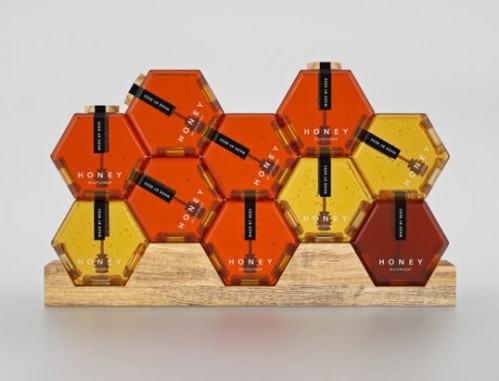
Hexagon Honey Packaging

Add to FacebookAdd to DiggAdd to Del.icio.usAdd to StumbleuponAdd to RedditAdd to BlinklistAdd to TwitterAdd to TechnoratiAdd to Yahoo BuzzAdd to Newsvine

When it comes to marketing food products, known in industry jargon as “Consumer Packaged Goods (using the acronym “CPG”), it takes more than mere advertising. Any brand with a deep advertising budget can do so. However, the skill is in knowing how to best utilize a limited budget for maximum effectiveness. Surprisingly, many smaller brands seem to be running circles around their much bigger brand counterparts with greater resources. The key differentiator is in the strategy and implementation including the ideal target market, brand positioning and specific media sought.

Guerrilla marketing: Getting noticed on a shoestring budget

Persuading consumers to consider your product on their shopping list takes time and an ample marketing budget. However, getting consumers to take notice of your product can be swift if a combination of Guerrilla/unconventional marketing tactics are used in conjunction with unique packaging design.

The term “Guerrilla marketing” refers to an unconventional and bold approach for a business to promote its products and/or services in ways that capture the attention of potential customers. They are creative, memorable, attract people’s attention (some may be controversial) and require a limited budget which makes it ideal for small to mid size businesses. “Guerrilla marketing” was originally coined in 1983 by Jay Conrad Levinson who also wrote the book “Guerrilla Advertising” with subsequent editions and derivatives which followed.

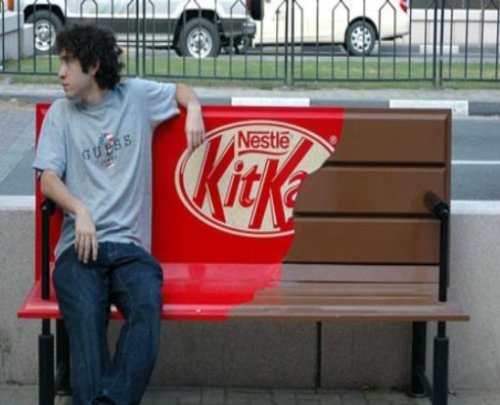
In keeping with the CPG theme, Nestle’s Kit Kat candy bar brand utilized Guerrilla marketing by placing creative candy-themed benches across large cities as the image below depicts.
aaa

Today, if a brand, especially a new arrival on the market, wants to stand-out in a crowded marketplace, it ought to consider the following means and tactics.

Online/digital Content marketing: This is absolutely the medium/platform which should not be overlooked. Even large brands are placing more emphasis with digital in their integrated marketing strategy. Content is released frequently but in small doses utilizing Twitter, blogs, Linkedin etc. along with stunning lifestyle images and video with must view material (Instagram, Pinterest, Facebook, YouTube, Vimeo to name the most prominent digital venues).

Public Relations: As this is earned media, what is stated about a brand from a third party is considered trustworthy. Creating buzz through the media, including the use of press releases, is an inexpensive way to earn publicity in lieu of traditional advertising spend.

Alliances – associations – sponsorships: These are additional considerations to boost exposure which turns-out to be a win-win for both parties (sponsor and sponsored party/ beneficiary).

Storytelling: A brand should include storytelling which places an emphasis on the brand’s heritage, the reason for being and why it is offering such a product or products. It is more than content and a narrative, it is a picture made up of feelings, facts and interpretations.

Food packaging: Eating with our eyes

The value added in design, craftsmanship, branding and overall quality can elevate a product into an epicurean delight. Clever and innovative design significantly increases sales and improves brand performance. In addition, it can do plenty of silent marketing. Consider Toblerone, the Swiss chocolate bar brand, whose distinctive yellow triangular packaging and equally shaped product inside is instantly recognizable. It undoubtedly portrays a premium product yet offers a good value for the price. The brand’s marketing spend is much less than its competitors, though its sales and profits are known to be exceptional in its category.

There are many ways of seeing the value of design. For instance, you can measure sales and relative value as an output of changes in design. Design can also improve your standing among rivals and give you a competitive advantage. The Design Council published a report where facts and statistics concerning the value of design are highlighted. One interesting statistic is that design conscious businesses can expect a return on their internal design investments as high as 125%. That’s quite an impressive return compared to other types of investments made in a business.

What may be obvious is that if you have high quality design, you do not need to compete with your competitors on price. If the design of a product packaging has a “wow” factor to make it stand-out on the shelf, then consumers will choose it even if the price is slightly above the competing products. If the product inside is as good as its packaging, customers will enjoy what you have to offer and continue to be loyal to your brand. That is the result of offering something unique and of a higher standard.

Lifestyle marketing: Non-traditional methods to reach modern consumers

Generally speaking, a brand that is designed for a lifestyle should have a much higher emotional value to consumers than one based solely on features, benefits and cost. A study from the Kellogg School of Management revealed that brands serve as a means of self-expression along with the limitations of expressing a consumer’s identity through brands. The goal of a lifestyle brand is to become a way that people can utilize it to relate to one another. Those brands are an attempt to sell an identity, or an image, rather than a product and what it actually does.

Two CPG brands which have joined the lifestyle bandwagon and spending more money and resources away from traditional marketing are Oreo and Red Bull. The former has created one article and image on the pulse of pop culture per day for 100 days with not much revealed of what would come next. Red Bull which spends a staggering 30% of its revenue in marketing and sponsorship events, has also launched a magazine with over five million subscribers, including a record label and two film studios to produce its lifestyle and experiential material.

Healthy eating and acquiring new tastes are modern day trends which can’t be ignored by CPG marketers. Smaller portions are also a recent trend which equate to less calories for consumption along with much focus on natural and non-GMO ingredients.

Creating new categories and uncontested market space

Instead of competing head-on in the same product category, as the majority of brands are accustomed to, consider creating an entirely new class which will be in an uncontested marketplace. This approach is known as Blue Ocean Strategy®. It was developed by two professors at INSEAD, W. Chan Kim and Renée Mauborgne who are also co-authors of Blue Ocean Strategy: How to Create Uncontested Market Space and Make the Competition Irrelevant (Harvard Business Review Press). As they put it, they observed that companies tend to engage in head-to-head competition in search of sustained profitable growth. Yet in today’s overcrowded industries competing head-on results in nothing but a bloody “red ocean” (as in cutthroat competition turns the ocean bloody red) of rivals fighting over a shrinking profit pool. Lasting success increasingly comes, not from battling competitors, but from creating “blue oceans” of untapped new market spaces ripe for growth.
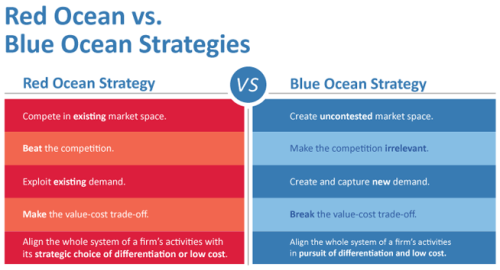
Blue Ocean Strategy Chart

An intriguing case study which puts the above strategy in perspective is Australia’s Casella Wines. In 2001, it entered the overcrowded and highly competitive wine industry in the U.S. with its Yellow Tail brand. By the end of 2005, it had reached sales with 25 million cases ─ achieved on a limited marketing budget. This triumph placed Yellow Tail in the category of the overall bestselling 750ml (25.4 U.S. fl. oz.) red wine, outstripping Californian, Italian and French wine brands. It accomplished this by applying the Blue Ocean strategy framework. Consequently, Casella Wines’ Yellow Tail brand targeted the beer and ready-to-drink cocktails in the U.S. market and created Yellow Tail to be easy drinking, an informal selection, fun and an adventure ─ in essence, an uncomplicated, fruity wine structure that was instantly appealing to the mass of alcohol drinkers.

A category which should not be ignored are Millennials (aka Generation Y). They are projected to spend $65 billion on consumer packaged goods (CPG) over the next decade, yet there are many misconceptions and challenges in reaching these shoppers, according to a white paper by WPP’s Geometry Global. Millennials are the largest generation since the Baby Boomers. They are known to be quite sophisticated, technology wise, unaffected by most traditional marketing and sales pitches. As a result, CPG companies should adjust and innovate to stay digitally connected with the Millennial consumer.

Sensorial branding: Exploiting the senses

In keeping with the spirit of the five senses, you can exploit them entirely to create a favorable experience in synergy, for guests and clients alike. Below are some of the most important factors:

SIGHT – choice of packaging, its design along with its images, the font type and colors. Add to that a stand-alone point of purchase (POP) display.

TOUCH – the feel and ergonomic design of the packaging. This is how the consumer interacts with it. Plenty of emphasis should be placed on this when designing the package.

TASTE – finding the perfect balance between sour, salty, sweet, and bitter. Food product samples ought to be available as consumers would prefer to try a product they are exposed to for the first time. Presentation is equally important which has an impact on the overall image of the setting.

SMELL – it is all about the smell of the product. This sense is closely linked to emotion and memory. You can use something like computer controlled scent machines to entice. Sensory technology can be very influential down an aisle. Case in point: a French bakery café can deliberately use ventilation to deliberately spread the smell of roasted coffee and baked items sold to induce clients to make or increase their purchases. A company which is known to furnish such state-of-the art equipment is Scent Air Technology.

By integrating the brand-building strategies to appeal to all, or most of the senses, sales have actually increased.

At the end of the day

Marketing done well can improve your brand’s awareness, lead to more sales, word-of-mouth, as well as gain client loyalty.

Using clever marketing approaches which do not cost a fortune, along with innovative and attractive packaging, can lead to impressive sales. However, to develop repeat purchases (think “sell-through” at the retail level), the product itself should taste good and produced with quality ingredients.

Stay in touch with your customers via social media interactions and occasional email newsletters and a blog. Do what you can to improve the lives of these people with valuable advice and special offers. The product should exude that it occupies a part in a pleasant lifestyle.

Remain true to what is making your CPG brand a success and refuse to become complacent. Keep refining, innovating, never mislead (through false benefit claims and nutritional information) and engage constantly with your loyal clients. These activities are not deemed a onetime event but rather an on-going process.

Add to FacebookAdd to DiggAdd to Del.icio.usAdd to StumbleuponAdd to RedditAdd to BlinklistAdd to TwitterAdd to TechnoratiAdd to Yahoo BuzzAdd to Newsvine

____________________________________________

Request your TWO FREE chapters of this popular book with no obligation.

Leave a comment

Filed under 1, blue ocean strategy, brand positioning, Branding, branding not products, Business, competition, consumer packaged goods marketing, cpg branding, cpg marketing, cpg packaging, food marketing, Marketing, package design, positioning, public relations, publicity, pull marketing

Genuine Luxury vs Accessible Luxury: Two Distinct Yet Opposing Categories

By James D. Roumeliotis

Mass - Masstige - Prestige

Add to FacebookAdd to DiggAdd to Del.icio.usAdd to StumbleuponAdd to RedditAdd to BlinklistAdd to TwitterAdd to TechnoratiAdd to Yahoo BuzzAdd to Newsvine

“Masstige” (a combination of two words: “mass” and “prestige” – aka mass with class) is a contemporary marketing term which denotes prestige for products perceived as luxurious and targeted to a wide range of customers known as the “mass affluent.” As per Wikipedia, the mass affluent are the high end of the mass market, or individuals with US$100,000 to US$1,000,000 of liquid financial assets, or consumers with an annual household income over US$75,000. These upper middle class individuals can afford to splurge on some of the finer (and affordable) things in life which include fashion merchandise, sporting goods, cosmetics, various accessories (silk ties, scarfs, small leather goods, perfumes etc.), high-end consumer electronics/gadgets, as well as culinary food and spirits. Brands in those categories depend on the “masstige” crowd for a majority of their sales, despite a few which also happen to be purveyors of inaccessibly priced products catered to the HNWI/UHNWI (aka the very wealthy or the 1% respectively).

This is purely an oxymoron and paradoxical since in the authentic luxury domain, “mass prestige” is an artificial term for “luxury” as it is not generally geared for the mass but rather the well heeled. Sadly, the true meaning of “luxury” has been bastardized by many brands who are falsely in the “luxury” business (in the true sense of the word and definition). ​However, there are luxury brands which have chosen to offer lowered priced products in a bid to join the “accessible luxury.” Think Coach with its leather bags and accessories or Chanel with its perfumes and cosmetics.

Defining the true meaning of the term “luxury”

Definitions of “luxury” vary significantly and depend on with whom you discuss the topic and in what context. The term “luxury” is not the easiest to define. It is relative, mysterious and elusive. In essence, it revolves around subjective criteria in the mind, which creates a mood and what is generally referred to today as lifestyle.

Gary Harwood at HKLM, one of the founders and directors of a leading strategic branding and communication design consultancy, stated:

A luxury brand is very expensive, exclusive and very rare – not meant for everyone. When it ceases to be these things, then it’s lost its exclusive cachet. Commoditizing luxury brands and making them more accessible to the middle market puts them at risk of becoming ordinary, common and less desirable. And the more available a brand is, the less luxurious it becomes.”

Authentic luxury brands compete on the basis of their ability to invoke exclusivity, prestige and hedonism to their appropriate market segments not the masses. There is a classic litmus test as follows:

  • Is the product manufactured in artificially limited quantities? (i.e. the rarity factor)
  • Does the firm have a story to tell? (i.e. history & pedigree)
  • Is the firm portraying a unique lifestyle? (i.e. the product or service will enhance one’s experience through an exceptional appeal)
  • Is craftsmanship the hallmark, which delivers products that only High Net Worth individuals (HNWI/UHNWI) can purchase without question?
  • Does the brand offer authenticity?

Genuine luxury purveyors remain relatively small and select in their category. Ultra wealthy (UHNWI) consumers purchase rare luxury products because they seek to distance themselves from the mass through the emotional value of acquiring flawless and rare objects of desire.

“Aspirational” luxury, on the other hand, is another fancy marketing parlance which is generally defined as a brand that most want but only a fraction of them can actually afford it. Most cannot afford a $2000 bottle of vintage wine but may be able to occasionally splurge on a $200 bottle of one of the finest single malt Whiskey.

Identifying luxury sectors

Genuine Luxury is classically defined in three key segments:

1) Luxury Goods: Fashion & Accessories, Watches & Jewelry, Well-being & Beauty products.

2) Lifestyle Purchases: Automotive, Experiential Travel, Home & Interiors, Exclusive Alcoholic beverages (exceptional wines, champagne & spirits)

3) Private/Executive Jets and Yachts: An absolute category in their own right.

Brands which fittingly claim authentic luxury status

Few brands can really claim the trademark of luxury. It is those which combine allure with pedigree and quality attributes. Discounting is not part of their strategy and their entire raison d’être is geared to the UHNW (Ultra High Net Worth). Many of their products actually increase in value over time since they are either discontinued or necessitate a long waiting list/time.

Most notable authentic luxury brands are in the haute merchandise category:

Hermes, Chanel, Louis Vuitton, Bottega Veneta, Rolex and Cartier.

Other players to this core list include: Bentley, Rolls Royce, Gucci, E. Goyard, Charvet, Salvatore Ferragamo, and Bulgari.

Exclusive and bespoke travel companies provide tailor made adventures and excursions. The four key players in this category include: Abercrombie & Kent, Kuoni, Orient-Express and Cunard Line.

Broadening our view of luxury services, certain firms offer services and privileges to a rare percentile. Such services include credit cards with no limits, jet ownership, private plan charters, global concierge services and the like. Think NetJets and Amex.

“Accessible” luxury is a marketing notion, not a merchandise category

The concept of making luxury available to the masses goes against what true luxury is as
there is no such thing as accessible luxury ─ it is either luxury or it is not as “accessible” luxury is a marketing notion and not any product category. Think Michael Kors, Coach, Ralph Lauren, Godiva and Apple among others. Top luxury brands such as Hermes, Louis Vuitton and Chanel have accessible luxury with perfumes and cosmetics, sunglasses, as well as accessories (leather, silk scarfs etc.).

In marketing parlance, being coined as an “accessible” luxury good can be deceiving when the quality of materials is not quite at par as one would normally find in a “genuine” luxury product. For such companies, becoming too commonplace is a risk for such brands as they lose their cache due to a lesser price line, as well as risk their reputation for the sake of increasing their revenues. Then there are some non-luxury brands which use the codes of luxury strategy to grow their sales. Needless to say, many consumers will eventually catch-on that such products are merely a gimmick thus on their way to lose their luster.

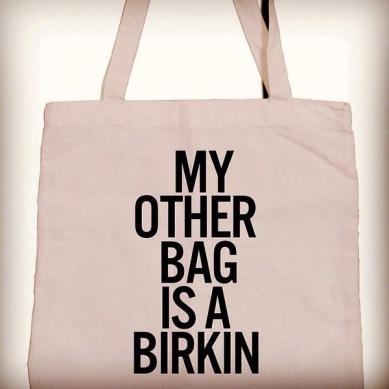
Masstige - My other bag is a Birkin

“Premium” and “prestige” categories defined

If luxury brands are related to scarcity, quality and storytelling then premium goods, on the other hand, are expensive variants of commodities in general: i.e. pay more, get more.

These brands are less ostentatious, more rational, accessible, modern, best in class, sleek design, and manufactured with precision. Beats headphones and TAG Heuer watches are a case in point and so is Audi and Lexus in automobiles.

“Luxury” and “prestige” brands respectively both have a similar status. Although some may disagree, in some cases, brands such as Mercedes-Benz automobiles, are considered to be both “luxury” and “prestige.” There are also brands which are either labelled one or the other. It depends how they are identified in the eyes of consumers.

Prestige brands offer a high level of innovation, craftsmanship ─ and with some categories, the finest ingredients or raw materials. Due to their well-established names, status and pedigree, they boast quite a loyal following. As a result, they can command premium prices which their clients do not mind paying for since they are made to feel special. Examples of some prestige brands include Breitling watches, Lancome cosmetics and Aston Martin automobiles.

The distinction between a prestige brand and premium brand is simply one of perception. In automobiles it is Cadillac and Lexus vs their German counterpart of BMW and Audi. In watches, it is perhaps a Rolex versus a Breguet and a Cartier.

On a final note

When it comes to lower priced supposed “luxury” products for the affluent masses, they are essentially “premium” products ─ otherwise known as “masstige.” The brands succeed at creating fancy designs and utilize expensive looking material to make their products appear very expensive which are then sold at a fraction of the price compared to genuine luxury brands in the same product category. Add clever window dressing and marketing and the result is that those products become affordable objects of desire. Unlike authentic luxury brands which are manufactured at their country of origin (mainly Italy, France or the U.K.), they are outsourced to low labour cost factories in Asia or Turkey. Despite this, they are given a premium markup which is intentionally done to create an aura of high value.

As long as there is a big demand for massitige products that its target market can afford and make them part of their social status and lifestyle, the category will be around indefinitely.

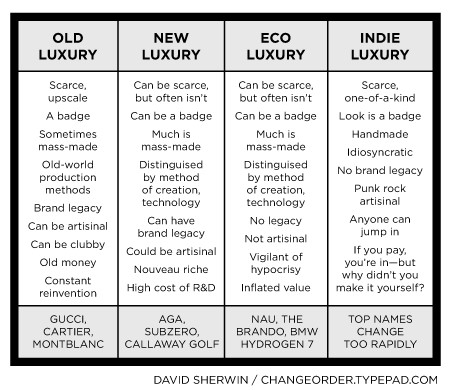
As a final point worth mentioning, at this day and age, there are luxury branding experts who claim that there are actually four categories of luxury: Old, New, Eco and Indie as exhibited in the following table (credit: David Sherwin). This translates into additional choices ─ categories to satisfy most desires.

Four Types of Luxury Chart

Add to FacebookAdd to DiggAdd to Del.icio.usAdd to StumbleuponAdd to RedditAdd to BlinklistAdd to TwitterAdd to TechnoratiAdd to Yahoo BuzzAdd to Newsvine

___________________________________________

Request your TWO FREE chapters of this popular book with no obligation.


3 Comments

Filed under brand positioning, Branding, Business, country of origin, Luxury, Marketing, mass affluent, masstige, selling luxury, what is luxury, what is premium

The Top 10 Most Read Articles in this Blog for 2015

by James D. Roumeliotis

Top 10 Articles for 2015

Add to FacebookAdd to DiggAdd to Del.icio.usAdd to StumbleuponAdd to RedditAdd to BlinklistAdd to TwitterAdd to TechnoratiAdd to Yahoo BuzzAdd to Newsvine

As in every year, I have once again rounded up the ten most read/popular articles — this time for  2015. The following ten captured the most attention by numbers and from 154 countries in all. See them all below in descending order.  Your views are always encouraged including subject matter you think I should be covering more of.

THANK YOU for your readership and I look forward to feeding your mind with much more business practical food for thought this year which can be applied for timely results.

1 Luxury vs. Premium vs. Fashion: Clarifying the Disparity

2 Perceived Quality: Why Brands Are Intangible

3 The Art of Selling Luxury Products: Brand Story Telling & Persuasion

4 Mass Customization & Personalization: The Pinnacle of Differentiation and Brand Loyalty

5 Exceeding the Hotel Guest Experience: Anticipating and Executing Desires Flawlessly

6 Brand Awareness: the influence in consumers’ purchasing decisions

7 The Ultra Luxury Purveyors: Lessons from brands catering to the richest 1 percent

8 Identifying and Catering to the Discerning Consumer: Quality and Service Above All

9 Start-up Essentials: A Universal Roadmap for Starting a Business — Infographic

10 Product Features vs Benefits: The Brand Differentiation

Add to FacebookAdd to DiggAdd to Del.icio.usAdd to StumbleuponAdd to RedditAdd to BlinklistAdd to TwitterAdd to TechnoratiAdd to Yahoo BuzzAdd to Newsvine

______________________

Request your TWO FREE chapters of this popular book with no obligation.

EntrepreneurialEssentials - FrontCover Final

Google


Leave a comment

Filed under 1, advisery board, advisory board, brand positioning, brand refresh, Branding, branding not products, Business, business development, business management, Business success, business vitality, catering to picly clients, competition, description of fashion, description of luxury, description of premium, discerning clients, discriminating clients, entrepreneurship, entrepreneurship success, guest experience, hotel guest experience, launching a business, Luxury, luxury storytelling, management, Marketing, marketing strategy, positioning, preventing business problems, publicity, sensuous brands, sensuous products, starting a business success, stimulating brands, total customer experience, what is fashion, what is luxury, what is premium

The Top 10 Most Read Articles in my Blog for 2014

Ten Most Popular image

Add to FacebookAdd to DiggAdd to Del.icio.usAdd to StumbleuponAdd to RedditAdd to BlinklistAdd to TwitterAdd to TechnoratiAdd to Yahoo BuzzAdd to Newsvine

As we look back and close the year, I have rounded up the ten most read articles of 2014 by my readers. The following ten captured the most attention by numbers. See them all below in descending order.  Your views are always encouraged.

THANK YOU for your readership and look forward to feeding your mind with much more business practical food for thought which can be applied for timely results.

1| Luxury vs. Premium vs. Fashion: Clarifying the Disparity

2|Perceived Quality: Why Brands Are Intangible
3| The Ultra Luxury Purveyors: Lessons from brands catering to the richest 1 percent
4| Mass Customization & Personalization: The Pinnacle of Differentiation and Brand Loyalty
5| Brand Awareness: the influence in consumers’ purchasing decisions
6| The Art of Selling Luxury Products: Brand Story Telling & Persuasion
7| Exceeding the Hotel Guest Experience: Anticipating and Executing Desires Flawlessly
8| Pitfalls of Start-ups: How to Succeed Through the Initial Three Years and Beyond
9| Bold Leadership: 10 Ways to Eradicate Organizational Politics

10| Branding Essentials for Small Enterprises

Add to FacebookAdd to DiggAdd to Del.icio.usAdd to StumbleuponAdd to RedditAdd to BlinklistAdd to TwitterAdd to TechnoratiAdd to Yahoo BuzzAdd to Newsvine

______________________

Request your TWO FREE chapters of this popular book with no obligation.

EntrepreneurialEssentials - FrontCover Final

In Canada – Increase your odds of launching your business promptly and successfully

Startup Agency

Google

Leave a comment

Filed under Branding, Business, Business success, Luxury, Marketing

Exploring the “Super Luxury” British Automotive Total Customer Experience: Part 1 ‒ The Aston Martin

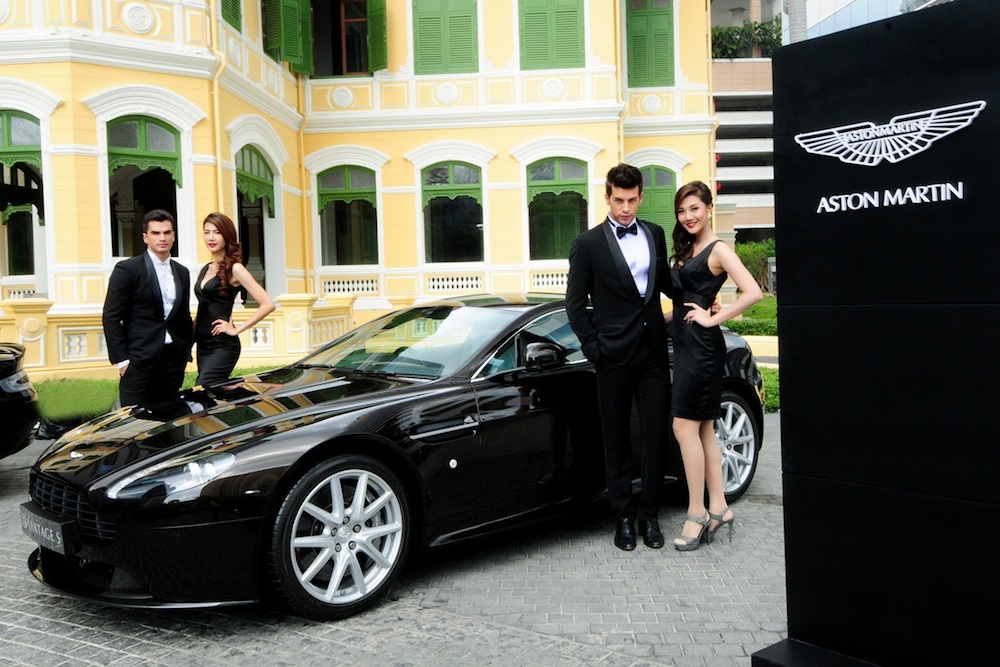
Aston Martin Prestige Image

Viewpoint by James D. Roumeliotis and Petrona J. Joseph

Add to FacebookAdd to DiggAdd to Del.icio.usAdd to StumbleuponAdd to RedditAdd to BlinklistAdd to TwitterAdd to TechnoratiAdd to Yahoo BuzzAdd to Newsvine

When we encounter the word “luxury”, images of: seamlessness, awe, the rarity factor, cache, opulence, aristocracy, supreme workmanship, stellar service and reverence come to mind, amongst others

Now, close your eyes for a moment. What images come to mind when you consider mention of the following vehicles: Aston Martin, Jaguar, Bentley and Range Rover? That’s what we will be analyzing in this four part series of the luxury British automotive icons and the above average expectations of consumers seeking such extravagant motor vehicles.

What qualifies the authors to give such commentary? Having worked and served — most notably with prestigious brands such as Gucci, Aston Martin, Jaguar, Bentley and Range Rover, as well as with mega yachts and coupled with extensive research and consultations in this domain –, both can accurately define the exceptional treatment tendered to a HNWI (High Net Worth Individual) luxury seeking discerning consumer. Brands which qualify to serve this exclusive market provide attention to detail, a plethora of product knowledge/competence, and discretion along with an implementation of an anticipated flawless post-sale/follow-up policy.

Price aside, a luxury car brand should embody cache, exclusivity, pedigree, craftsmanship and limited production. R.L. Polk and Company, a global automotive information and marketing firm that provides solutions to automotive and related industries, has re-defined the term with the appellation, “super luxury”, ‒ i.e. cars that cost over $100K. This category includes brands such as Rolls Royce, Bentley, Maserati as well as the Aston Martin being featured here.

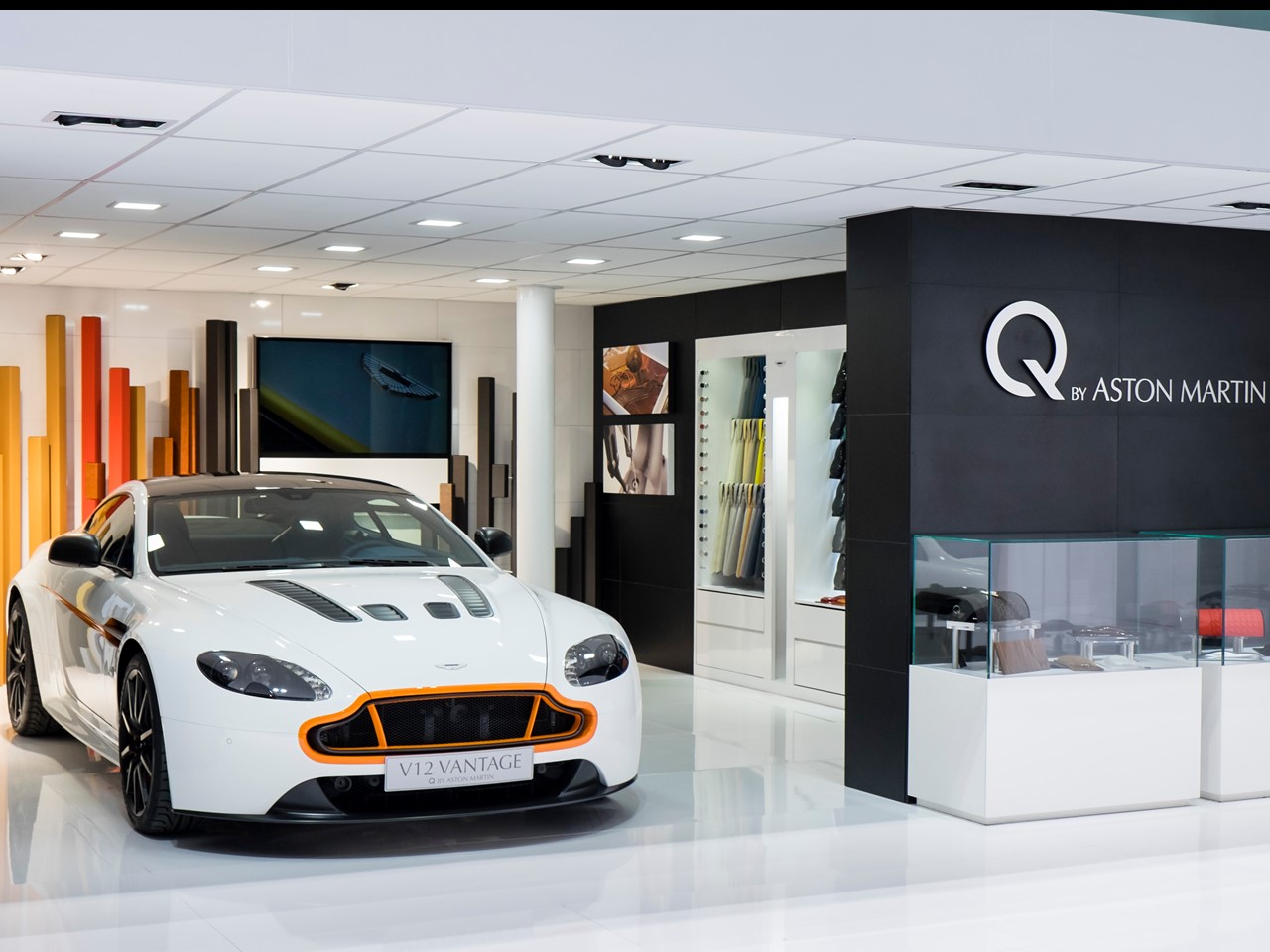
Aston Martin Showroom

Aston Martin: License to thrill

We begin with the initial luxury automotive brand in this four part series: Aston Martin. This high valued motor car producer brings images of James Bond, a ladies gent, British heritage, sophisticated technology, sex appeal, speed, agility and soul.

Considering the above persona, the makeup of a typical Aston Martin customer.is a male (no gender discrimination intended), in his late 30’s early 40’s, handsome, successful, possibly with an attractive spouse (or if single, a striking companion), possesses a deep knowledge of refined luxury, knows what he wants virtually at any price level, and enjoys adventure, as well as thrives at constant new challenges.

Initial impressions and consultative sales process

When a prospective owner, or existing customer of an Aston Martin walks into any impressive looking Aston Martin showroom, the total experience should normally result as follows:

– To be greeted initially by the attractive receptionist/hostess (brand ambassadors) by the owner or General Manager of the dealership;

– Introduce the prospective client to an Aston Martin specialist;

– Offer a hot or cold fine beverage;

– Be given a tour of the impressive premises;

– Exhibit the various models and a test drive initiated during which time rapport is being built;

– Offer of an overnight test drive to create the feel and experience of the automobile and its performance characteristics;

– Thank and greet the prospect by the dealership owner or GM upon returning the vehicle followed by the sales specialist;

– Customer’s contact information should be entered into the dealer database (CRM);

– If a sale is initiated – the sales process should ensue. However, if a sale does not occur, effort should be exerted in a discreet and pragmatic manner (consider “consultative” selling) to close the sale. Statistics show that 60% of car purchases have been consummated on the spot when they received what they considered was an excellent presentation and demonstration. Either way, a follow-up is imperative within 24 hours.

Sale & delivery

– An appointment should be set for delivery;

– Upon arrival to pick-up the vehicle, customer should be congratulated by owner and/or GM;

– Explanation of vehicle model should be thorough along with a post-sale follow-up the following day;

– Customer should be offered a token appreciation for his/her business. This can be in the form of champagne from a strategic partnership for example, Moët & Chandon and/or an additional gift in good taste.

Aston Martin Showroom Lounge

Exceeding customer expectations for the discerning client-driver

To succeed in gratifying the seemingly sophisticated client, a high-end organization should develop a comprehensive strategy along with efficient implementation tactics. These include:
– Having a clear and unique value proposition that hooks them;
– Consider exploiting the five senses to attract and retain them – categorized as “ambiance”/”sensorial” marketing and branding;
– Staff must be customer centric, patient, empathetic, and good listeners – remaining calm under duress during client interactions;
– Employee retention – hiring for attitude and training for skills;
– Utilizing a hands-on approach;
– Probing clients’ specific needs/requirements – recognizing their motivations – reading their body language;;
– Earning their trust and respect by exuding confidence, empathy and transparency;
– Offering a personal touch – individualized attention with customized solutions – It’s all about the customer;
– Being frank and transparent with pricing, offers, proposals and promotions;
– Proposing an expansive product selection and service options;
– Outstanding and consistent levels of customer service throughout the organization;
– Reducing or eliminating waiting times – whether on the phone (reservations, customer service etc.), as well as for service or an appointment at the physical location;
– Offering customer loyalty programs through joint collaborations with other luxury purveyors – a great way to make them feel special by receiving something extra;
– Asking for feedback with regards to service and product experiences for ways to improve those experiences. Discerning clientele are typically strongly opinionated and relish giving their views.
– Implementing the latest technology with all touch points.

The Aston Martin automotive brand with its power, beauty, soul and heritage as its tagline delivers to a specific and limited market segment by giving way to its consumer target to acquire their models they associate with a “luxurious and sporty lifestyle.” The brand is essentially a status symbol.

Brand loyalty is about building an emotional, and in some cases, irrational, attachment in a product. “Total customer experience” is not an option but rather compulsory as part of an alluring brand. It takes savvy planning, execution and perpetual refinements to stand above the crowd. It’s how you get noticed and remain relevant. Luxury brand desirability is driven by standout design, craftsmanship, as well as what is felt.

A typical Aston Martin showroom portrays a super luxury car brand able to offer a “wow” factor to its intended customers with an unconventional retail experience which exploits the five senses. This includes a showroom floor with ideal lighting, the various models well positioned/presented, impeccably dressed/groomed staff, and an upscale lounge ‒ overall, presenting sight, sound, smell, touch sensorial experiences and creating a feeling of lavishness. Some will go as far as offer art exhibitions on the premises, five star dining events and wine tasting to name a few. It’s what its type of clientele crave.

Add to FacebookAdd to DiggAdd to Del.icio.usAdd to StumbleuponAdd to RedditAdd to BlinklistAdd to TwitterAdd to TechnoratiAdd to Yahoo BuzzAdd to Newsvine

_____________________________________________________________________________

Request your TWO FREE chapters of this popular book with no obligation.

EntrepreneurialEssentials - FrontCover Final

Inquire about our 30 minute free consultation

Google

2 Comments

Filed under beauty and function, Branding, brands with sex appeal, Business, catering to picly clients, customer experience, customer service, discerning clients, discriminating clients, Luxury, luxury storytelling, Marketing, retail luxury interior design, selling luxury, sexy brands, sexy marketing, sexy products, super luxury cars, what is luxury

The Genuine Luxury Domain and Its Country of Origin: Why the Latter Matters

Viewpoint by James D. Roumeliotis

Add to FacebookAdd to DiggAdd to Del.icio.usAdd to StumbleuponAdd to RedditAdd to BlinklistAdd to TwitterAdd to TechnoratiAdd to Yahoo BuzzAdd to Newsvine

Made in Italy - NO in China Tag

With the proliferation of Italian and French luxury brands bearing the ‘Made in China”, ‘Made in Turkey’ or made elsewhere remote from their land of origin, it makes one ponder whether the brands are diluting their image for the sake of lower prices and higher profits. This begs us to revisit the question of what constitutes an “authentic” luxury product and whether manufacturing in a country unknown and unfamiliar for evoking luxury is a good long term strategy for the brand with heritage.

Luxury vs. Premium vs. Fashion: Clarifying the Disparity

Definitions of “luxury” vary enormously and depend on with whom you discuss the topic and in what context. The term “Luxury” has never been something easy to define. It is relative, mysterious and elusive. In essence, it revolves around subjective criteria in the mind, which creates a mood and what is generally referred to today as lifestyle.

The proliferation and marketing misuse of the word “luxury” on many products across sectors is quite evident. Brands either do it out of ignorance or to enhance the desire for the consumer to purchase their products.

Gary Harwood at HKLM, one of the founders and directors of a leading strategic branding and communication design consultancy, affirmed:

A luxury brand is very expensive, exclusive and very rare – not meant for everyone. When it ceases to be these things, then it’s lost its exclusive cachet. Commoditizing luxury brands and making them more accessible to the middle market puts them at risk of becoming ordinary, common and less desirable. And the more available a brand is, the less luxurious it becomes.”

Authentic luxury brands compete on the basis of their ability to invoke exclusivity, prestige and hedonism to their appropriate market segments not the masses. There is a classic litmus test:

  • Is the product manufactured in artificially limited quantities? (i.e. the rarity factor)
  • Does the firm have a story to tell? (i.e. history & pedigree)
  • Is the firm portraying a unique lifestyle?
  • Is craftsmanship the hallmark, which delivers products that only High Net Worth individuals can purchase without question?
  • Does the brand offer authenticity?
  • Does it implement an absolutely no discounting policy?
  • Is the product (and at least most of its materials/parts) manufactured only in its country of origin?

Luxury is not premium – and premium is not luxury. They are two dissimilar categories catering to different market segments.

France - Italy Cufflinks

Luxury Product Roots and Perception: Key Factors of Authentic Luxury

A luxury product is rooted in a culture and comes along with a small fragment of its native soil, of its heritage. This proposes that in order for a “luxury” product to remain true to its origins, as one of its main criteria, its production shall remain in the country of origin ‒ whether that is France, Italy or elsewhere (most notably in Europe). Tempting to relocate production elsewhere can cause the brand to lose its lustre and character.

Professor Jean-Noël Kapferer, an author and lecturer at the Kellogg Business School (Northwestern University, USA), as well as at HEC Paris, Europe’s premier academic research center on Luxury, clarified his views on this subject matter by stating that:

Looking at luxury companies’ own attitudes, there is a clear segmentation, based on their brand positioning and business model. A first group (such as Louis Vuitton, Hermès, Chanel) emphasize quality and heritage as the main sources of their incomparability. They are patriots. For them, a country of origin is a homeland, much like the soil in a vineyard – a miracle made of earth, nature, sun, rain, and sophisticated human labor, loaded with culture. For them, ‘made in…’ tells a whole story, tying production to a long heritage.

He further affirmed that:

“To remain a true luxury brand, following the luxury business model, entails sticking to local production. This is not an easy task for many luxury brands. Those that comply must create the conditions that are necessary to sustain this production. This is why they often buy their local sub-contractors in case the latter go bankrupt, to be sure to keep alive a historical know-how that might otherwise disappear.”

France and Italy are considered the leading countries for luxury and trend setters for clothing and accessories. Luxury watches (better known as “timepieces”) are manufactured in Switzerland ‒ the undisputed leader in this category. London, is considered to be the luxury spirit capital of the world with Burberry as the most prominent luxury brand. Whereas, Germany Italy, as well as the UK are for luxury automobiles. However, what they do produce elsewhere in the world are not ‘luxury’ but rather their lower priced “premium” derivatives (think BMW, Mercedes and Audi). Other illustrious automotive names, such as Ferrari and Rolls Royce, continue to manufacture solely in their native country.

Private vs. Public Luxury Purveyors

For the good of their distinguished image and cache, top-tier luxury brands should remain small privately held, with no pressure to sell and family run beyond the reach of speculators. These companies are managed, and their equity held, by those families. Consequently, management of brands, people and profits are done with the long term in mind, not necessarily the next quarter, which most investors would not have the patience to deal with if the luxury brand was publicly traded. In essence, the privately held have the luxury of taking risks as they desire and staying the course when they don’t. They have the freedom to invest for 5-10 years without receiving a financial return. In comparison, the publicly traded ones, which are accountable to their shareholders, are constantly under pressure to trim production costs and increase revenues and profits which lead them to cater to a larger audience ‒ the mass affluent. So much for all the elements of ‘genuine’ luxury purveyors which are doing away with scarcity and exclusivity.

The most prominent smaller and privately held ‘authentic’ luxury brands which fulfill every criteria ‘luxury’ truly exudes are as follows:

Soft Luxury Goods (high-end apparel, leather goods and exclusive fragrances) include: Hermès (70% owned/controlled by the Dumas family ‒ the descendants of its founder), Chanel (100% ownership by the Wertheimer family) and the niche perfume house, Creed Fragrance Company founded in 1760 (100% ownership by the Creed family ‒ descendants of its founder).

Hard Luxury Goods (products such as watches, jewellery and pens) include: Rolex, Chopard, Patek Philippe amongst others.

According to the Millward Brown luxury brand survey, which includes the large luxury groups, Louis Vuitton, Hermes, Gucci, Chanel, LVMH (Moët Hennessy Louis Vuitton), Rolex, Cartier, Fendi and Tiffany & Co. respectively, are the most successful family owned luxury brands. Moreover, research done by SDA Bocconi, renowned for providing world class luxury education, revealed that unique characteristics of most family-owned or managed business fit almost perfectly with the competitive logic of hard and soft luxury approaches. Needless to say, their management culture, retaining the mystique (crucial in the ultra-luxury domain), and long-term decision approach are all instrumental for cultivating and preserving their brand heritage.

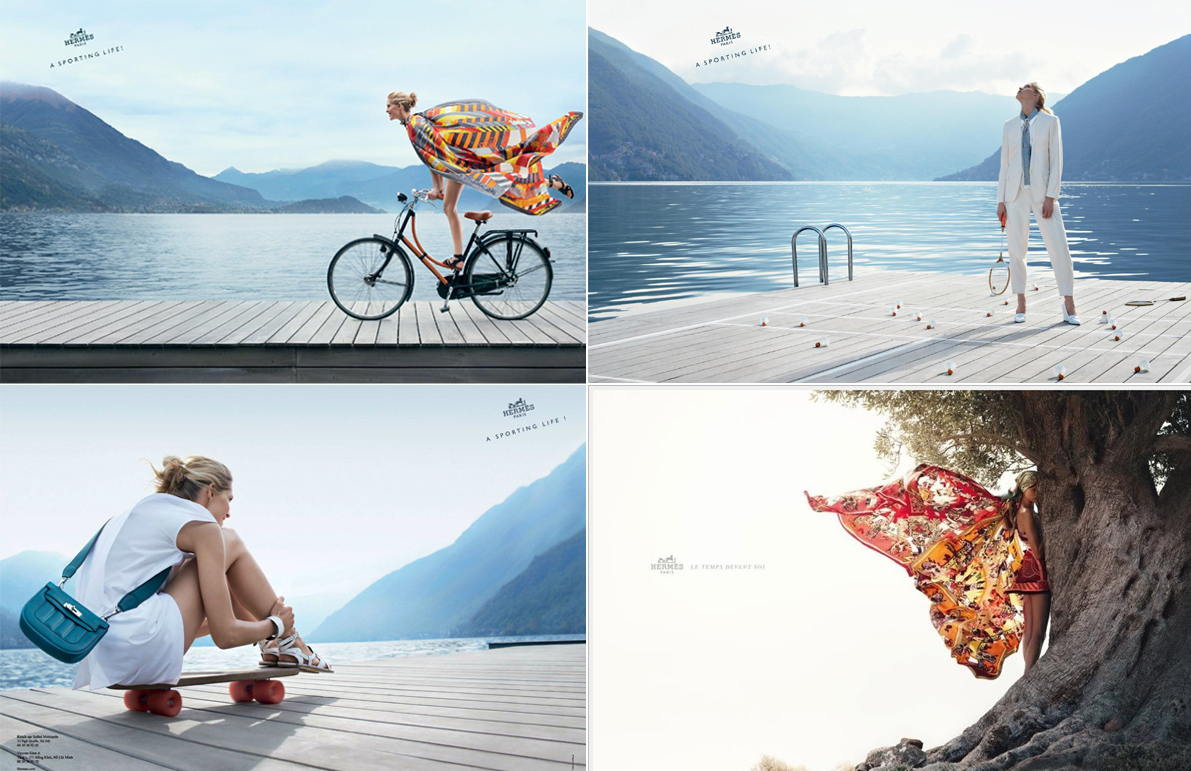
Hermes 2014 Ad Campaign

Hermes 2013 Ad Campaign

In the Final Analysis

There should be no confusion between luxury and premium or even a fashion category. When someone buys a luxury object, he/she purchases craftsmanship, cache, pedigree, made in limited quantities, a special place in the world of lifestyle and exclusivity (made for the few). The premium business model is based on the manufacturing of best-in-class products, with an image of style. Fashion is a general term for a popular style or practice, especially in clothing, foot wear, and accessories. Fashion references to anything that is the current trend in look and dress up of a person. Usually not timeless. A “luxury” and a ‘premium” product can be both – as in a tailored made fine wool suit for example.

Therein lies the major differences between a luxury product and a premium product. It’s legitimate for a premium product to seek out the most suitable and most economical manufacturing location, so long as quality and service levels can be maintained.

Brands such as Nike, Adidas, Ralph Lauren, Hugo Boss, Tommy Hilfiger, amongst others, are doing an exceptional job of selling solely an image to the masses. Indeed, far from being a genuine ‘luxury’ brand, most of their products are manufactured in low labor countries such as China.

The ‘made in’ label plays a significant role for luxury aficionados who hold higher expectations including a value added quotient to ‘luxury’ brands who produce their products in their respective country of origin – mainly France, Italy and the U.K. For categories other than apparel and accessories, production should be elsewhere in Western Europe.

In the article “Building a Luxury Brand Image in a Digital World” by David Dubois, INSEAD Assistant Professor of Marketing and Debbie Teo, INSEAD MBA, they quote the following:

Hermès has no desire to become ‘masstige’ (a mass producer of prestige goods) the company’s CEO Patrick Thomas stated in 2009. In essence, he asserted that his brand was not in a position to dilute its image and compromise on quality in the interest of short-term results. This is truly one of very few authentic “luxury” brands befitting the model and criteria in the sense of the word.

Privately held luxury brands are prone to view business with long-term vision and remain rigid with quality over quantity. Comparatively, their publicly traded counterparts go out of their way to please their shareholders which may dilute their “luxury” status for the sake of volume and short–term gains.

Good business decisions are not the domain of tactical “bean counters” — exploiting the luxury brands for all their worth. They may also come from strategic planning and overall financial leadership.

Add to FacebookAdd to DiggAdd to Del.icio.usAdd to StumbleuponAdd to RedditAdd to BlinklistAdd to TwitterAdd to TechnoratiAdd to Yahoo BuzzAdd to Newsvine

_____________________________________________________________

Request your TWO FREE chapters of this popular book with no obligation.

EntrepreneurialEssentials - FrontCover Final

Inquire about our 30 minute free consultation

Google

Leave a comment

Filed under Branding, Business, catering to picly clients, country of origin, customer experience, description of fashion, description of luxury, description of premium, discerning clients, discriminating clients, Luxury, luxury storytelling, made in france, made in italy, Marketing, selling luxury, what is fashion, what is luxury, what is premium

Why Sales & Marketing Should Coexist: Uniting the Two

by James D. Roumeliotis

Add to FacebookAdd to DiggAdd to Del.icio.usAdd to StumbleuponAdd to RedditAdd to BlinklistAdd to TwitterAdd to TechnoratiAdd to Yahoo BuzzAdd to Newsvine

 Linking sales & marketing

In larger companies, how often do we witness bickering between the sales and marketing departments? Too often it seems. In well-informed B2C and B2B markets, especially in a highly competitive sphere, businesses would be wise to make certain that their sales staff and marketing practitioners coexist rather than allow one side to blame the other for a lack of sales. This situation has long been a challenge — although it is not hopeless to rectify. Ignoring this situation certainly affects company performance amongst other adverse factors.

Sales and marketing complementing each other

Marketing as a function supports Sales. Marketing’s function is demand creation, which includes advertising, public relations, trade shows, white papers, and point-of-sales-materials.

The Sales function is to generate revenue. Neither exists without the support of the other. Peter Drucker,  considered the top management thinker of his time, once wrote in The Practice of Management that “the aim of marketing is to make selling superfluous. If the marketing is well done, the products, and its features, sell themselves.” Despite this, sales staff don’t fully comprehend the role and value of Marketers and feel that their needs are being neglected, whereas, Marketers look down at Sales and consider them as merely a function, as well as short-sighted for the sale. In reality, Sales rely on Marketing for the tools to facilitate the sales process. If Marketing understands what the customer wants, then the prospect will purchase the product or service with less effort to sell.

Working in sync has benefits for everyone involved

To work together as a well-oiled team requires each side to contribute to the other, as well as clearly understanding each other’s role and the benefits of teamwork. This works by focusing on aligning sales and marketing to the same vision of how customers’ needs are addressed. This way they will reach a common ground. These days, marketing practices consider their sales force as “customers.” Since the sales force is the front-line, if they believe, they will be able to attract and retain a client base organically.

Collaboration and fusion of sales & marketing

Collaboration and fusion of sales & marketing

The way forward: How do you unite the two plus the customer service department?

The way forward initially requires a strategy with an appropriate execution which stresses communication, understanding and collaboration. The elements to integrate Sales, Marketing, as well as Customer Survive into the equation should include:

  • Conduct one to two training sessions (as necessary) with all 3 sides/departments (Sales, Marketing & Customer Service) to clarify the importance of their roles, along with the company’s values and objectives – keeping in consideration the customer as the key figure in all this and sales performance as a major KPI.
  • A sales & marketing plan should be devised with the input of Sales and Marketing. There should be a common agreement along with management. This compels all sides to be on the same page, creates direction and synergy. It also allows the 3 to define how each one may impact the plan.
  • Establish a committee with Sales, Marketing and Customer Service to meet once a month to continually provide feedback to each other, as well as iron out any issues they may be encountering with one another. This way, any misunderstanding is dealt with and out aside in the same room.
  • When creating marketing campaigns and tools, the entire sales process should be emphasized. Marketing is serving two people – Sales and the Customer.
  • Implement a CRM system. Data sharing technology integrates Sales, Marketing, Customer Service, as well as management/operations and ensures they’re in sync working with the same customer data, both internal and on social media. The CRM also helps manage the sales cycle and track marketing efforts. For the Customer Service side, it provides service cycles, customer preferences and other pertinent information with data retrieval a seamless task.

Sales ought be coached to understand what the purpose and work of Marketing is, whereas Marketing should understand the sales process and helping the sales staff make sales rather than merely focusing on creating fancy promotional tools – whether physical or digital. Working with each other alongside can’t help but excel in their functions which will come to fruition through the company’s increased sales performance, improved morale, sales/marketing ROI, increase accountability and enhance customer experiences, thus retention.

 Add to FacebookAdd to DiggAdd to Del.icio.usAdd to StumbleuponAdd to RedditAdd to BlinklistAdd to TwitterAdd to TechnoratiAdd to Yahoo BuzzAdd to Newsvine

___________________________________________________

Request your TWO FREE chapters of this popular book with no obligation.

EntrepreneurialEssentials - FrontCover Final

Inquire about our 30 minute free consultation


Google


Leave a comment

Filed under Business, Marketing, sales, sales managementt, sales strategies, sales tactics

Maestros of Ambiance: The Art of the Hotel & Food Establishment Experience — in visuals

by James D. Roumeliotis

 Add to FacebookAdd to DiggAdd to Del.icio.usAdd to StumbleuponAdd to RedditAdd to BlinklistAdd to TwitterAdd to TechnoratiAdd to Yahoo BuzzAdd to Newsvine

Leave a comment

Filed under Branding, brands with sex appeal, Business, catering to picly clients, customer experience, customer service, discriminating clients, guest experience, hotel guest experience, Luxury, luxury storytelling, Marketing, sensuous brands, sexy brands, sexy marketing, stimulating brands

The Genuine Luxury Establishment: Perception, Ambiance & the Total Shopping Experience

Luxury Street - Cartier

by James D. Roumeliotis with a special contribution by Stephane Delille

Add to FacebookAdd to DiggAdd to Del.icio.usAdd to StumbleuponAdd to RedditAdd to BlinklistAdd to TwitterAdd to TechnoratiAdd to Yahoo BuzzAdd to Newsvine

Consider this! You are walking on, what is considered, a prestigious street in a downtown area of a major city lined up with a slew of luxury shops. What do you particularly notice about the look of the shops as compared to mainstream stores? Would you say it’s the window displays which are striking? The entrance? The upscale and inviting interior design? The way the merchandise is displayed?

Designing a luxury shop is much more than four walls, racks and lighting. It’s a meticulous creative and holistic process taking into account that luxury stores have to transmit the identity of a luxury brand, so that the image the customer has of this brand is affirmed by each store visit. Needless to say, it’s a design concept coupled with the total customer experience in mind.

Piaget timepieces, Bond Street, London boutique

Piaget timepieces, Bond Street, London

Ambiance, personalized service and the total shopping experience 

In a world where the consumer has become savvier, luxury products more accessible through an increase in democratization of luxury brands and the rapid emergence of prestige brands, the retail environment in luxury branding is all about heightening the consumer’s brand experience and amplifying the brand aura.

A well designed luxury retail boutique should embody an extraordinary design that is timeless while maintaining a striking interior that is unique, inviting, functional, and most certainly portray a luxurious setting.

A custom designed attractive setting – yet alluring with captivating style, invites customers to truly feel the brand experience by adding character. It exudes a “You’ve arrived!” underlying message. This is accomplished by connecting the feeling of warmth and acceptance ‒ via emotions to a product or service, and infusing it with a tangible and intangible essence that remain in the customers’ minds. The vital elements are:

  • Location: The luxury brand store perception all begins with its location. A prestigious address/neighborhood makes an initial luxury statement ‒ whether on a prominent avenue such as Bond Street in London, Rue Saint Honoré in Paris or Rodeo Drive in Beverly Hills and at other renowned high-fashion streets worldwide. A high-end mall and airport outlets are becoming ever more popular due to their convenient spots along with an increasingly sophisticated environment.
  • Facade/Window Display: transparency/opacity of the windows, display highlights for outside windows (product type, arrangement of space, animation, colors and much more.), frequent creative displays and themes all play a vital role in showcasing merchandise with pizazz.
  • Main entryway: This should reflect an imposing appearance by creating the feeling of grand luxury access to the interior of the boutique. Elizabeth Arden’s signature red door is a distinguishable fixture at her stores and spas worldwide.
  • Decor: Attention to details including well-crafted attractive furnishings and materials (pillows or decorative accents) throughout. Choice of color palette, textures, combination of materials and accents all influence the overall store image in addition to being part of the overall design esthetics.
  • Lighting and its effects: The proper choice of illumination adds to the overall design and ambiance.Lighting can bring focus to merchandise displays, hide imperfections, add warmth, and help create a positive shopping experience for the brand’s clients. Halogen spots and LED lighting are the preferred variety for interior designers.
  • Smell and Background Music environment: These reflect the store’s personality. Smell is considered the olfactory of the fifth human sense. The scenting strategy is part of “sensory”/”sensorial” marketing and branding that’s meant to attach certain smells to brands, drive loyalty, and make people feel at home. Whereas, music/sound supports refining brand communication and in designing a better sounding environment. A discreet volume should be considered as an ideal comfort level.
  • Merchandising appeal ‒ display and layout: localization of displays (size, colors, kits, messages) while keeping in line with brand values and guidelines. The spaces where your clients see and touch your products have an effect on the visual aspect along with their shopping experience.
  • Lounge area: possibility or not to have private salons for VIPs, to utilize for private shows/demonstrations, presentations and other special gathering purposes.
  • Service amenities: Washrooms should possess panache and be spotless. Their design can achieve the look and feel of luxury with both functionality and comfort. A kitchenette can be an additional amenity for preparing and catering light food/hors d’oeuvres. A workshop for bespoke functions such as product setting on the spot, size customization, engraving etc). Perhaps a kid’s space with animation to keep a child/children busy while their mum/dad/parents are shopping. The kids can eventually be converted to the luxury label themselves.
  • Staff Caliber and Overall Customer Care: Luxury goes beyond good looks. The service offered is a major event in itself. This comprises of dress code, attitude, and politeness regardless of what the client looks/wears. As well as responsiveness, a consultative sales approach and accessibility. This requires proper hiring criteria, on-boarding and repeated training in product knowledge, presentation skills, and anticipating customer expectations to go above and beyond. Luxury firms need to implement KPIs (Key Performance Indicators) to gauge their service effectiveness which do not only measure the performance of organizational processes, but also warrant a consistent quality level of in-store service.

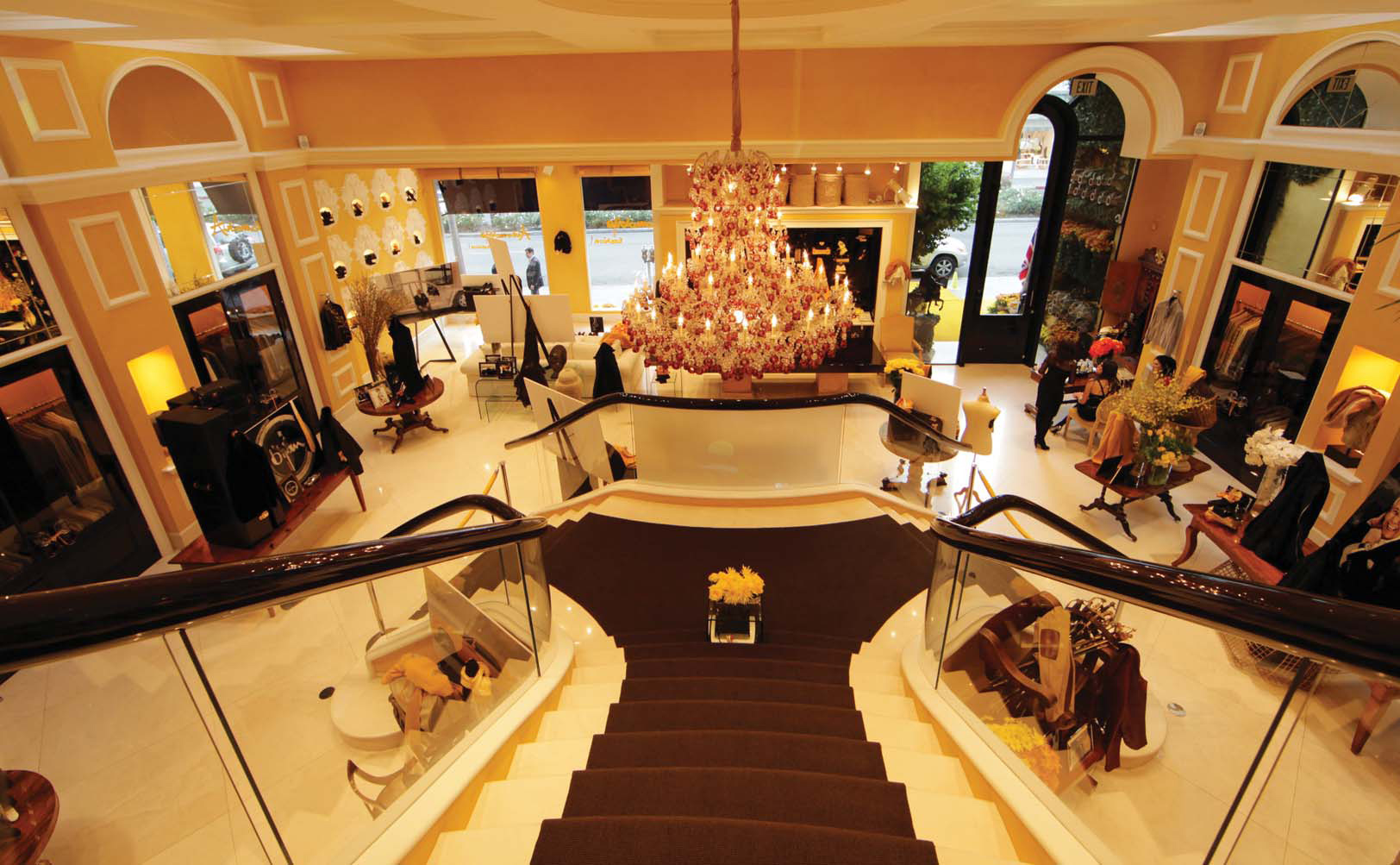
Bijan Boutique

Bijan Boutique, Rodeo Drive

Artisans of timeless and artistic retail interior design

It takes bold strokes to prevail from the competition by showcasing a distinctive look along with creating an emotional bond with the clientele. As such, luxury brands are making their mark on the map with a radical and explosive architectural vision. It’s where design innovation coupled with creativity are paramount when delivering artistic solutions driven by each individual brand’s image.

When it comes to commissioning distinctiveness with luxury ambiance interiors in the retail, restaurant and hotel sectors respectively, Yabu & Pushelberg have become the go-to interior designers akin to what Frank Gehry is to deconstructivist architecture. In over three decades, the duo partners, based in Toronto along with a New York City design studio, have fostered a client list that ranges from Louis Vuitton and Tiffany & Co to Four Seasons Hotels and renowned French chef and restaurateur Daniel Boulud. In their work, Yabu and Pushelberg manage to articulate luxury through contrasts, austere designs with fine materials, as well as through comfort and the casual, strong points of view, including a crafty mix of art and artisanship. For them, luxury is a state of mind, not a material.

Yabu-pushelberg-lane-crawford-sitting-area

A Yabu & Pushelberg sample interior

The final take

The ambiance created in a luxury boutique is one of the finest marketing tools. The aesthetic appeal to human senses, the feel of the brand creates the image. Along with great service, it is one of the most important reasons customers will choose to shop repeatedly. It’s where the brand lives by orchestrating immaculate detailing that engages all senses of the discerning target audience. Surround the brand and its products/services with fashion, beauty, design and attractive models – without any characteristics of tackiness.

It all begins with the choice of store location, the immediate initial impression (window display, entrance, store layout, merchandising, furnishings, lighting and much more), the sales staff presentation and the impact of each touch-point in creating a unique indulging experience. The small touches that regularly go unnoticed help to create a distinct sense of place in luxury commercial spaces.

Emporio Luxury Mall, New Delhi, India

Emporio Luxury Mall, New Delhi, India

All that said, today’s savvy luxury consumers are increasingly seeking much more than merely a cosmetically elegant looking bricks and mortar shops. They have become more discerning and seeking a more knowledgeable and professional assistance to help them in managing their lifestyle and stature. It all boils down to the total customer experience which embraces knowledgeable and helpful staff, alluring presentations, storytelling, exclusive invites and privileged previews amongst other lifestyle themed activities.

FOR THE “15 Retail Essentials – Your Opening Toolbox” PRESENTATION, KINDLY COMMUNICATE WITH JAMES AT: jdr(AT)affluencemarketing(DOT) ca

Add to FacebookAdd to DiggAdd to Del.icio.usAdd to StumbleuponAdd to RedditAdd to BlinklistAdd to TwitterAdd to TechnoratiAdd to Yahoo BuzzAdd to Newsvine

 ___________________________________________________

Request your TWO FREE chapters of this popular book with no obligation.

EntrepreneurialEssentials - FrontCover Final

Allow us to add sex appeal to your brand identity and products.

Inquire about our 30 minute free consultation


Google


Leave a comment

Filed under beauty and function, Branding, brands with sex appeal, Business, Luxury, luxury storytelling, management, Marketing, retail luxury interior design, selling luxury, sensuous brands, sensuous products

Branding Essentials for Small Enterprises

Viewpoint by James D. Roumeliotis

Small Business Branding

Add to FacebookAdd to DiggAdd to Del.icio.usAdd to StumbleuponAdd to RedditAdd to BlinklistAdd to TwitterAdd to TechnoratiAdd to Yahoo BuzzAdd to Newsvine

Entrepreneurs may possess an abundance of passion for their small enterprise, but when it comes to promotion, value proposition, and building a brand their enthusiasm wanes. Building and nurturing a brand is what makes an enterprise gather wind under its wings.

No matter how small your venture may be, branding is essential. Branding is more than sticking a logo on a letterhead or business card.

Branding is the DNA of what you sell or do. Considering clients want to bond with a brand, you owe it to yourself to generate a story line. Buying today is so much more than a question of need. It is a question of relationship.

It is a given fact that a small enterprise will not have the budget or resources to implement a high powered show, outsource to an award winning agency or hire a PR/Marketing team to handle the ins and outs of this side of the business. However, what you do have or should have is creativity, innovative thinking, a sound understanding of your market, sweat equity and chutzpah.

Getting to grips with the differentials

The terms marketing and branding are often used interchangeably. This is a mistake in understanding. They are in fact two different concepts and should be understood as such.

Marketing is defined by the Chartered Institute of Marketing (CIM) as: “The management process responsible for identifying, anticipating and satisfying customer requirements profitably”.

Marketing provides strategic support to the sales function, by locating and nurturing qualified leads in order to reduce the cost of sale and shorten the sales cycle. To accomplish this, marketers use a variety of techniques, such as advertising, market research, and logo design.

The American Marketing Association (AMA) defines a brand as:
“A name, term, sign, symbol or design, or a combination of them intended to identify the goods and services of one seller or group of sellers and to differentiate them from those of other sellers.”

A brand is a promise of something that will be delivered by a business. This promise comes in a form of quality, an experience and a certain expectation in the mind of the consumer. Any viable small business must embrace branding, have a clear sense of identity and value proposition. Many start-ups typically make a cardinal mistake by thinking that they are just selling products or services. The organization of the firm may be sound, but a strong grounding in branding will make your venture a pure success story.

Branding in essence is the heart and soul of your venture. It sets your products or services apart from the competition. This is particularly true in certain sectors where price is the only differentiator. Competing just on price is a dead end game. The only firms who can win at this deal in high volumes and low margins. Small businesses cannot compete here. Service and experience therefore, should be added to the column of differentiators.

For example, local or neighborhood businesses which sell products with a reputable identity and favorable customer perception will invariably sell more and can command a better prices. Take the case of La Vie Claire in France. The franchise model has made these shops institutions in targeted neighborhoods. Most products are branded with the name of the store. Other brands are small or unknown. Sales at individual point of sales hinge on the service and advice of the resident manager. Given the price points of organic food, cosmetics, vitamins, mineral supplements clients seek a value added proposition to shop here on a regular basis. The key component is reliability, friendliness, and good products, which are fresh.

What is Branding - Green Board

Consider the following keys:

1) Begin by defining your brand
Their is a small mens clothing boutique in the ninth arrondissement in Paris. The name is Husbands. It is off a main shopping street, but you would need a reference to know it exists. The brand ID is classic English tailoring ready-to-wear with a rock ‘n roll attitude. Fabrics are top notch and there are subtle detailing common to bespoke. Prices are moderate. However, if you are a new comer to the store, the first question you would ask yourself is: What is the unique selling proposition?

The owner of this store, will be happy to oblige you by talking to you about his passion and why the clothes are good value for money. However, is Husbands a brand? To the client, the answer is no. The story line of the brand and the store should be clear without an explanation.

2) Positioning
What do you want your brand to represent? Examine text book examples of brands that work. Don’t copy. Just learn the lessons and apply them to your brand in the making. A good case here is Hackett. When Jeremy Hackett first started out on the wrong end of the Kings Road, he understood that his brand had to embody something. In his case it was the essential British kit. Everything about the original concept captured the elegance of British tailoring without copying Savile Row. The store was old school for a new generation. The moment the press talked about his venture, the shop was off to the races.

The concept of Hackett was clearly defined from the beginning. Everything and I mean every detail was bonded into the brand and the DNA was solid and clear in any client who visited the premises.

3) Visual Identity
Neglect this point at your own risk. Color, lighting, furnishings, logo, bags, and so forth must speak with one unified voice. If the voice is mixed or unclear, your brand is dead in the water. Online presence must support the bricks and mortar entity. If you just sell online, fine. Just make sure their is one storyline, coherent, defining, and engaging. If it is, clients will act as ombudsmen. If it isn’t, you won’t make a single sale.

Take the case of Atelier de l’Armee based in Amsterdam. The strength of the brand ID is workwear, vintage, military. The concept revolves around craftsmanship with a contemporary voice of high quality and style.

4) Articulate your messaging
Ensure coherent communications online and offline. Three brands come to mind worthy of your attention: Ralph Lauren, Dolce & Gabbana, and DKNY. Each of these brands encapsulates a unique and distinctive vision. The products become the props to their fantasy worlds. The message delivery is always on target because they have been thought through with precision. Which ever value proposition you entertain, you must admit that the ID is engaging and speaks with its clients as valued partners not at them.

Advertising, events, sponsorships, promotions, direct marketing, customer relationship management are only the tools of the trade. The right messaging spearheads each component in a contiguous manner, which everyone finds engaging and wants to be part of. Does your brand accomplish this? If not, better go back to the story board.

5) Obsession
Often I have this discussion with colleagues and clients. It is about generating an obsession. Almost sounds like a perfume brand. Successfully generating obsession is the best sort of brand loyalty. Clients are enchanted and as mentioned before on this blog constitute a magic kingdom.

A year ago, Entrepreneur magazine had published an article by author Paula Andruss titled “The Secrets of 7 Successful Brands.” In it, she wrote that regardless how long ago those brands were launched, they all share one thing in common: They have figured out how to work their way into customers’ hearts, minds and wallets. Companies include online eye-wear retailer Warby Parker, TED and Pinterest, amongst others.

Funny Law Firm Name

Branding for the private/professional practice

To develop a following requires a brand, and it doesn’t matter if you are a doctor, dentist, an accountant, or an attorney. All self-employed professionals should include it on their wish list. Your personal “brand” is what comes to mind when your “clients” are deciding whether to see you for the first or not.

Your credentials have much to do with your image in the consumer’s mind, so does your office ambiance and the courtesy (or lack of) offered the minute your staff greet the patient/client at the front desk. You may also be the doctor with bad breath or architect who is frequently late for appointments.

When branding your own private practice, you have the ability to carefully create a brand position that will appeal to your market and make your profession more successful through broader, or in some cases, very specific appeal. However, brand development requires time, energy, as well as a reasonable budget.

Personal brand positioning is the activity of creating an identity with a distinctive value in the target customer’s mind. For instance, when we think of an accomplished defense attorney, the first ones that spring to mind are those who have a reputation for having a high rate of litigation success – or cardiologists who are identified as utterly competent in curing most heart diseases and extending their patients’ life span. Essentially that is the position they occupy in your mind whenever you think of them.

Putting it all together

Branding significantly increases the overall value of brand equity. It’s proven that the brand value is ten times more than the physical assets of the company. It is more like investing in goodwill and this is priceless.

For a certain small businesses, the notion of marketing and branding remains unfamiliar territory. New business school grads however should approach this subject with eyes wide open. You can be a small fashion brand, boutique or even restaurant. Just examine the original Dean & Deluca, the gourmet food emporium, when it was located on Prince Street in SoHo, New York. The concept and vibe was pure branding genius.

Whatever path you choose, choose wisely. Create a brand with purpose. Give your audience a value proposition. Make them want to be part of your success story. Align your goals with an experience and the clients will come in droves.

Bonding with your audience also requires that you monitor the client’s behavior and the brand’s online reputation. Reputations can be fostered with either free or pay-for-service online tools such Google Alerts and Reputation.com. It is often advisable to conducting research among both your customers and employees. Timeframes can vary depending on your activity. Classic measurements take place either twice a year or annually.

Add to FacebookAdd to DiggAdd to Del.icio.usAdd to StumbleuponAdd to RedditAdd to BlinklistAdd to TwitterAdd to TechnoratiAdd to Yahoo BuzzAdd to Newsvine

_________________________________

Request your TWO FREE chapters of this popular book with no obligation.

EntrepreneurialEssentials - FrontCover Final

Allow us to develop a sustainable brand for your existing SME/SMB or work on a strategy (with hands-on implementation) for your imminent start-up.

Inquire about our 30 minute free consultation

Google

Leave a comment

Filed under 1, Branding, branding not products, brands with sex appeal, Business, Business success, entrepreneur, entrepreneurship, entrepreneurship success, Marketing, sexy brands, sexy marketing, small business branding, sound branding, sound marketing, starting a business success, stimulating brands

Brand Awareness: the influence in consumers’ purchasing decisions

by James D. Roumeliotis and Violetta Ihailanen (special guest columnist)

Brand Awareness

Add to FacebookAdd to DiggAdd to Del.icio.usAdd to StumbleuponAdd to RedditAdd to BlinklistAdd to TwitterAdd to TechnoratiAdd to Yahoo BuzzAdd to Newsvine

Starbucks is an innovator when it comes to creating brand exposure, content quality and engaging with its audience on social media. It has an impressive following on various social networks and able to cultivate current relationships by encouraging sharing through special promotions, and customized experiences through programs such as My Starbuck Rewards.

Another American company, Farmers Insurance, decided to exploit the benefits of social media to build additional brand awareness, by creating a new campaign that would put their virtual airship on the screens of everyone playing the popular social game Farmville on Facebook. earlier last year, it was reported that Farmville had over 80 million users – and growing.

The raison d’etre of any for profit business is to increase sales and income. For this to occur, a company’s goal and objective is to attract new customers and encourage repeat purchases. Brand awareness signifies how aware existing, as well as potential customers are of your business and its products or services. Ultimately, to achieve successful brand awareness requires that your brand is very familiar and is easily recognizable. Brand awareness is crucial to differentiating your product/service from other similar products/services and competitors.

What does it take to build effective brand awareness?

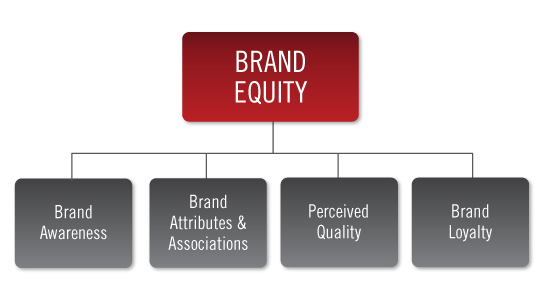
Brand awareness affects perceptions and attitudes, which drive brand choice and even brand loyalty, which means that without brand awareness there is no brand equity. The latter signifies the value premium that a company achieves from a product/service with an identifiable name as compared to its generic counterpart. Moreover, solid brand equity is an asset that can be sold or leased.

The first dimension distinguishing brand equity is brand awareness. It is influential in consumers’ purchasing decisions and loyalty. This affects customers’ perceptions and attitudes (liking or disliking) and how they build brand preferences.

David Aaker, an authority on marketing & branding, in his various publications defines brand awareness as “a consumer’s ability to recognize or recall a brand in a certain product category”; in other words, the brand is called to mind when a consumer thinks about the category. Greater awareness of a brand increases the likelihood that a consumer will consider it.

Brand awareness has three levels, which is depicted by experts in a pyramid. It ranges from the pyramid’s base as uncertain feelings that begin the moment the brand comes to the consumer’s mind through a name, followed by a belief that the brand is the only one in a particular product category.

Brand Recognition:

This is the lowest level of brand awareness. It refers to consumers’ ability to discriminate between a previously encountered brand and new brands based on prior exposure to the brand. The choice of the brand may not have been supported by the information a customer retrieves from memory.

Thus, brand recognition creates positive feelings toward a brand, and more exposure to a brand name ─ while supported by the company’s image and products, strengthens consumer memory. In a luxury window display, executed by professional merchandisers, the name of the brand will be supported by the ultimate look of the collection.

Brand Recall:

The next level of brand awareness refers to consumers’ ability to recall the name of the brand when provided only with the product category as a cue. It usually takes place in a store, when a consumer compares a brand he/she can recall from memory in the presence of other brands. For example, a product-category cue may be signaled in a department store that has collections from several luxury brands. The significance of brand recognition depends on where a purchasing decision is made: in the store or outside the store. Brand recognition is generally more effective when the product decision is made in a store.

The Purpose of Brand Names & Symbols

Brand names and symbols are the facets of brand awareness that provide basic information for classifying brands as members of product categories. These affect inferences made about brand attributes and benefits.

Jean-Noel Kapferer and Vincent Bastien, authors of the venerable book “The Luxury Strategy”, which includes the notion of ‘Break the Rules of Marketing to Build Luxury Brands”, note that in the luxury domain, because of the complexity of the luxury concept, a “label” reveals the identity, class, knowledge and culture of the brand. It creates, for example, immediate recognition of the unique touch of Chanel, with the particular look of a garment anywhere in the world. In luxury, a name, logo, symbol or color, shapes distinct consumer perceptions ─ forming emotional links to the brand, as well as secondary links to product quality.

Brand name awareness is the basic step in the communication process between brand and consumer that supports the creation of brand identity. To be effective, the name should be easy to remember and have an emotional component. In luxury, a brand name usually belongs to its original creator and founder, as in Yves Saint Laurent, Christian Dior, Louis Vuitton and Coco Chanel.

A prominent brand name that’s different and distinctive enhances recognition. Distinctiveness is achieved through pictorial depiction of the brand name, which facilitates recognition of the symbol. Luxury brands that bear the names of their founders, such as Christian Dior, are already distinctive, whereas less-mature luxury brands could benefit from a pictorial approach, thus enhancing the brand awareness.

Brand symbol is a representation of the brand name and its product category. Companies that want to communicate their product or service effectively should depict their brand name as a symbol. In luxury brands, a symbol usually combines a brand name and a logo.

In this instance, the latter begins to communicate with a customer before a purchase, helping to maintain consistent memories of the brand. A logo provides a great deal of information through a small number of signs that translate the values and vision of the brand.

Other signs of brand recognition

Packaging and colour are also important associative characteristics in identifying the essence of a brand. Such unique appeal helps potential customers easily remember and quickly identify a brand from a distance. A brand’s name and packaging strongly influence quality perceptions and shape a brand’s reputation through purchasing behaviour that leads to brand loyalty Tiffany’s aqua blue colour reflects a relaxing and refreshing state because it resembles the colour of water.

A coordinated color that is used in signs, packaging, web pages and all advertising shows the character of a particular business, which influences customer satisfaction and loyalty. FMRI research (Columbia University’s Medical Center Program for Imaging and Cognitive Sciences) has shown a significant impact of differentiated packages on consumer choice, which can affect a customer’s emotions and increase sales. For example, perfumes presented in distinctively designed bottles linked to the brand name help create a distinctive brand identity.

Brand Awareness Via Social Media

Social media had become an important venue for companies of all sizes in building trust amongst their so-called “fans” or “followers’ who in essence are their consumers. Social media offers an array of functions, which can benefit a company’s reach and objectives. The Harvard Business review recently featured an article on how soft drink brands like Coke and Pepsi use social media to build trust with their consumers. Facebook and Twitter, amongst others, are effective tools for these brands to reinforce and expand their identities ─ as well as enhance customer relationships.

All Things Considered: Strategy & Implementation

A brand can offer the best products in its category, comes backed by the best service and deliver the best overall value; however, it’s meaningless if no one has heard of the brand.

To start with, consumers must be aware that there are different brands in the product/service categories in which the brands operate. Subsequently, they must be aware of the brands ─ ideally, the brands should be the first ones that come to their minds within specific product categories and associated with a USP (unique selling proposition). Consumers should also be able to identify which benefits are associated with the brand. Finally, they should have an idea where the brands are sold.

For companies to succeed in creating effective brand awareness, they should develop and execute a strategy that they can continue to update throughout the development of their brand. Successful brand awareness normally takes time to develop with regards to an effective awareness effort. Furthermore, it takes time for an effective communication to reach potential customers.

A few customers can respond early, while most will take time to hear about the products/services, make a decision to try them, as well as return for more at a later time. Establishing customer loyalty takes even more time as it requires extended experience with any company and its products/services. As a result of the aforementioned actions, positive brand awareness will increase. Brand awareness is essentially the impression people have of a brand.

In the soft drink industry, there is not much, which separates a private/white label soda from a brand name counterpart in terms of taste. However, consumers are very aware of the brands Coca Cola and Pepsi, in terms of their images and names. This higher rate of brand awareness equates to higher sales and further serves as a superior competitive advantage that prevents competitors from gaining additional market share.

__________________________

Footnotes
Article based on extensive research that has been conducted for an MBA dissertation based on the topic ‘The Influence of Brand Identity on Brand Equity in Luxury Segment’ by Violetta Ihailanen who has over 15 years of practical retail luxury experience with renowned fashion brands including Burberry amongst others along with an entrepreneurial stint.

Sources

Aaker (1991; 1996)
Bettman (1979)
Farquhar (et al, 1990)
Hoyer and Brown (1990)
Kapferer and Bastien (2009)
Keller (1993)
MacInnis (1999; 2008)
Rossiter and Percy (1987)
Zaichkowsky (2010)
Wilcox and Laverie (2008)

Your comments are welcome

Add to FacebookAdd to DiggAdd to Del.icio.usAdd to StumbleuponAdd to RedditAdd to BlinklistAdd to TwitterAdd to TechnoratiAdd to Yahoo BuzzAdd to Newsvine

Request your TWO FREE chapters of this popular book with no obligation.

EntrepreneurialEssentials - FrontCover Final

Learn how to start or expand a business with free courses at
How to start a business

7 Comments

Filed under Branding, Business, Luxury, Marketing

PASSAGES: 15 Quotes for New Year Contemplation

Add to FacebookAdd to DiggAdd to Del.icio.usAdd to StumbleuponAdd to RedditAdd to BlinklistAdd to TwitterAdd to TechnoratiAdd to Yahoo BuzzAdd to Newsvine

“An empowered organization is one in which individuals have the knowledge, skill, desire, and opportunity to personally succeed in a way that leads to collective organizational success.”

─ Stephen R. Covey

“No institution can possibly survive if it needs geniuses or supermen to manage it. It must be organized in such a way as to be able to get along under a leadership composed of average human beings.”

─ Peter Drucker

“Hire people, who are better than you are, then leave them to get on with it. Look for people who will aim for the remarkable, who will not settle for the routine.”

─ David Ogilvy

“Be willing to make decisions. That’s the most important quality in a good leader. Don’t fall victim to what I call the ‘ready-aim-aim-aim-aim syndrome’. You must be willing to fire.”

 ─  T. Boone Pickens

“You will never understand bureaucracies until you understand that for bureaucrats, procedure is everything and outcomes are nothing.”

─ Thomas Sowell

“If you pick the right people and give them the opportunity to spread their wings and put compensation as a carrier behind it you almost don’t have to manage them.”

─ Jack Welch

“What’s a brand? A singular idea or concept that you own inside the mind of the prospect.”   

─ Al Ries

“Improving your brand is an investment in building your personal profile, reputation and the results you will achieve.” 

─ Rachel Quilty

“If you don’t get noticed, you don’t have anything. You just have to be noticed, but the art is in getting noticed naturally, without screaming or without tricks.”

– Leo Burnett

“You’ll never have a product or price advantage again. They can be easily duplicated, but a strong customer service culture can’t be copied.” 

─ Jerry Fritz

“People don’t want to communicate with an organization or a computer. They want to talk to a real, live, responsive, responsible person who will listen and help them get satisfaction.”

─ Theo Michelson

“Design is the method of putting form and content together. Design, just as art, has multiple definitions; there is no single definition. Design can be art. Design can be aesthetics. Design is so simple, that’s why it is so complicated.”

─ Paul Rand

“During a political campaign everyone is concerned with what a candidate will do on this or that question if he is elected except the candidate; he’s too busy wondering what he’ll do if he isn’t elected.”

─ Everett Dirksen

“Effective communication is 20% what you know and 80% how you feel about what you know.”

─ Jim Rohn

The quality of life is determined by its activities.”  

Aristotle

10 Second Survey

I’m planning something neat for those who participate here. If you don’t mind, would you kindly do my 10 second survey. In return, I will send you my book, “Entrepreneurial Essentials:…” in PDF format with my compliments.  Please click HERE for link to the survey.

Add to FacebookAdd to DiggAdd to Del.icio.usAdd to StumbleuponAdd to RedditAdd to BlinklistAdd to TwitterAdd to TechnoratiAdd to Yahoo BuzzAdd to Newsvine

Leave a comment

December 31, 2013 · 12:02 am

Mass Customization & Personalization: The Pinnacle of Differentiation and Brand Loyalty

by James D. Roumeliotis

Add to FacebookAdd to DiggAdd to Del.icio.usAdd to StumbleuponAdd to RedditAdd to BlinklistAdd to TwitterAdd to TechnoratiAdd to Yahoo BuzzAdd to Newsvine

Simple Ways to Offer Customized Products - Practical Ecommerce

There was a time when customized products and personalized services were catered exclusively for the discerning and well heeled.

London’s Savile Row stands as a testament to personalized luxury.   In a world full of luxury dumbed down and mainstream, there has been an up-shift by certain manufacturers trying to offer tailored ranges and services to a wider audience.

This development is technically referred to as “mass customization” and “mass personalization”.  So why the shift?

Simply put, clients are demanding more and don’t share the same sense of brand loyalty as previous generations. Marketing strategists believe that focus must be on generating a community tied to customer satisfaction.  I won’t call this CRM on steroids but the analogy could hold.

With ever increased competition, brands must show genuine benefit to hold the client’s attention as well as affection. The trend is quite sweeping once you start to examine the determinants. Look at fashion apparel, beauty care products, shoes, bicycles, laptops, and even smart phones. All claim they are perfect for customization.

Mass Customization vs. Mass Personalization

According to Wikipedia, the definition of the term “mass customization” in marketing, manufacturing, call centers and management, is the use of flexible computer-aided manufacturing systems to produce custom output.

These systems combine the low unit cost of mass production processes with the flexibility of individual customization.

“Mass personalization” on the other hand, is the custom tailoring by a company in accordance with its end users tastes and preferences.

The main difference between the two concepts is the ability for a company to give its customers an opportunity to create and choose product specifications. There are however limits.

The Financial Times lists “personalized production” among six other factors driving the future of manufacturing – namely network manufacturing, technological innovation, industrial democracy, boutique manufacturing, cluster dynamics, and environmental imperatives.

A case in point: Pomarfin is a small family owned Finnish footwear company. With strong competition from Asian manufacturers, the firm decided to change its strategy.  It carefully looked at the adaptation to the mass customization paradigm, alongside a revision of its business model. Its choices were to either outsource the manufacturing of its shoes to China and simply become an ubiquitous brand, or differentiate itself while keeping its production in Europe.  It chose the latter, by deciding to compete in mass customization, making made-to-measure shoes for discerning and affluent men.  Pomarfin then introduced the clever concept of installing and utilizing a foot scanner in retail stores, which sells its shoes. The client’s foot gets scanned and the image is then uploaded to a server and sent to the firm’s manufacturing plant.  The client then decides if he wants his exact fitting shoes shipped directly to his address of choice or picked up at the retailer.

Moreover, as an additional convenience, the customer can reorder custom shoes through Pomarfin’s website. To be fair and retain loyalty with its retailing partners, Pomarfin pays them a royalty for life for each new pair of shoes purchased by a customer sent its way.

Untitled

Broad Marketing of Bespoke Products & Services

Clients have simply become more demanding. They expect more, and have no loyalty to brands that do not come up with the experience to match the product or service hype. This trend is both at the B2C and B2B level.

Everyone it seems is looking for the enviable win-win scenario.

It is natural to think that bespoke is the sole domain of the fashion industry whether shoes, suits, shirts or haute couture. These items with their stress on handmade carry heavy price tags and are geared to people with a high DPI.

You would be mistaken to believe that this is not possible for a mass market. For example, Dell computers was the first firm to offer customization to their entire range. In fact, designing your own computer needs with a consultant is the DNA of this organization. Dell understood that this type of differentiation would mark them apart from anyone else in the industry.

Other consumer goods operations quickly followed suit. For example, Adidas AG launched the miAdidas unit which offers custom sports shoes. Nestle delivered a market coup to the coffee industry with Nespresso, bringing single serve coffee into the home and office. Now you can serve different types of coffee within a group with no effort.

Individuality is a Sign of Personality: The Way Forward

The mass customization trend has been a rolling bandwagon. Understanding and harvesting this demand is easier said than done. Smart firms generally respond by building production facilities and systems with an increasing number of modifications in order to produce and deliver individualized units as per customer’s preference.

This certainly has its benefits and drawbacks:

Advantages
– Allows customers to create customized products
– Products deliver excellent value for money
– Makes comparative shopping difficult
– Shifts the focus from price to benefits
– Economies of scale/mass efficiency
– Manufacturer can justify charging a premium
– Easily differentiated against similar products
– Provides deeper form of customer engagement and data

Disadvantages:
– Increased overall complexity
– A significant initial investment + per unit cost of production
– Layover time – takes longer to manufacture
– No return policy on custom orders

Progress in manufacturing technology such as computer-aided manufacturing (CAM) and computer-aided design (CAD) have increased the flexibility, as well as the efficiency of the modern-day factory to achieve build-to-order products.

Ordinary is for the Mainstream – Do Luxury Brands Have Your Number?

Traditionally, the wealthy have great purchasing power. In theory, they are sophisticated and unafraid to express their taste as trendsetters and style mavens. They can also be the hardest segment to market to effectively because they are spoiled for choice.

Yet billions are spent catering to the tastes of this ever growing segment. Take the Paris Fashion Week shows and you can see the parade, the fanfare, and the glitz. Everyone is here: the paparazzi, fashionistas, and even fashion bloggers. Is it any wonder? Everyone craves glamor and it’s big business.

If you are one of the Jet-Set, do you want to be just mainstream? Of course, you don’t. The luxury trade has got your number, no matter how idiosyncratic your taste or preferences. Need private banking where professionalism and discretion are key? You got it. Want to stay in a boutique hotel so exclusive that few even know it exists? It’s there for the taking.

The providers of these services use what I refer to as “Bespoke Marketing” along with “Sensorial Branding” to differentiate their message and total customer experience respectively. These branding exercises are narrow in scope and speak of privilege the way its understood among the cognoscenti.

It is typical for certain shoppers at Louis Vuitton on the Champs-Elysees in Paris to serve the right customers flutes of champagne while they try things on or discuss their luggage needs upstairs. It must be said that LV knows how to coddle their clients.  As I am sure you can appreciate, LV is not the only store in this town to offer VIP red carpet treatment. Most major luxury firms do likewise such as Cartier, Dior, and Chanel.

Need a personalized briefcase? Why not pop over to Hermes? They are awaiting your next visit. The world of Hermes personifies exclusivity. Open one of their in-house magazines, and a special universe is revealed. The key beyond outstanding products is the creation of something bordering on revelation. The store itself has become a stage set, and sales pros are the players who embody the firm’s DNA.

Bespoke is the middle name of this institution. Real luxury brands understand this concept like Stradivarius handcrafted violins.

Needless to say, the term “luxury” has been misused over the years. It is mysterious and elusive. In essence, it revolves around subjective criteria referred to as lifestyle.

Gary Harwood at HKLM, one of the founders and directors of a leading strategic branding and communication design consultancy, stated:

“A luxury brand is very expensive, exclusive and very rare – not meant for everyone. When it ceases to be these things, then it’s lost its exclusive cachet. Commoditizing luxury brands and making them more accessible to the middle market puts them at risk of becoming ordinary, common and less desirable. And the more available a brand is, the less luxurious it becomes.”

Perfume connoisseurs are taking their choices a notch above most as the top-end of the fragrance industry is a very personalized one. Consequently, niche perfumes for the discerning and well-to-do are growing rapidly. This sector is creating new trends in the beauty and fashion world through an artisan approach.  Customers visiting bespoke perfumery shops expect highly trained staff to advise on fragrances. A great “nose” knows different clients value different scents, and thus will prescribe like an old fashioned doctor, who used to make house calls. Chemistry and diet also play a role in developing your own signature perfume.

Quite sophisticated and personalized indeed. But then, isn’t this the true symbiotic meaning of luxury?

novero_victoria_gold_stripes

The Final Take

“Mass customization” and “mass personalization” (or “build-to-order marketing” and “one-to-one marketing”) in delivering either products or services when properly implemented, bring about across-the-board improvements in all dimensions of a business. This includes, price, responsiveness, quality, and a positive experience. Competitiveness and operational effectiveness of a company also improve.

However, mass customization also has a few drawbacks as it does come with a cost. Along with a substantial initial investment in manufacturing equipment upgrades, the primary challenge in pursuing mass customization stems from increased complexity in its operations. A higher level of product customization requires greater product variety, which, in turn, entails greater number of parts, processes, suppliers, retailers, and distribution channels. As a result, bigger challenges exist to manage all those aspects of the business from raw material procurement to production and eventually to distribution. In addition, an increase in product variety has the effect of introducing greater uncertainty in demand realizations, increase in manufacturing cycle times, as well as an increase in shipment lead times.

In the luxury sector, traditionally there hasn’t been any shortage of customization for the ultra-high-net-worth. Exclusive and bespoke travel companies provide tailor made adventures and excursions, whereas, the ultra luxury and exotic automobile sectors such as Rolls Royce and Ferrari respectively offer a wide array of customization options. Each vehicle coming out of the studio will be completely unique and guided by a personal designer at the manufacturers.

“Good things come to those who wait.” Or so the saying goes.

Add to FacebookAdd to DiggAdd to Del.icio.usAdd to StumbleuponAdd to RedditAdd to BlinklistAdd to TwitterAdd to TechnoratiAdd to Yahoo BuzzAdd to Newsvine

__________________________________________________

Request your TWO FREE chapters of this popular book with no obligation.

EntrepreneurialEssentials - FrontCover Final

Learn how to start or expand a business for free at
How to start a business

Google

4 Comments

Filed under 1, B2B sales, Branding, Business, catering to picly clients, customer service, discerning clients, discriminating clients, luxury frgrances, Marketing, niche perfumery, perfume branding, perfume marketing, selling luxury

Ambiance Marketing/Sensory Branding — in IMAGES

Add to FacebookAdd to DiggAdd to Del.icio.usAdd to StumbleuponAdd to RedditAdd to BlinklistAdd to TwitterAdd to TechnoratiAdd to Yahoo BuzzAdd to Newsvine

Today, consumer purchase decisions are increasingly driven by consumers’ hearts. With ambiance marketing/sensory branding, a custom designed attractive setting, yet alluring with captivating style, invites customers to truly feel the brand experience by adding character. This is accomplished by connecting the emotions to a product or service, and infusing it with a tangible and intangible essence that remain in the customers’ minds.

See images and videos which depict the essence of ambiance marketing/sensory branding.

CLICK ON THE IMAGE for the link to the images/video page

Add to FacebookAdd to DiggAdd to Del.icio.usAdd to StumbleuponAdd to RedditAdd to BlinklistAdd to TwitterAdd to TechnoratiAdd to Yahoo BuzzAdd to Newsvine

__________________________________________________

Request your TWO FREE chapters of this popular book with no obligation.

EntrepreneurialEssentials - FrontCover Final


Google

Leave a comment

Filed under Branding, customer service, Luxury, Marketing, selling luxury

The Top 10 Most Popular Articles in this Blog for 2012

I am pleased to share with you the top 10 most read articles in my blog for 2012.  Thank you for your readership.

Add to FacebookAdd to DiggAdd to Del.icio.usAdd to StumbleuponAdd to RedditAdd to BlinklistAdd to TwitterAdd to TechnoratiAdd to Yahoo BuzzAdd to Newsvine

#1 Brand Awareness: the influence in consumers’ purchasing decisions

#2 Sensorial Purveyors: Creating an Enticing Ambiance in the Hotel Domain

#3 Defining the Luxury Brand

#4 A Philosophy Named CUSTOMER SERVICE – How to Refine it and Maintain It

#5 THE SEVEN KEY PRINCIPLES FOR BUSINESS SUCCESS – A Personal   Belief Through Years of Practical Experience

#6 The Art of Selling Luxury Products: Brand Story Telling & Persuasion

#7 Branding Bottled Water: Differentiating a commodity through various tactics

#8 Branding by Design: The Impact of Fashion on the Automobile Industry

#9 Perceived Quality: Why Brands Are Intangible

#10 How to Run an Effective Political Campaign – a Synopsis for the Aspiring Candidate

Add to FacebookAdd to DiggAdd to Del.icio.usAdd to StumbleuponAdd to RedditAdd to BlinklistAdd to TwitterAdd to TechnoratiAdd to Yahoo BuzzAdd to Newsvine

10 Second Survey

I’m planning something neat for those who participate here. If you don’t mind, would you kindly do my 10 second survey. In return, I will send you my book, “Entrepreneurial Essentials:…” in PDF format with my compliments.  Please click HERE for link to the survey.

2 Comments

Filed under Branding, Business, business development, customer service, description of luxury, description of premium, discerning clients, discriminating clients, Luxury, Marketing

The Smell Of Exclusivity: Evolution of the Niche Perfume Market

By James D. Roumeliotis

Smell Branding Image

Open any fashion magazine and you are immediately struck by the mystique of perfume adverts. It is an industry, which combines the power to make people dream, to imagine their ability to attract, and better still seduce. It plays on the psychological heartstrings of self worth and self-perception.

When the elements come together with force, people feel sexy and desirable. Billions are spent on their consumption. Large and small houses spare no expense in their creation and marketing. Perhaps this explains why so much effort is spent on designing an appropriate package along with creating the right name.

New Display for Fragrance Collection : r/fragrance

The Commercialization of Designer Fragrances

Mainstream body fragrances are usually a blend of synthetic elements. They are produced by only a handful of firms.

Niche perfumes however, are not generally associated with fashion labels, celebs or extravagant looking bottles. Their trademarks are rare components constructed to leave an indelible mark.

Such fragrances are built on a pyramid, harness raw materials and are aromatic. Many are botanically sourced and distilled by master perfume makers. Key ingredients include Damascus rose, jasmine, citrus from Sicily or Corsica, and even tree bark such as sandalwood, juniper, and cedar.

For these reasons, trained noses are in high demand. However, the use of perfume and the selection of ingredients are cultural and even generational. Take two well-known brands as examples:

Many young clients prefer the scent marketed by Abercrombie & Fitch. It is light, sweet and attracts. Although everyone knows Chanel No.5 not everyone will wear this fragrance. It is heavy and voluptuous. Marilyn Monroe might have worn nothing else to bed, but who else follows suit? Chanel’s new advert campaign online has been designed to capture a new generation of advocates.

When Only Luxury Perfume Will Do

Recent statistics show that the demand for fragrances continues to grow most notably in the Gulf and Middle East. Euromonitor, a consumer research firm states that perfume sales in Saudi Arabia top sales in 2010 ($827.5 million) followed by the UAE, ($205.8 million) during the same year. On average, a Gulf client will spend $380 per annum on perfumes.

Lifestyle and DPI do not alone explain the stats. It is also the demand for rare elements used in their preferred fragrances some of which contain oud and amber. Just last year Christian Dior has tried to tap this lucrative market with much success.

Other classic brands such as Armani and YSL have tried to do likewise. Historically however, more emphasis was placed on naming the product and the packaging rather than the actual contents. Lifestyle has always been the key market driver when a big fashion brand launches a new perfume. They are seen as key pieces of the accessories puzzle to the brand, which can include cosmetics.

I am often reminded how such brands will even create a timepiece, which sports the brand name. However, these timepieces have nothing in common with genuine luxury watches such as a Patek Philippe.

As consumers become more sophisticated, they begin to shop around for more articulate perfumes. Think of Annick Goutal, Kilian Hennessy (Kilian Paris), Roja Dove (Roja Parfums), Serge Lutyens, or better still Frederick Malle. These houses stress sophistication as well as natural ingredients whenever possible.

The luxury brand Hermes for example, has taken great care to hire some of the noses that work for Frederick Malle. The smell Terre d’Hermes immediately comes to mind. With each creation, there is an eau de toilette and for others there is the perfume. Both products commit the client to the brand and provide accessibility as well as exclusivity, which is the hallmark of Hermes in the first place.

Distinguishing Natural Perfumes from Mainstream Fashion Brands

Contrary to popular belief, France was not the first country in the world to conceive perfumes. The ancient Greeks and Romans were devoted users of fragrance. However, Grasse, a town on the South of France, is today considered the world’s capital of perfume.

The natural perfumer is both a scientist and an artist. He/She demands rigor in his/her quest of creating beautiful perfumes including his/her “nose” as an inherent talent.

According to The Natural Perfumers Guild – the world’s largest trade association dedicated to natural fragrance, natural perfumers do not use synthetic aromatic chemicals. Natural aromatics are natural biological chemicals, thus their scents come from nature. Additionally, the need is greater than the mainstream perfumers in developing a fixative base for the perfume (so it is held onto the skin to last longer.) Mainstream perfumery has a huge number of synthetic fixatives at their disposal, and natural perfumers do not, and would not, use them. Moreover, the bottles or body care containers are filled by hand which, typically, makes the entire process personal.

Niche perfumery maker Creed, established in 1760 and one of the oldest, uses such methods of hand production, including maceration and filtration, instituted at the company’s founding. It is the industry’s firm proponent of natural ingredients in fragrance. As a result, it has a loyal following that includes royalty, Hollywood stars, political leaders, legends in business, sports, music and the fine arts as well as discerning members of the public who value beauty and quality in scent.

Applying the slogan, “Fragrance without compromise” to his brand ethos, Frederick Malle  runs the exclusive fragrance boutique in Paris, Les Editions Du Parfum. His shop and the niche perfumes he sells epitomize how the luxury perfume trade has moved on from just name brands to something beyond marketing hype.


Of Art and Storytelling

The fragrance industry is a very personalized one. For this reason, niche perfumes for the discerning and affluent are growing rapidly. This sector is creating new trends in the beauty and fashion world through a niche/artisan approach. As the perfume market grows in important markets including the Middle East and BRIC countries, and as companies expand outward, the traditional perfume tastes are affecting the world of perfumery. Thus, these highly coveted and hard-to-find perfume notes are becoming ever so popular. Those boutiques able to offer the most sought after fragrances such as oriental amber, Agarwood (oud), and musk amongst others, along with their striking ambiance, will distinguish them from their competitors.

Customers expect highly trained staff at bespoke perfumery shops to understand the art of fragrances such as the origins and chemical make-ups as they are able to tell a customer why a certain fragrance will or will not work with her/his body chemistry and suggest alternatives. This includes the suitability of a perfume to someone’s skin chemistry and diet.

At specialty perfumery shops such as Madison, with a location in Bucharest and Budapest, fragrance aficionados will find an exclusive array of scents, niche colognes, hard-to-find perfumes, room scents, and incense. The 46 or so brands they carry are not available in traditional department store beauty and cosmetic counters.

The Role of the Influencer in the Fragrance Domain

With the advent of in the social media sphere, most notably on YouTube, the “influencer” persona was born. An influencer is someone in a niche or in a specific industry with sway over a large target audience. This individual can also persuade others to act based on their recommendations.

The fragrance domain has several of its own. These passionate souls with their YouTube channel have amassed hundreds of thousands and in some cases, over a million subscribers. One of those on the top spot is former German model, “Jeremy Fragrance” (née Daniel Sredzinski). Jeremy vlogs about both women’s and men’s perfumes and features niche fragrances as well as the popular scents. He is a smooth-talking YouTuber who began his video platform in 2014, He has a high influencer equity score. Another one on the top three spot, is New Yorker Tiff Benson, a fragrance and beauty vlogger and blogger. She shares perfume reviews on YouTube who also writes about beauty and lifestyle topics on her eponymous blog. Tiff is part of the Sephora Squad and founder of The Fragrance Society.

The Olfactory Take – in search for something new and singular

Great perfumes are like works of art. They are inspiring, delightful and memorable – despite their staid looking bottles in contrast to those of the designer house perfumes. Perfumes and emotions are also linked together since they impact our mood considerably. They are the new luxury category which is treated as a work of art.

The lesser-known fragrance brands are often touted by celebrities who publicly declare their preference for them, because of the mystique and rarity they possess. Niche labels often use exotic and rare ingredients which make their brand stand out from the rest. The more than two century old Creed Perfumery has a large freestanding store in New York, considered one of a kind in North America, where it sells its own limited produced fragrances.

Small and privately owned fragrance producers are, for the most part, family run – which make them personally involved in all aspects of the productions process. Their uniqueness ranges from fine-quality ingredients stories of pedigree to environment-friendly practices. Such niche brands normally cater to a small, yet extremely loyal clientele. Personalized service, through well trained front line staff, adds to the emotion, as well as the total customer experience demanded by its discerning patrons.

_____________________________________________

Request your TWO FREE chapters of this popular book with no obligation.

EntrepreneurialEssentials - FrontCover Final

2 Comments

Filed under Branding, Business, Luxury, luxury storytelling, Marketing, niche perfumery, selling luxury

Luxury vs. Premium vs. Fashion: Clarifying the Disparity

by James D. Roumeliotis

Luxury vs Premium image

Add to FacebookAdd to DiggAdd to Del.icio.usAdd to StumbleuponAdd to RedditAdd to BlinklistAdd to TwitterAdd to TechnoratiAdd to Yahoo BuzzAdd to Newsvine

Luxury Brand Management is sometimes like weather forecasting. With the media and fashion industry in full tilt this autumn, there is wave upon wave of adverts, campaigns, and promotions. Within the glitzy magazines and online videos geared to seduce, consumers and even those within the industry have a difficult time distinguishing luxury from premium brands.

Price is not the only determinant. Add the crossover product strategies between the 2 types of brands and there is more confusion still. Luxury enthusiasts are always looking for the “best”. The problem arises on what this term really means if it means anything at all. Most studies indicate that the term “luxury” is highly subjective.

For this reason, I have decided to try to clarify this important topic and booming business sector.

Take for example the terms, “premium”, “luxury” and “fashion”. Is it possible to define and portray these ethereal ideas in concrete terms? Marketing hype blurs the lines, and of course, this is intentional only adding to the misinformation among diverse constituent audiences.

Defining Luxury

Definitions of “luxury” vary enormously and depend on with whom you discuss the topic and in what context. The term “Luxury” has never been something easy to define. It is relative, mysterious and elusive. In essence, it revolves around subjective criteria in the mind, which creates a mood and what is generally referred to today as lifestyle.

Gary Harwood at HKLM, one of the founders and directors of a leading strategic branding and communication design consultancy, stated:

“A luxury brand is very expensive, exclusive and very rare – not meant for everyone. When it ceases to be these things, then it’s lost its exclusive cachet. Commoditizing luxury brands and making them more accessible to the middle market puts them at risk of becoming ordinary, common and less desirable. And the more available a brand is, the less luxurious it becomes.”

Authentic luxury brands compete on the basis of their ability to invoke exclusivity, prestige and hedonism to their appropriate market segments not the masses. There is a classic litmus test:

Is the product manufactured in artificially limited quantities?
(i.e. the rarity factor)

Does the firm have a story to tell? (i.e. history & pedigree)

Is the firm portraying a unique lifestyle?

Is craftsmanship the hallmark, which delivers products that only High Net Worth individuals (HNWI/UHNWI) can purchase without question?

Does the brand offer authenticity?

Identifying Luxury Sectors

Luxury is classically defined in two key segments:

1) Luxury Goods: Fashion & Accessories, Watches & Jewelry,
Well-being & Beauty products

2) Lifestyle Purchases: Automotive, Experiential Travel, Home & Interiors, exclusive alcoholic beverages (read exceptional wines, champagne & spirits)

Brands Which Claim Authentic Luxury Status

Few brands can really claim the trademark of luxury. Those that do combine allure, sex appeal with pedigree and quality. Discounting is not part of their strategy and their entire raison d’être is geared to UHNW (Ultra High Net Worth).

Anyone in this business can rattle off the litany of names recognizable to most people:

Hermes, Chanel, Louis Vuitton, Bottega Veneta, Rolex and Cartier.

Other players to this core list include: Bentley, Rolls Royce, Gucci, E. Goyard, Charvet, Salvatore Ferragamo, and Bulgari.

Contrast the above lists with Daimler’s Mercedes-Benz. This firm has reduced its cachet ever since it introduced the entry levels A, B Classes respectively and the SMART car.

The firm also does not hesitate to harness frequent promotions to boost sales revenues. This type of strategy is pursued when the board is under pressure from stakeholders to tap what is referred to as affluent consumers of the mass market. DPI (Disposable Personal Income) of this segment is over $100,000.

Because of this strategy such brands can no longer be considered as “luxury” in the true meaning of the term.

Genuine luxury purveyors should remain relatively small and select in their industry. Wealthy consumers purchase luxury products because they seek to distance themselves from the mass through the emotional value of acquiring flawless and rare objects of desire.

Luxury service brands follow a similar pattern. On the basis of my expertise and experience I would list Hotel de Crillon, Hotel Plaza Athenée, Ritz Carlton, and Hotel du Cap. All these hotels provide the perfect luxury experience of outstanding service, exclusivity, and pedigree.

Identifying department stores is a bit more tricky considering the makeover of this retail concept in the last 15 years. Despite the changes consider the following 3: Harrods (UK), Le Bon Marche (France), and Saks Fifth Avenue (USA).

Exclusive and bespoke travel companies provide tailor made adventures and excursions. The four key players in this category include: Abercrombie & Kent, Kuoni, Orient-Express and Cunard Line.

Broadening our view of luxury services, certain firms offer services and privileges to a rare percentile. Such services include credit cards with no limits, jet ownership, private plan charters, global concierge services and the like. Think NetJets and Amex.

Considering magazines, if I were asked to name one magazine catering to this crowd and speaks its language, I would nominate: Monocle. It has been described in certain circles as “Foreign Policy meets Vanity Fair.”

“Premium” Clarified

If luxury brands are related to scarcity, quality and storytelling then premium goods, on the other hand, are expensive variants of commodities in general: i.e. pay more, get more.

These brands are less ostentatious, more rational, accessible, modern, best in class, sleek design, and manufactured with precision.

For example, take the case of L’Oréal. The firm is a giant in the cosmetics sector. It positions its “premium” products with subtly. Clients get the luxury feel they hanker for and the presentations are done with élan.

Dior on the other hand makes no pretense. It is categorized as a luxury beauty product and is priced accordingly.

What about Fashion?

This is quite a question. Is it luxury, premium or neither? If you were to stroll into Camps de Luca in Paris for a bespoke suit, you will be treated like royalty and the titans of business, who make up the firm’s client base. Afterwards, you can meander over to Place des Victoires and place an order at arguably the best shirtmaker, Charvet and order a dozen shirts cut to your specifications in sea island cotton.

Clearly, these firms are luxury in every meaning of the term.

Designer labels or “fashion houses” are a different kettle of fish. Some can be quite pricey. However the nature of fashion is ephemeral and change. Pick up a copy of September Vogue and judge for yourself.

Do not confuse what you see in Vogue with “haute couture”. This niche is always there and the French keep it this way. Clients are limited by definition of the cost involved, not to mention the intense hand labor, fabric selection, and attention to the tiniest details.

These luxury fashion statements convey ostentation, glamor, lavishness, and elegance. They are one-of-a-kind garment.

The following fashion houses measure their creative worth with the designer talent, which marks the brand: Chanel, Hermes, Ralph Lauren, Burberry, Brioni, Prada, Gucci, Dior, LV, Valentino, YSL, and D&G.

Needless to say, quality control is fundamental and is offered in lifestyle controlled environments at the above brands flagship stores worldwide.

Luxury Time Waits for No One

If you need a watch to tell time, a Timex vintage piece made simply for that purpose will do the job. If you want to make a statement that you have arrived, you will undoubtedly look to see which watch best suits your personality and budget. Think James Bond and the flagrant exposure of Rolex and later Omega.

Luxury timepieces exist in many categories and can accommodate a wide variety of budgets. A good example of an entry level timepiece is a Movado at $500. At the other end of the spectrum, you could chose a Chopard at $70k. Watches are often sold via adverts of sports heroes or movie stars. The reasons are clear. Personification and self-identity play a large role in watch acquisition and social status.

Chronocentric categories watch brands in the following groups:

Basic Luxury Watches
Description: Attractive and functional
Brands include those of fashion designers such as Michael Kors, Fortis, and Movado.

Retail prices: > $1,000 stainless steel; ( >$2,000 for gold)
Strategy: Moderate to heavy discounts available among specialized dealers.

Pseudo Luxury Watches
Description: elegant and stylish
Brands: Baume & Mercier, Raymond Weil, Tag Heuer

Retail prices: $500-$2,000 (steel); $750-$4,000 (gold)
Strategy: discounting via accredited dealerships

Luxury
Description: accent is on prestige. Quality and durability are stressed. Elegance and value underpin the watch.

Brands: Breitling, Cartier, Ebel, Omega, Rolex

Retail prices: $1,000-$4,000 (steel); $2,500-$8,000 (gold with leather strap); $5,000-$20k (gold with gold bracelet)

Strategy: modest discounts sometimes available via brand-authorized dealers. (The unauthorized “gray market” can give bigger price breaks)

High-End Luxury
Highly crafted timepieces made by experts. These watches are highly “refined” and easily recognized by collectors and people “in the know.” Sold with a strong emphasis on exclusivity, design, and craftsmanship. Produced in small numbers, available via specialized dealers. In short, these are the Rolls Royce class of timepieces.

Brands: Alain Silberstein, Audemars Piguet, Blancpain, Breguet, Franck Muller, JLC, Parmigiani, Patek Phillipe, Ulysse Nardin, Vacheron Constantin.

Retail prices: starting at $5000 (steel); starting at $20k (gold). Some watches can exceed $2m.

Selection

Watch selection is highly personal. This is true no matter what the person’s budget. Even if you are shopping in a budget category, there are many to chose from. Think Swatch or Nixon.

However, once a person seeks to make a watch statement then choice will be determined by social class, DPI, sports inclinations, sense of self-esteem, pedigree, craftsmanship and of course function. Your average person does not need a chrono watch with its multiple dials and buttons. Yet, the 25-35 year old segment see these pieces as a station in life.

A youngish successful profile will not usually be drawn to a Patek Phillipe. But someone over 40 will. Most Westerners will not go gold unless it is old gold meaning a vintage high end timepiece, which is thin and elegant.

You will also notice that in certain milieus that watch brands count. People weigh there status, revenue generation, prestige in tandem to the watch or even watches that they own and collect. Lastly, even though there are many successful business women who own and wear high-end watches, men seem to be the more obsessed. This can be attributed to the fact that it is one of the few pieces of jewelry a man can wear and not draw too much attention to himself.

Baby You Can Drive My Car

In my other two columns, I tried to clarify the differences between “luxury” and “premium” in the fashion industry and in the horology markets. Similar problems also exist when assessing the automobiles.

It is quite clear to most professionals that luxury cars carry high price tags many of us normal mortals would consider exorbitant. Price aside a luxury car should embody a cache selling prices. Read here: exclusivity, pedigree, craftsmanship and limited production.

R.L. Polk and Company, a global automotive information and marketing firm that provides solutions to automotive and related industries, has re-defined the term with the appellation, “super luxury”, i.e. cars that cost +$100k. This category includes brands such as Rolls Royce, Bentley, Aston Martin, Maserati, and until 2013, Maybach, by parent Daimler AG.

Premium cars are defined as those, which offer clients cutting edge design and technology. Their target market are individuals in the upper middle class. Some label these vehicles as such because they have creature comforts with all the bells and whistles.

Cars in this category normally range from an entry level BMW 1 or 3 series (depending on the country) from ~ $30k- +$95k.

Competition for market share in the profitable premium category is fierce amongst rivals BMW, Mercedes Benz and Audi, along with their Japanese counterparts Lexus and Infiniti.

Acura and Volvo are not regarded as strong contenders. Instead, they are viewed as part of the compact executive car segment. This category is a combination of the standard class vehicles from the top name brands and top models from automakers not necessarily known as being premium category brands.

Impeccable service is also another important measure for premium automobile brands with a strong emphasis on the total customer experience.

At the same time, we are witnessing aspiring premium brands from deep rooted economy class automobile manufacturers such as Hyundai with their Genesis (including the coupe version) and Equus models. However, compared to their established counterparts, they’re lacking “brand cachet”, thus in their clever marketing, Hyundai is pitching “Smart Luxury & Engineering” as its differentiator.

There had been internal discussions within Hyundai about creating a separate brand to feature the Genesis sedan as well as the imminent Equus sedan in North America, but due to prohibitive costs and potential delays, those models will still remain labeled with the Hyundai brand.

For exotic sports cars such as Ferrari, Lamborghini, Bugatti and others, Ferrari chairman Luca Cordero Di Montezemolo, explained at a recent FT Business of Luxury Summit:

“I tell my employees listen, be careful, we are not selling a car, we are selling a dream. Because we sell something that is not a typical car, in this rests the emotion of driving.”

Ordering any one of those cars can quote an average wait of 24 months before delivery.

As with the ultra luxury cars, the exotic sports car (limited) producers are now offering their own customization program. Ferrari, for example, offers no limit on imagination to potential buyers who want something different or want to make their Ferrari unique to them.

The Takeaway

The proliferation and marketing misuse of the word “luxury” on many products across sectors is quite evident. Brands either do it out of ignorance or to enhance the desire for the consumer to purchase their products.

Some “premium” products are labeled as “luxury” and promoted that way vigorously. This is where mass brands imitate luxury and its characteristics. As a result, it has caused confusion amongst consumers along with plenty of fancy jargon adding to the perplexity.

Luxury is not premium – and premium is not luxury. They are two dissimilar categories catering to different market segments.

A luxury brand is more about prestige and appearance – it’s about pedigree and social stratification. As objects of desire, they stand out as aspirational to all but a few souls. These crucial elements keep these products exclusive on purpose. Premium, on the other hand, stands for performance, value added, state-of-the-art, craftsmanship, and timeless design.

Certain brands deliberately generate this confusion, while others can’t figure out the messages they want to send to potential clients themselves. Obviously, the wealthy know the difference. Perhaps now, so will you.

__________________

Your views are welcome

Add to FacebookAdd to DiggAdd to Del.icio.usAdd to StumbleuponAdd to RedditAdd to BlinklistAdd to TwitterAdd to TechnoratiAdd to Yahoo BuzzAdd to Newsvine

12 Comments

Filed under Branding, Business, discerning clients, discriminating clients, Luxury, luxury storytelling, Marketing, selling luxury, what is fashion, what is luxury, what is premium

Hijacked By Commercialism: The Five Intersecting Rings and Their Sponsors

by James D. Roumeliotis

There was a time when the Olympic Games stood purely for global athletic competition. Nowadays, you have to be somewhat paranoid considering the gross commercial exploitation. The management team in charge of the IOC (International Olympic Committee) have gone for tight-fisted brand control. In today’s economic environment, everyone is brand conscious. The defining line between sports and business and non-profit endeavors is a thing of the past.

Like Christmas, the Olympics have been hijacked by commercialism. What was once a tribute to athleticism has been transformed into an indulgence of consumerism.

Change In Perspective
Do you realize that the Olympic games went from honoring the Gods to becoming a vehicle for financial gain?

It is common knowledge that the Greeks invented the Olympics in 700 BC. However, the “modern” Olympics as we currently know it was established by Pierre de Coubertin, a Frenchman in 1896.

Until the year 1972, the International Olympic Committee (IOC) would not accept money from corporate sponsors because it believed that due to their influence, the decision making authority of the IOC would be diluted. Until that year, the IOC was operating on a scanty budget with assets of $2m.

Following 1972, there was a radical shift on managing and running the Show. Members took the radical step to accept corporate sponsorship. In the next 8 years, the IOC accumulated assets worth $45 million. In the last four-year cycle that includes the London summer games as well as the Vancouver winter Olympics of 2010, the IOC raised $4.87bn in sponsorship and broadcast fees. On top of this, it earns a handsome sum on venue ticket sales, as well from licensing products/souvenirs.

The Commercialization of the Games

A new program called TOP (The Olympic Program) was created by the IOC in order to increase the Olympic brand value. To acquire a membership in TOP, a company has too forfeit $50m for four years. If a company becomes a member, then it has the right to use the Olympic symbol of the intersecting rings in its advertisements.

The 11 major brands have invested for the prestige and global celebrity. This intense exposure adds an exceptional opportunity to bond closely with their worldwide consumers. Alternatively, the IOC benefits from the revenue it earns from the sponsors, as well as the additional publicity it receives for the Olympics which the sponsors are contractually obliged to offer through their ads.

As for TV broadcasting rights, the bidding process can reach amounts in the low billions with some notable broadcasters such as NBC Universal. Despite lucrative advertising revenues, it is believed that it loses oodles of money for the sake of the title as “official broadcaster” to the Games.

An Excessively Antagonistic Brand

Prior to and during the actual Games, the IOC brand thugs are busy chasing down grandmas who sell muffins, a butcher who had to remove a bunch of sausages made to look like the iconic five ring logo and a shopkeeper who displayed intertwined bagels in alleged violation of branding rules. If that wasn’t enough, they have also threatened legal action to a dry cleaners operation named “Olympic”, whose business name existed for two decades, including improv comedians and Facebook users who mentioned or attempted to showcase any corporate entity that is a competitor to the official Olympics sponsors.

Renowned marketing expert Seth Godin articulated it best in his recent blog post by stating:

“Today, of course, everyone is a media company. In their misguided attempt to stop guerrilla marketers, squatters and media pirates, the IOC has completely missed the point of what a brand is. It’s not a word. It’s a set of expectations. You can’t build a brand by trying to sue anyone who chooses to talk about you.”

On the contrary, you have a Tennessee based distillery brand which handled a trademark violation with finesse and won it plenty of positive publicity and admiration. Referring to a recent story of a lawyer who defends trademarks for Jack Daniel’s whiskey and who was in the news for writing a cease-and-desist letter that is exceedingly polite, encouraging and empathetic. The letter was sent to the author of the satire “Broken Piano for President.”

Apparently, the book cover bears a striking resemblance to the label for Jack Daniel’s Tennessee Whiskey. All in all, both sides settled quickly and amicably with the absence of any needless strong arm tactics from the Whiskey’s legal counsel.

To add to the debacle, the IOC designates certain car lanes which are restricted to Olympic officials and athletes. Under normal every day circumstances, those are available to taxis for pickups and drop-offs. As a result, the “Olympic lanes”, although under-utilized for their intended purposes, in the interim create a great deal of inconvenience for drivers and passengers along with a significant drop in revenue for the cab drivers.

Suitable Sponsorship

Corporate sponsorship has also created controversy with the validity of some which go against the image of the athletic games such as McDonalds, Coca Cola and Dow Chemicals. With the McDonalds and Coca Cola, health food activists claim that the IOC could have taken a stand against obesity. They’re junk-food companies and have no business being associated with sport, health and performance.

Dow also a major sponsor, including its contribution of the fabric wrap around the stadium in east London, has caused a debate with campaigners arguing it holds responsibility for the disaster in Bhopal, India in 1984 which killed an estimated 15,000 residents. It’s a claim which it denies because Dow bought Union Carbide, the company which ran the plant at the time –16 years after the disaster and argues it has no responsibility.

Brash Marketing

In an online survey of 1,034 U.S. consumers, a week prior to the opening of this year’s summer games, respondents incorrectly mentioned Nike, Pepsi and even Google as brands behind the Games. Thirty-seven percent of respondents identified Nike as an Olympic sponsor, and just 24% said, correctly, that Adidas is one. That may be partly due to Nike’s success in identifying its brands with serious athletes of all types. Nike is also a master of ambush marketing.

Rival sponsor activities also invite bold antics from non sponsors who are willing to make a point by pushing the envelope to the edge. One sponsorship adversary who’s standing up to the Olympic branding czars is Nike. It’s got a longstanding reputation as a slick ambush marketer with more chutzpah and success than any other player on the field. Their latest “dare you” campaign has been named “Find Your Greatness” (theme: “Does greatness get handed out?”) and pokes fun at rival Adidas who is an official sponsor. Nike’s aim is to diminish them while elevating everyday athletes.

Bottom Line

Sponsorship should not be used to secure an unfair advantage. The Olympics may need sponsors, but they should refrain from applying bizarre brand exclusion zones to protect their investment. Sponsoring a big event gets the sponsor immense exposure and that’s its reward as a business. It shouldn’t buy special privileges. This is a big opportunity for the Olympics to get maximum exposure and conversation by anyone who cares to talk about the Games rather than stifle and control any discussion by ludicrous brand policies which only satisfy its sponsors.

Olympics sponsorship should not imply or allow carte blanche for sponsors to take jabs at their competitors. A case in point, Visa’s first Olympic campaign was full of ruthless antics. Having displaced American Express as the official payment card for the 1988 Winter Olympics, its ads bragged: “At the 1988 Winter Olympics, they will honor speed, stamina and skill – but not American Express.” Visa demonstrated how an Olympics sponsor can get away and deliberately put down its rival, in this case American Express.

Sponsors accepted by the IOC should be appropriate. Adidas, for instance, is a sports company and a fitting partner for the Olympics.

As politics and religion don’t mix, we should add that global athleticism, whose founding principle was to assemble top athletes from all corners of the earth to compete, should not mix with commercialism either.

_____________________________

Your views are welcome.

Add to FacebookAdd to DiggAdd to Del.icio.usAdd to StumbleuponAdd to RedditAdd to BlinklistAdd to TwitterAdd to TechnoratiAdd to Yahoo BuzzAdd to Newsvine


2 Comments

Filed under 1, Branding, Business, Marketing

Branding by Design: The Impact of Fashion on the Automobile Industry

by James D. Roumeliotis

Add to FacebookAdd to DiggAdd to Del.icio.usAdd to StumbleuponAdd to RedditAdd to BlinklistAdd to TwitterAdd to TechnoratiAdd to Yahoo BuzzAdd to Newsvine

Lamborghini Boss

In the book, “Fascinate: Your 7 Triggers to Persuasion and Captivation”, author Sally Hogshead stated that marketers must strive to fascinate people beyond the bounds of rationality. Companies must activate such mental triggers as lust, mystique, power, trust, and vice.

Though the marketing and branding folks are relied upon for their artistic output to create a buzz and compel consumers to buy, the industrial designers of car brands work diligently on fashion inspired creations for new model launches.

Like an outfit, an automobile should wrap its owner in a new outer shell, both protective and decorative. Premium cars like extraordinary clothes, invoke a whole new life as the glamor of both comes from the promise of escape and transformation.

The automobile as eye candy

Fine arts, fashion and luxury brands have long crossed paths creating a blend of culture, merchandising and branding. The similarities could not be more striking with cars and fashion. Seems European auto designers have always had this ethos ingrained as demonstrated with their design flair. The Italian industrial design houses such as Pininfarina, Italdesign and Bertone are renowned for churning-out architectural inspired automobile designs. In the past and present, Pininfarina has been employed by a wide variety of high-end automobile manufacturers, including Ferrari, Maserati and Rolls Royce.

Italians are very proud of their brands such as Panerai or a Lamborghini. They epitomize the essence of style. Even smaller motorized vehicles such as the Vespa convey savoir fair with simplicity.

Fiat & Gucci: complementary collaborators

The Fiat 500 is no exception. Once again, the firm is partnering with Gucci. The 500C by Gucci is offered in two colors, white with satin chrome accents or black with shined-up chrome bits. On both, a black soft-top covers occupants. Gucci’s color scheme signature runs down the middle. At all four corners sit 16-inch alloy wheels sporting the Gucci double-G logo in the center. Inside, a Gucci print adorns the seats and the fashion house’s moniker can be found sprinkled liberally throughout. When Fiat revealed the hardtop version of the Gucci 500, more than 3,000 pre-orders came flooding into the automaker’s website.

Bob Lutz prior to his retirement at GM

After holding top executive positions at BMW, Ford, Chrysler respectively, Bob Lutz had a very good idea what a car company and its car models should look like, which he didn’t find when he was hired at GM in 2001. Within days of arriving at GM, Lutz began reviewing the future model lineup and was shocked to discover that none of the models he reviewed, as he put it, “had any charm or ornamentation to delight the eye”.

The Cadillac CTS (2001 model) “lacked any charm or warmth.”

In his experience, there was an internal battle between the design team, what he regarded as “the car guys” vs. “the bean counters”. Read here the people in finance. Although now retired, Lutz can proudly claim that he was instrumental for the changeover to a sleeker line-up. GM sales figures show it has succeeded in generating committed buyers.

Fast forward more than a decade and this time Cadillac has moved its headquarters from the automobile manufacturing capital, Detroit, to the trendy SoHo district of Manhattan so as to establish a new brand identity in this luxury international city — as it yearns to convey a global avant-garde identity. At a New York Fashion Week party, in September (2015), celebrating Public School, GMs luxury brand enticed its onlookers with a sneak peak of its successor to the brand’s best-selling SRX SUV, by utilizing a hired helicopter to fly across the Hudson River carrying a XT5 SUV on a platform underneath it. More on this here http://bloom.bg/1EYmHft

The Rolls-Royce Wraith – high fashion on wheels

The latest motor carriage to be inspired by the world of fashion and film is the epitome of luxury cars – Rolls Royce Motors with its 2013 coupé Wraith model. The automotive brand to the well healed describes this 624bhp, $285,000 priced two-door as a debonair gentleman’s GT – a highly refined, luxurious and exclusive like its stablemates, but more dramatic and exciting than any of them. To add more pizazz, the designer edition of the Wraith model will be customized with the finest materials as per the customer’s specific taste and choices.

According to Giles Taylor, director of design at Rolls Royce, “There’s a sense of effortless grace and elegance, but at the same time something more contemporary and daring.” The interior is equally elegant and sophisticated. It is flawlessly outfitted with fine silks along with inspiration drawn from haute couture as evidenced by hints from the materials, color palettes and the techniques applied. It is the ideal combination of power, style and drama.

Two supermodels along with their new fashion statement -- the Rolls Royce Wraith.

Two supermodels along with their new fashion statement — the Rolls Royce Wraith.

Branding by design

Product design is key to a great brand. Design is the elemental differentiator with competitors. Eye catching sex appeal builds the emotional bond and turns owners into enthusiasts.

“It’s all about integrating design and brand,” says Joe Doucet, founder of Joe Doucet Studio.

“We need to cease thinking of them as different disciplines. The essence of the Apple brand comes through its design. Take the logo off a BMW and you still know it’s a BMW.”

Design also needs to be part of the strategic plan from the start, embraced by the CEO and across the Board.

“A brand is not your logo or ID system,” says Robert Brunner, founder of the design shop Ammunition and author of ‘Do You Matter: How Great Design Will Make People Love Your Company.’

“It’s a gut feeling people have about you. When two or more people have the same feeling, you have a brand. You get that feeling via smart design, which creates the experiences people have with the brand. Everything you do creates the brand experience; ergo design is your brand.”

Striking success at Audi

Premium brand Audi has come a long way with a big streak since its prolonged slump in the late 1980s and early 1990s. Today, the firm continues to surpass its own benchmarks. As one proud owner succinctly stated, “It’s elegant without being ostentatious.”

If you think fashion”, new Audi cars are akin to a well-put-together outfit. They are considered “classics” upon release. They are prominent not only for their impeccable sophistication and styling but also for the brand’s hard found creative innovation. Luxury and comfort are blended in a seamless mix. New technologies and taste trends are calculated to coincide with market shifts. The firm’s signature LED highlights reshaped an entire industry to become the standard.

aaa

Hyundai’s economic aesthetic appeal

In automobile parlance, Hyundai is a relative newcomer to this game, but the firm has learned quickly and converted previous Toyota and Honda evangelicals to switch. Jessica Caldwell, a senior analyst with Edmunds.com, claims that Hyundai is operating from a much older playbook.

“What Hyundai did was nothing new,” she says. “They developed the oldest formula in the book: Have a good design at a good price.”

Caldwell further states that she’s surprised that other car companies haven’t caught on to Hyundai’s “secret” sooner.

“That, to me, is Car making 101,” she says. “You would think that it’s not that hard to figure out. And I just think it’s interesting that people think that Hyundai’s success is so surprising. But, if you look at it, it’s not at all. I mean, of course people are going to buy something that looks good and is not expensive. I think, regardless if you’re buying a refrigerator, a shirt, or a computer, that formula is always going to work.”

Lookout for the Fashion Patrol

As Fashionistas and celebrities piled into New York City during the Mercedes-Benz Fashion Week in February, the fashion police were out in full force. To capture attention, MB deployed its “fashion force” in CLS 63 AMGs four-door sports coupe painted in police-livery black and white, with sirens and yellow flashing lights.

It was fast enough to stop anyone in the middle of a styling faux pas. The ultra stylish police officers, though, were more interested in looking-out for some of the city’s most fashionable citizens, who were rewarded with a ride to their next destination. Other participants won prizes, which included seats to the highly prized fashion shows themselves.

“Mercedes-Benz has a natural affinity with the world of fashion with cars that appeal to those with a strong sense of style,” said Lisa Holladay, manager of brand experience for Mercedes-Benz USA. “The 2012 CLS 63 AMG four-door coupe is the perfect vehicle for the Mercedes-Benz Fashion Force initiative with its fascinating design and significant curb appeal.”

Along with its affinity in the fashion domain, Mercedes also has a micro-site, named “Avant Garde Diaries” depicting scenes and visual stories of its cars with fashion industry icons.

Victoria Beckham and the Range Rover Evoque

Victoria Beckham, the former pop star and wife of renowned footballer David, has earned critical acclaim for her finely tailored, ultra chic fashion line, winning the Designer Brand of the Year award at the 2011 British Fashion Awards.

Likewise, her special-edition, 200 unit, Range Rover Evoque line boasts a hand-finished matte grey paint, 20″ black alloy wheels and rose-gold detailing. With Rover head designer Gerry McGovern, she spent 18 months on the SUV working from elements like jewelry and textile. The results are distinctive. She was reported stating that the car must appeal to both men and women.

Applying design cleverly makes a difference with brand perception. Thus, a fashion design culture needs to be strategic, not an afterthought.

When you consider the planning, demands in the fashion and car industry are similar. Grab the customer’s attention. Use innovation and design to generate passion and commitment. By doing so, you are able to build brand loyalty with staying power and revenue generation. Who knows, you could be at the forefront of starting a new cult!

YOUR VIEWS ARE ENCOURAGED

Add to FacebookAdd to DiggAdd to Del.icio.usAdd to StumbleuponAdd to RedditAdd to BlinklistAdd to TwitterAdd to TechnoratiAdd to Yahoo BuzzAdd to Newsvine

Google

1 Comment

Filed under Branding, Business, Luxury, Marketing